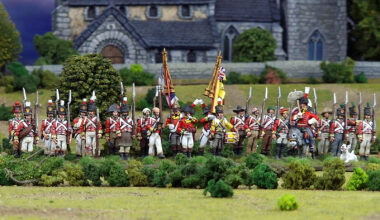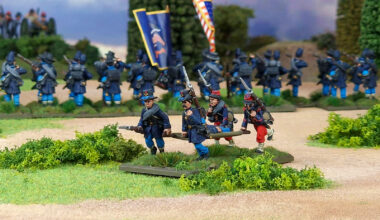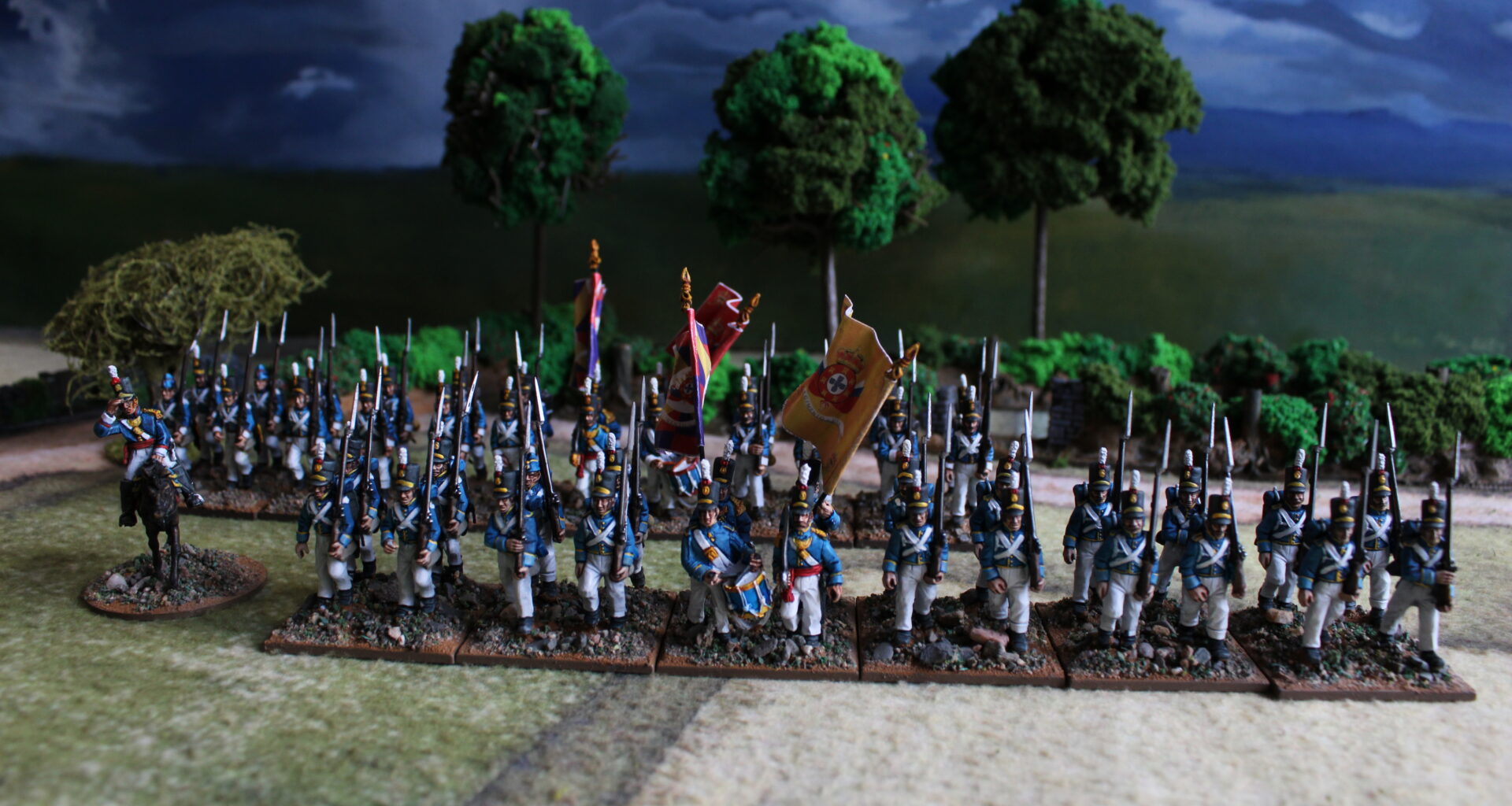
Sampo from Finland recently got in touch with us to show off his latest hobby project, and we liked it so much that we got him to tell us all about it. Sampo, what have you been up to?
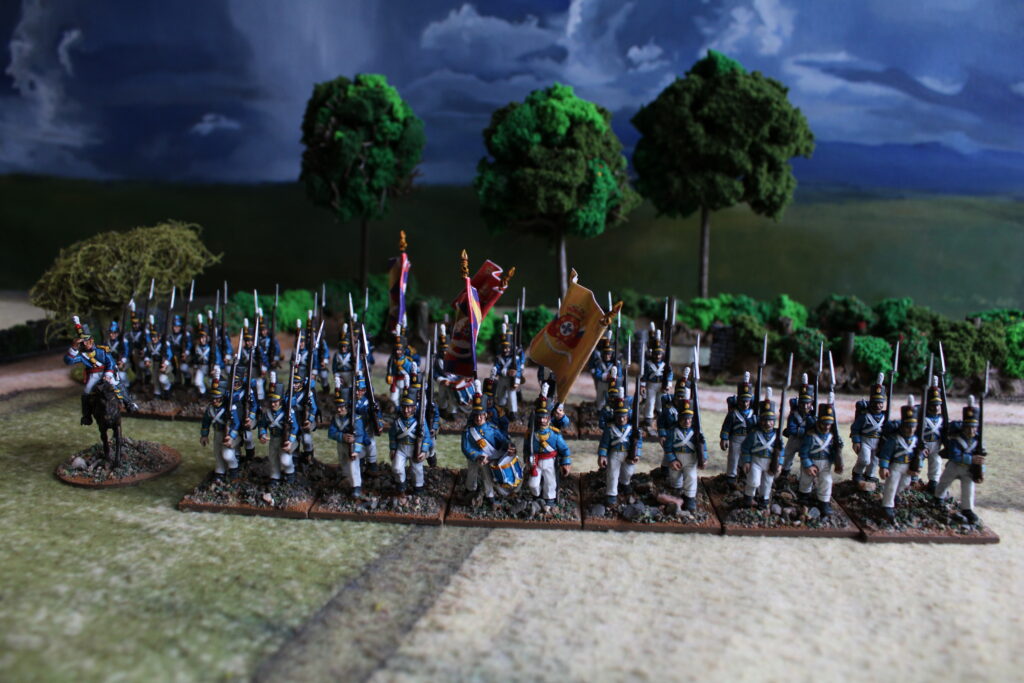
S – I’ve recently finished a brigade of Black Powder Portuguese in 28mm for the later Peninsular War period – think past the Pyrenees but before Toulouse. For playing on my standard 6×4 table my “brigade” consists of a pair of battalions instead of a pair of regiments, for now at least, and of course an officer to lead them.
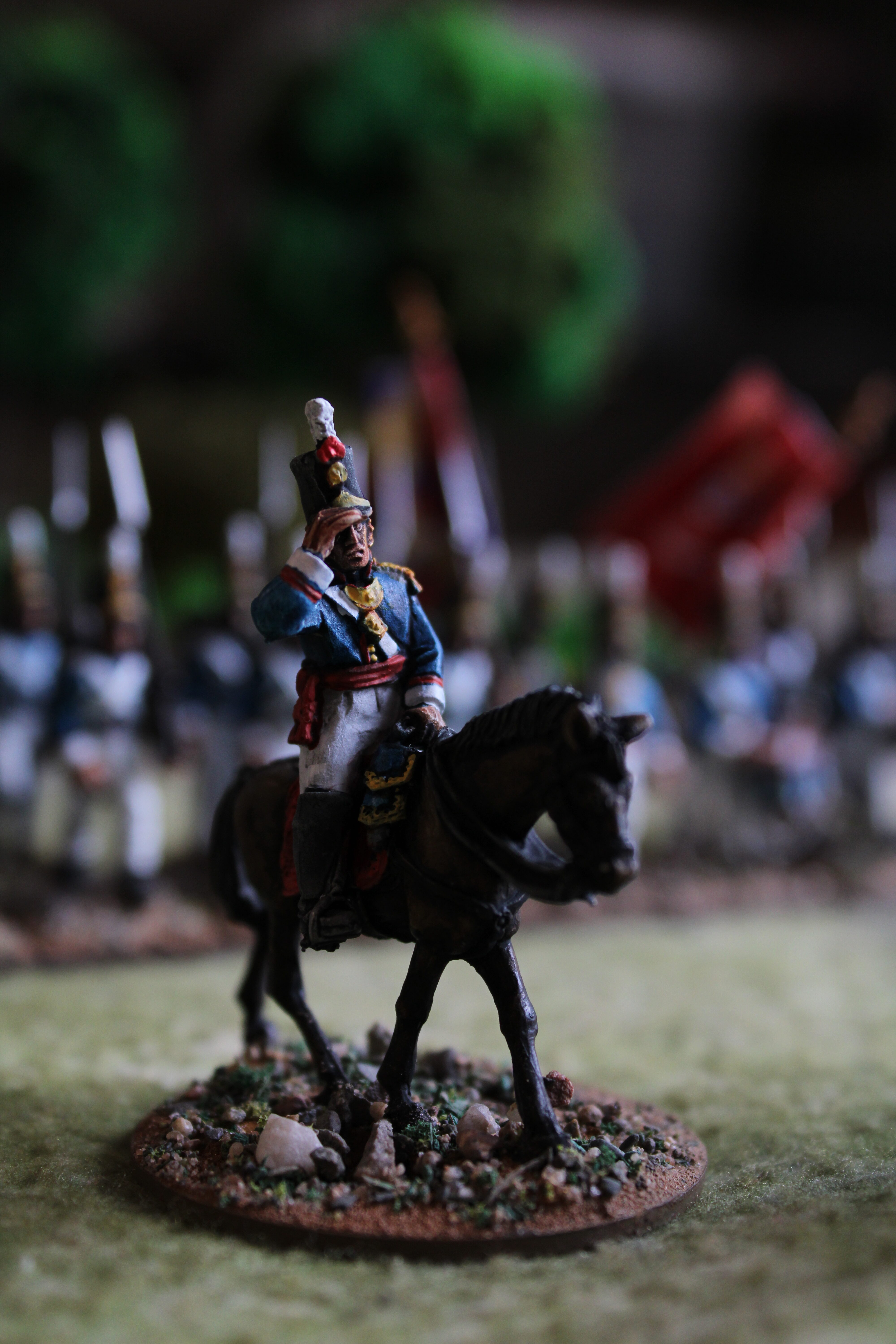
I first started collecting British for Napoleonics not only because I like the colour red but also to oppose one of my gaming buddies’ French. I got the Peninsular starter army almost as an impulse buy years ago, and it happened to include a battalion of Portuguese line infantry. By the time I had stumbled my way through all the redcoats (learning by doing, hopefully) only the Portuguese remained. In an army project I like to listen, read, and watch about the models I am working on, and the history of not only the Peninsular War but also the Portuguese army was absolutely fascinating. I had planned to brigade the lone battalion with other odd units like the highlanders and Rifles, but the more I learned about the Portuguese, the more I wanted them represented as their own brigade. Painting the blue was also a nice change, of course!
Portuguese units might have been brigaded in pairs but they were also then mixed in with their redcoated comrades. Currently the Portuguese are about a quarter of my allied infantry, which is a reasonably historical ratio.
I like to prime with white spray whenever possible (when the seasons in Finland permit!), otherwise using brush-on gray primer and a sloppy overbrush with white – not a more common ‘clean’ drybrush. Priming as white as possible lets the heavily diluted contrast/speedpaints and the sculpts do the work. None of that zenithal highlighting or griming for my Napoleonics! Thin coats of watered down paint with a slightly too large and damp brush for speed is the order of the day. My contrast paints are mostly from the original release, so I probably need to dilute them an excessive amount.
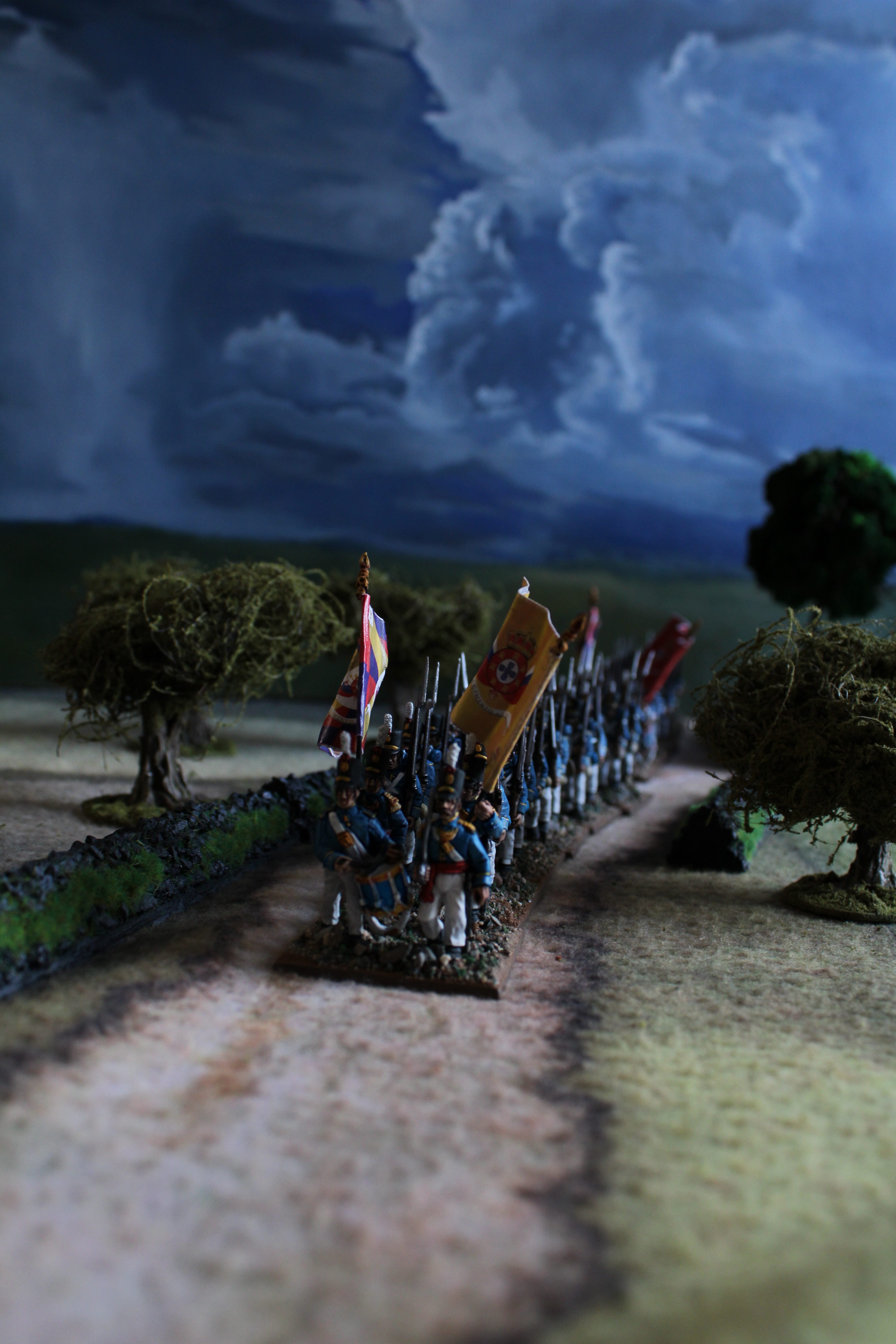
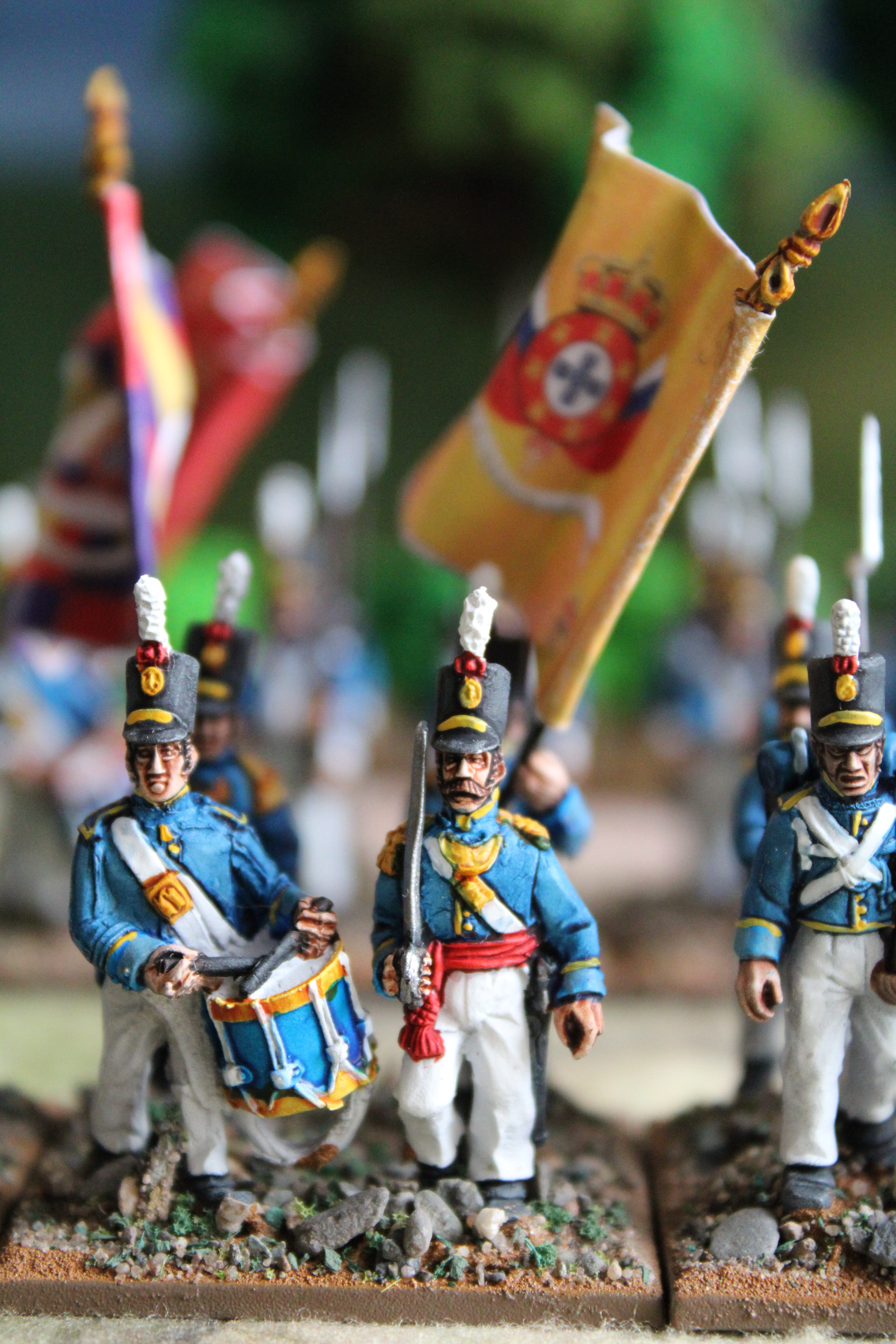
Jackets are a 50/50 (give or take) mix of Talassar and Leviadon blues, while for the rest I use bog standard colours from various contrast and speedpaint ranges except the whites, of which I apply only the primer for now. I leave the black last to fix or hide any mistakes and undercoat metal details that usually get hit by another colour. In my experience your regular silver paints appreciate a darker undercoat. After using the contrasts as base colours I varnish the models using a matt varnish again heavily diluted with water. This actually shades the trousers enough for me. After varnishing the models I try to actually be careful with highlighting the whites, metals (to keep them shiny) and other leftover detail that deserves another go, possibly fixing some mistakes where a diluted paint has gone rogue.
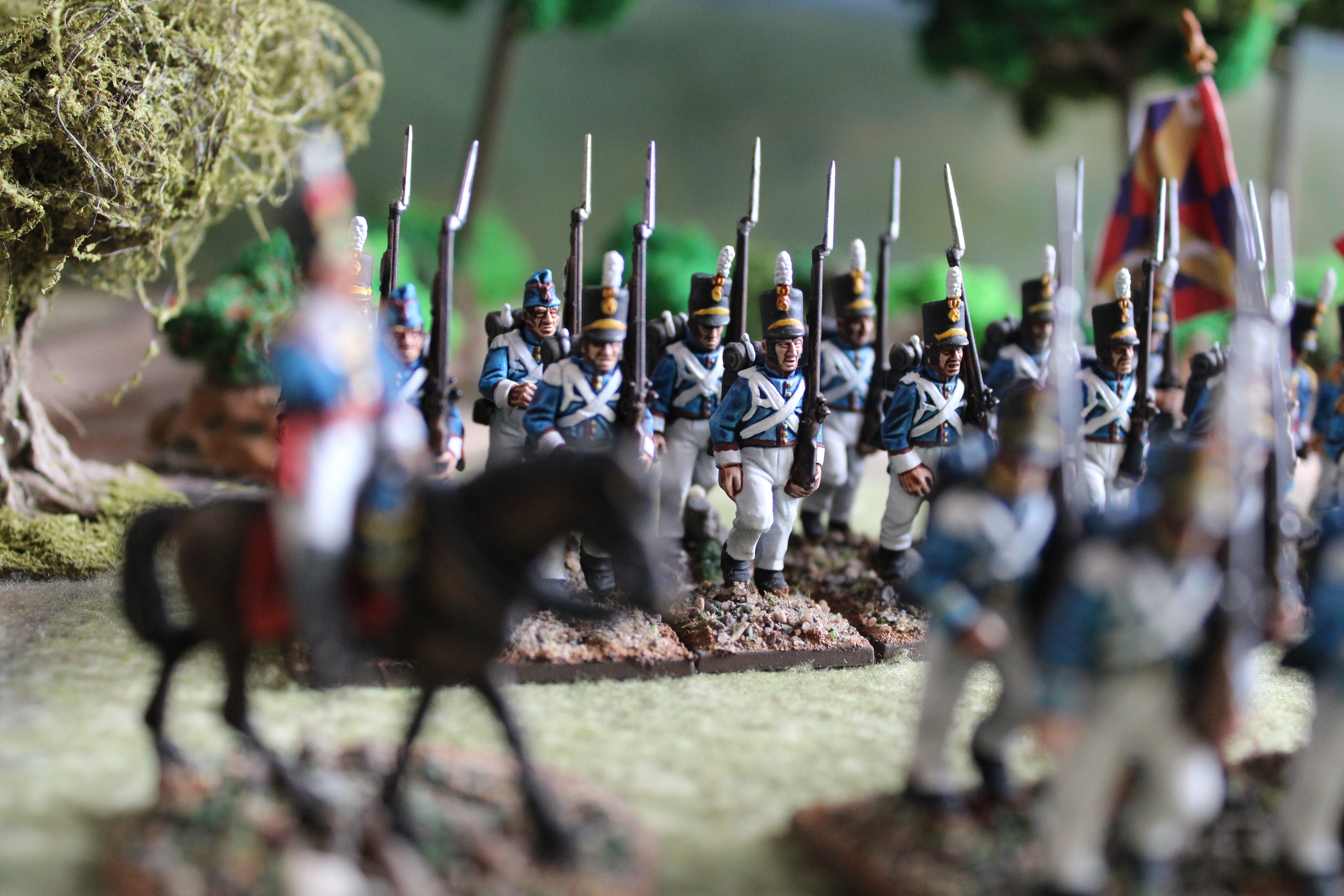
Painting the blue was the big thing for me here. I am not too exact on the ‘proper’ colours and wanted no dark “French” blues, but rather a more majestic tone. The piping of jackets were also sculpted visibly enough that I couldn’t just keep them as blue. This provided a rare use for a very small detail brush in my army! Using this method produces a complete unit in two to three weeks of hobbying which happens to be pretty much as long as I can focus on a single project.
I will eventually add a battalion of Caçadores which were often attached to Portuguese line brigades, and then perhaps some artillery (if I can bring myself to paint the limbers, which aren’t my favourite things to work on). After that? Who knows!
If you like Sampo’s work, you can follow him on instagram at waaagh23, and if he’s got you inspired to start a Napoleonic force of your own, you can…