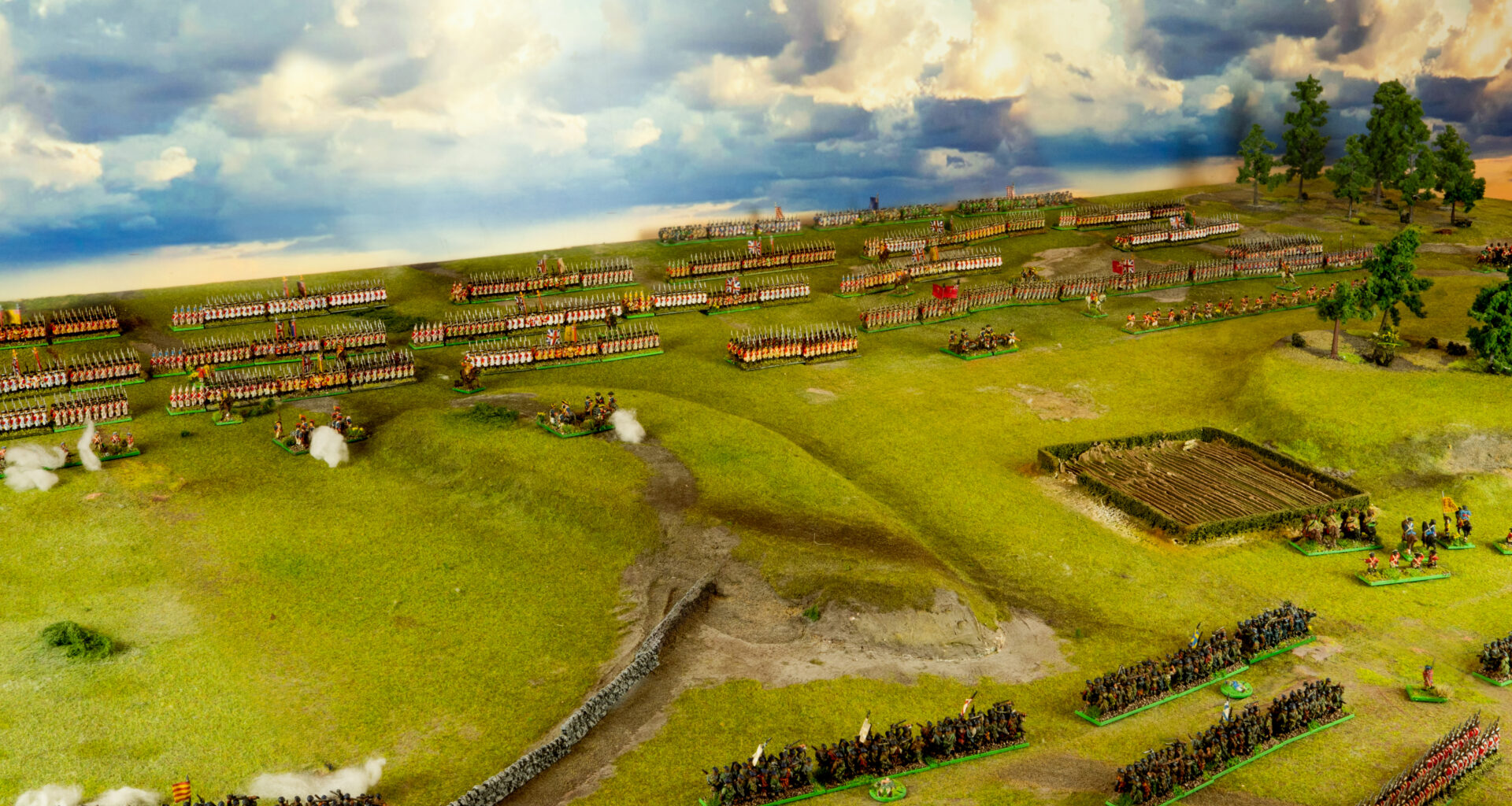

Warlord Games founder and CEO John Stallard is no stranger to a big project, and we know we’re in for a good time whenever he invites us to his fantastic gaming room to check out his latest creations. Recently, he’s been going at our Epic Battles: Pike & Shotte and Revolution! ranges with clippers and paint, and has emerged with a very unique Epic Battles project indeed – Culloden! Naturally, we had to sit down with him and ask him all about it. Tell all, Bossman!
JS – Many years ago, when I was a small boy, I used to live in Scotland, which was all well and good until the local lads, aged about 6, decided that my brother and I should be ‘English soldiers’, while they pretended to be Bonnie Prince Charlie’s hairy hooligans. Being no fools, they used cricket stumps to represent mighty broadswords, and as a result we ended up hiding up a tree, as no doubt a few redcoats may have done in 1745 when confronted by such savage opponents and their foreign war-cries! That was my introduction to the forces of the Duke of Cumberland and the Jacobites. Such fun!
The release of the amazing Revolution! boxed set got my creative juices flowing. I became a slave to painting 90 minutes each night, amassing His Majesty’s forces whilst paying my mate Kelly to paint the dastardly colonials. Three months later, I’ve got two beautiful armies to grace my tabletop.
The Jacobites
All tricorne wearing soldiers look very alike, and for about a hundred years tricorntastic (we weren’t sure this was a word, but John’s the boss – so it is now! -ed.) armies marched around the world looking extremely splendid. Well, there was one that didn’t, and that was the army of the Great Pretender, Charles of Scotland, who wished to restore Britain to the Stuart cause. He raised finance, regular troops, and the Highland clans, and brought in foreign regulars (in tricornes of course) from France.
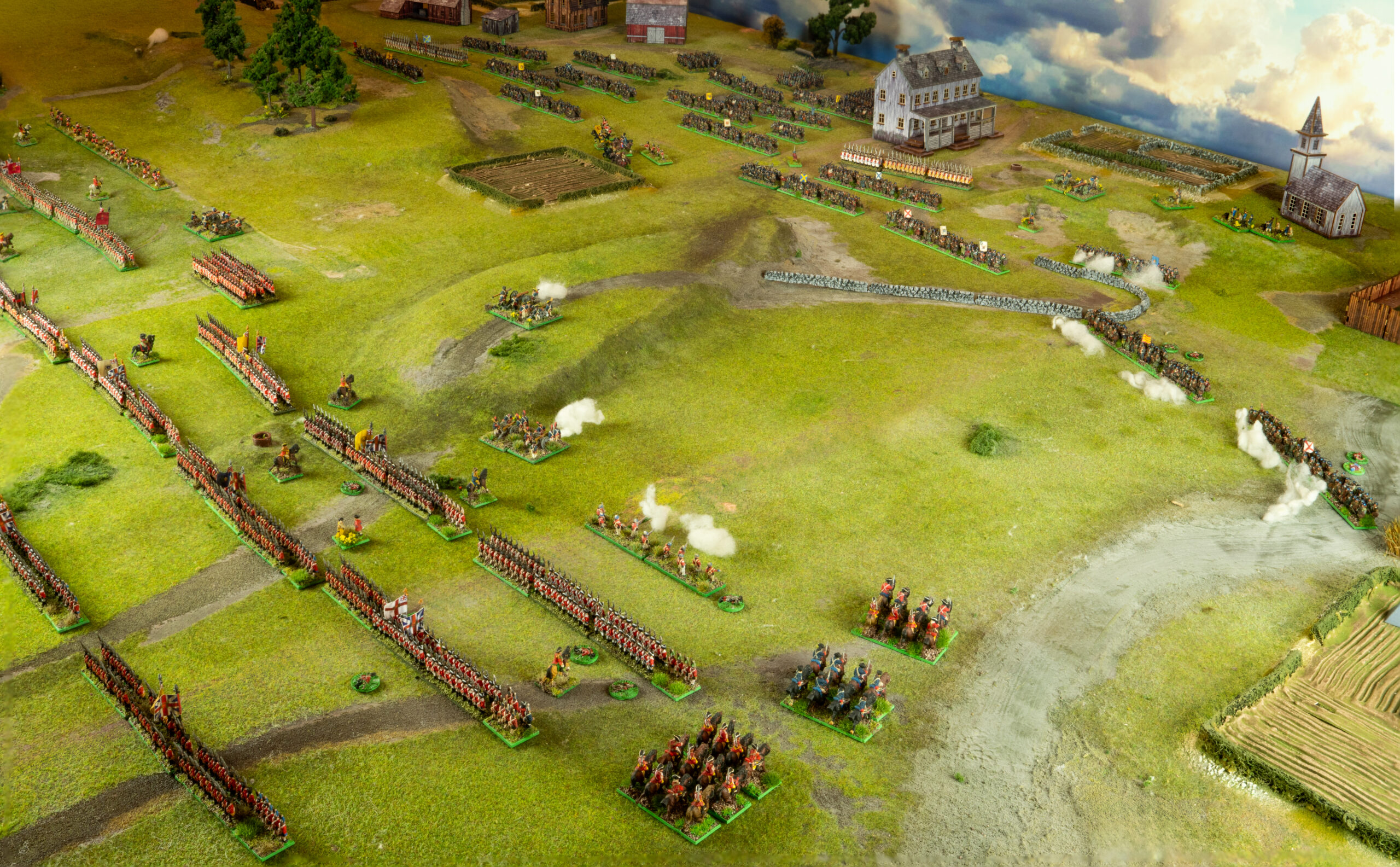
With this small but potent army he crossed the border, winning some small actions whilst London panicked and hurriedly organised an army of English and Scots regulars to stop them. As it was, the Scots got to Derby and didn’t much like the look of it (can’t blame them, really – ed.), so went all the way back to Scotland, much to Charlie’s dissatisfaction! Weeks later, the decisive battle was fought on Culloden Moor, leading to a calamitous defeat for the Jacobites, or a glorious victory for the Government army – depending on your point of view!
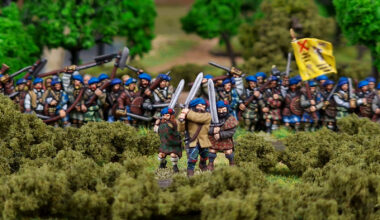
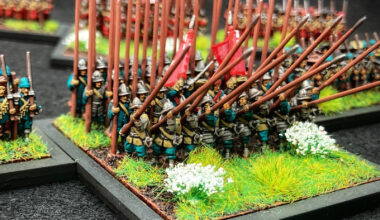
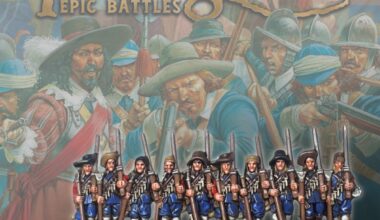
I found myself wondering – what If I could field a Scottish army to take on the dastardly redcoats? Simple! I looked through our Epic Pike & Shotte ranges and saw that we did metal strips of Montrose’s Highlanders, who though a century earlier, were dressed in bonnet and plaid and carried sword and targe, just as did Charlie’s men one hundred years later. Perfect!
The Highlanders formed the core of his army, so I bought a bunch of strips and formed my clans! The clans varied in size and strength on the day, so there’s no need to be too worried about how many strips to combine together as a unit. Most of mine are three strong with a flag in the middle, but there is no reason not to field stronger or weaker units as there was not much uniformity in the Scottish army. My mate, actual factual highlander Dougie Lister, painted them up in fairly muted colours and gave an impression of tartan plaids, which isn’t the easiest on models 15mm high, but he did a cracking job of it! We also make a sheet of Montrose flags, many of which will do nicely for this period.
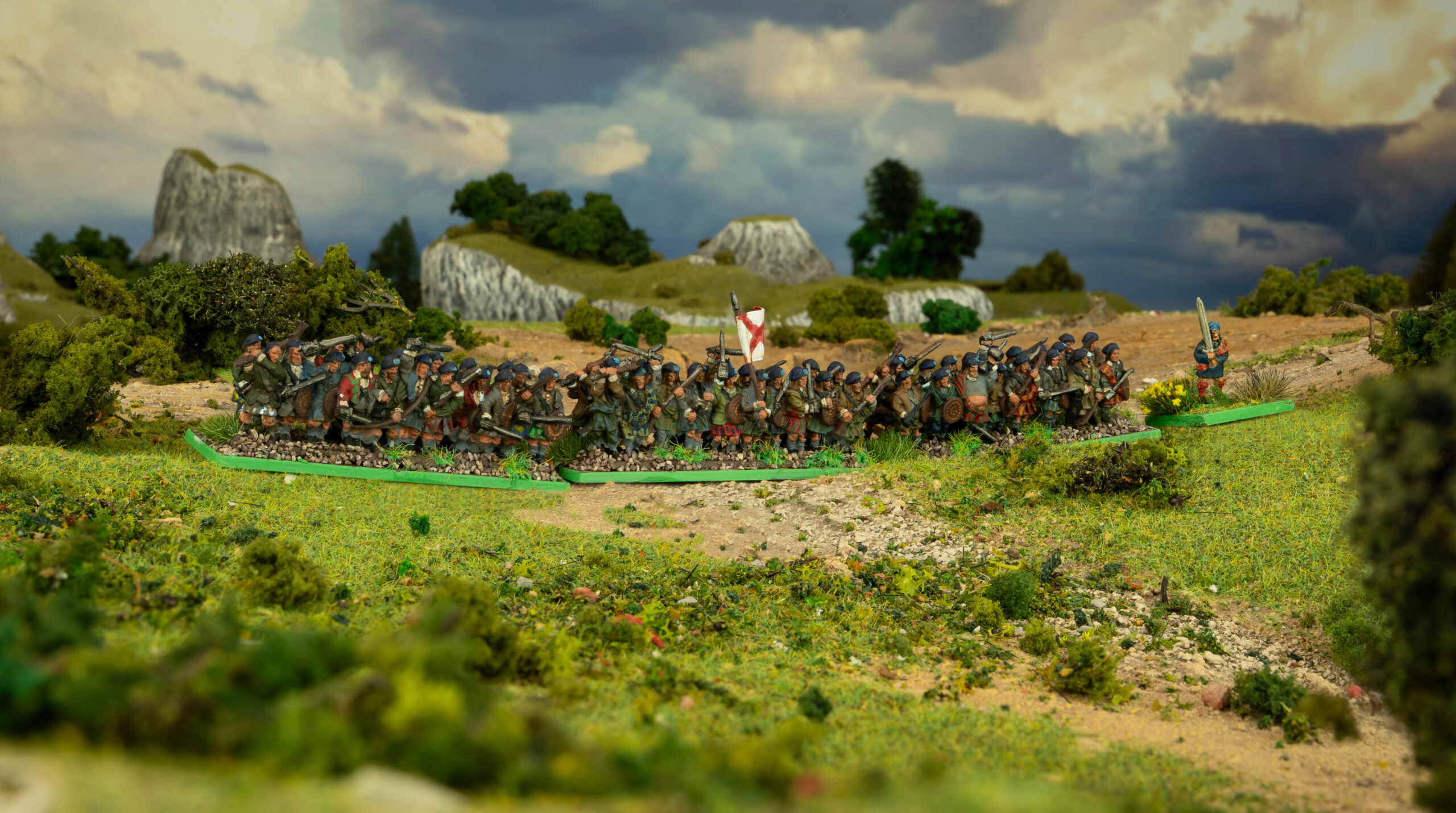
Charles’ forces also had some lowland troops which can be formed and painted using the Revolution! militia models – the odd head swap with some Scots bonnets will help identify their allegiance. To bolster his forces the dastardly French, always pleased to twist the lion’s tail, had shipped over troops, muskets, money, and powder. The Scots therefore also field Dillon’s regiment of redcoats and the Royal-Ecossais, a unit of blue-coated regulars largely formed of exiled Scots, who help to anchor an otherwise irregular army.
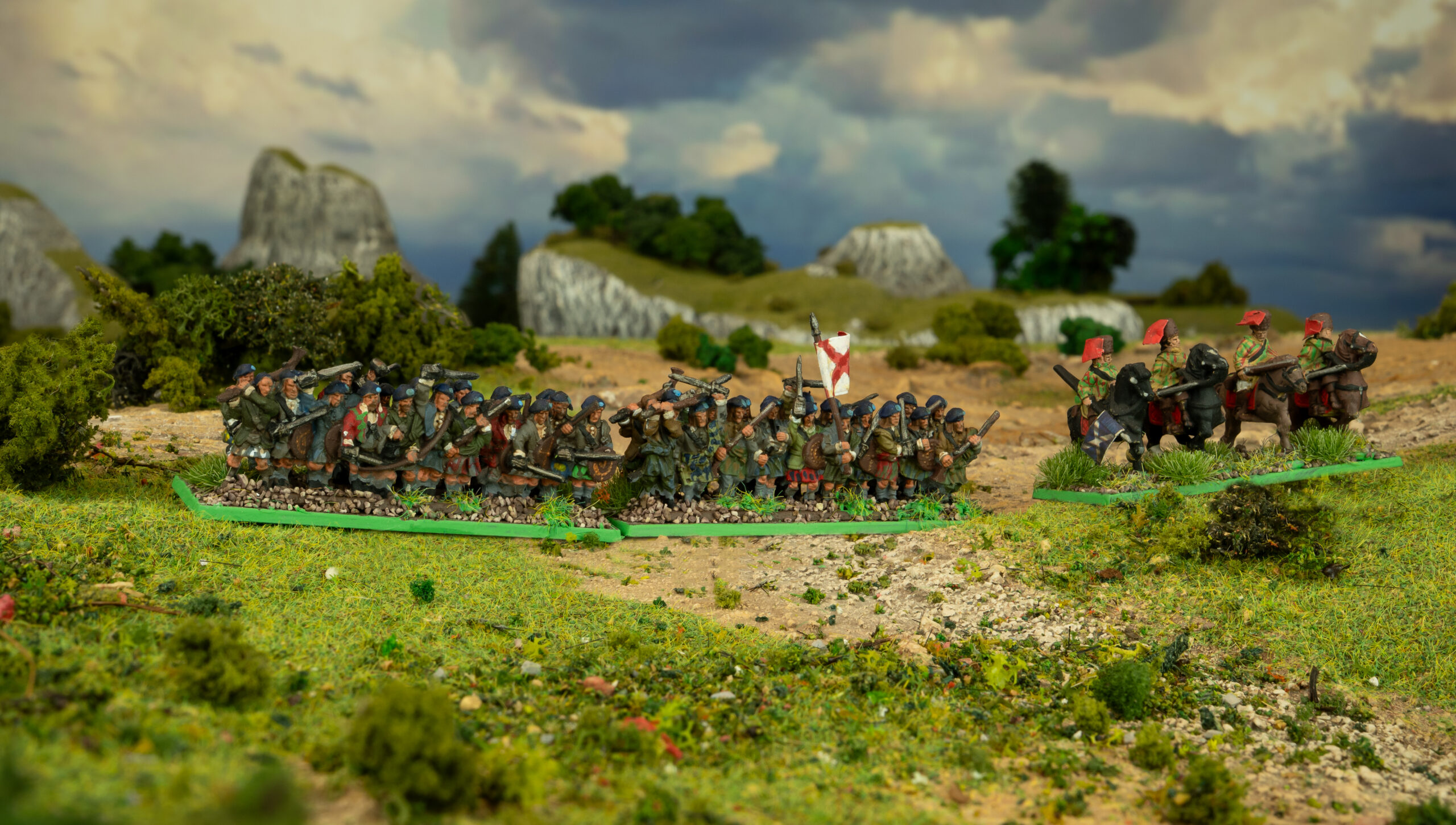
Charles was chronically weak in cavalry, having only a tiny personal bodyguard and another two small units, one of which is the exotic Bagot’s Hussars. I simply couldn’t resist fielding the hussars, although I believe the real unit was less than thirty strong – I had to make them! I used a sprue of French Napoleonic Guard Chasseurs and cut off their lovely fur busbies and glued them on to the normal light dragoons on the main Revolution! sprue – you could also use Nassau Flank Company heads for this if you don’t have a spare sprue. I added a tiny ‘bag’ on the side of the busby with putty and painted them tartan, before adding a Scots Covenanter lancer as a standard bearer.Its madness, but good madness… Charles also dismounted some cavalry as he was short of horses, and these I represented with red-painted Hessian Jägers, their rifles being a good proxy for carbines.
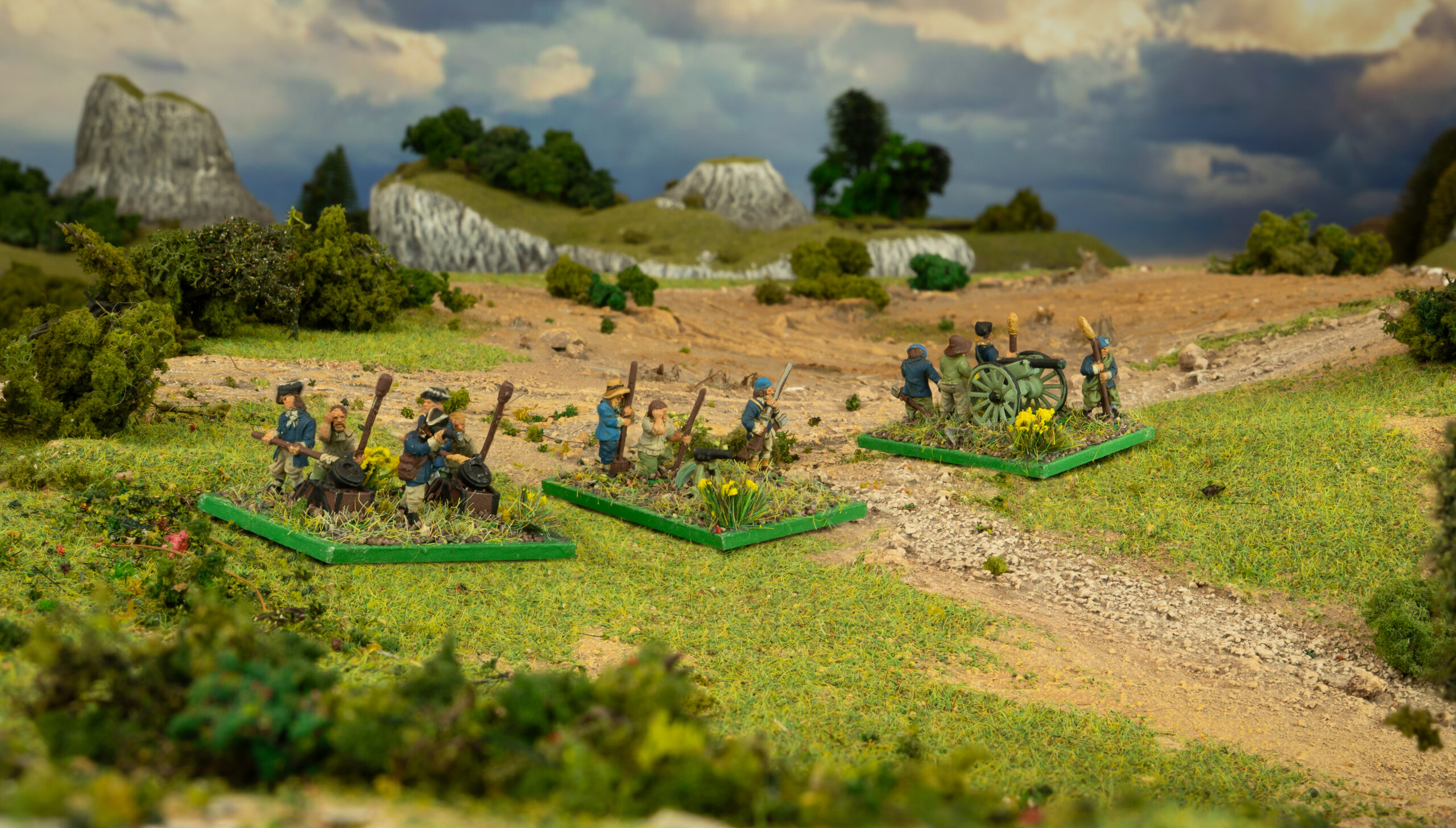
If Charles was short of good horseflesh, he was worse off in artillery. He cobbled together a small train, but it would seem to have been of little use on the day. I used the Epic Pike & Shotte Covenanter light gun found on their sprue (it’s tiny!) and a larger old looking field gun from the cavalry sprue, with a couple of tricornes popped on the crew to give some variety.
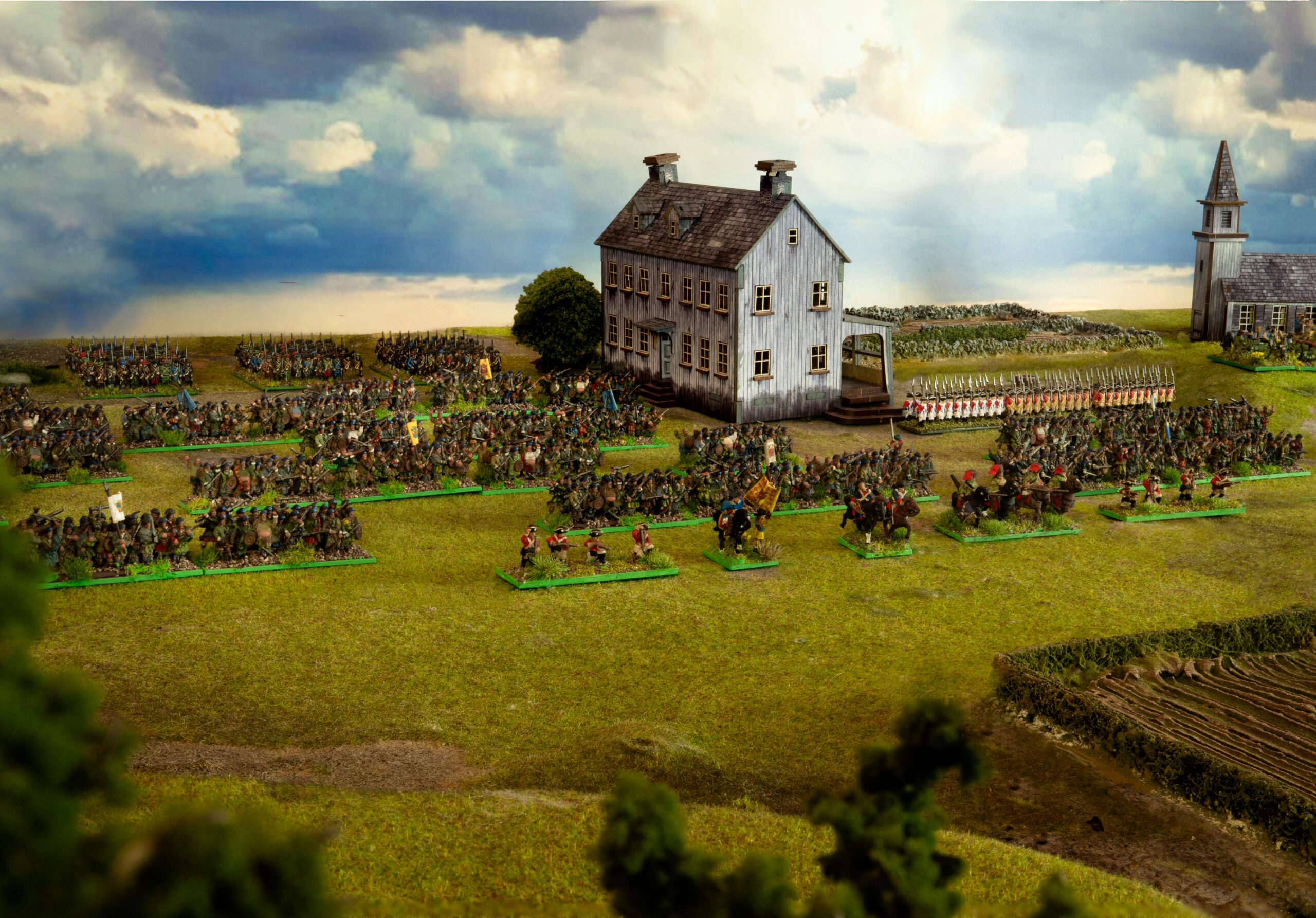
Commanders were easily sorted. I used a Covenanter general and a standard bearer with the royal standard alongside. Brigade commanders were the Devastator set, a trio of very fierce looking chaps with big choppers – perfect for the wild highlanders!
And that, largely, is the Scottish army. Very dangerous if it closes, but very vulnerable if it doesn’t! Most importantly, it looks splendid on the table!
The English
Now, the Government forces…
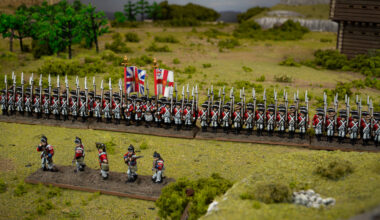
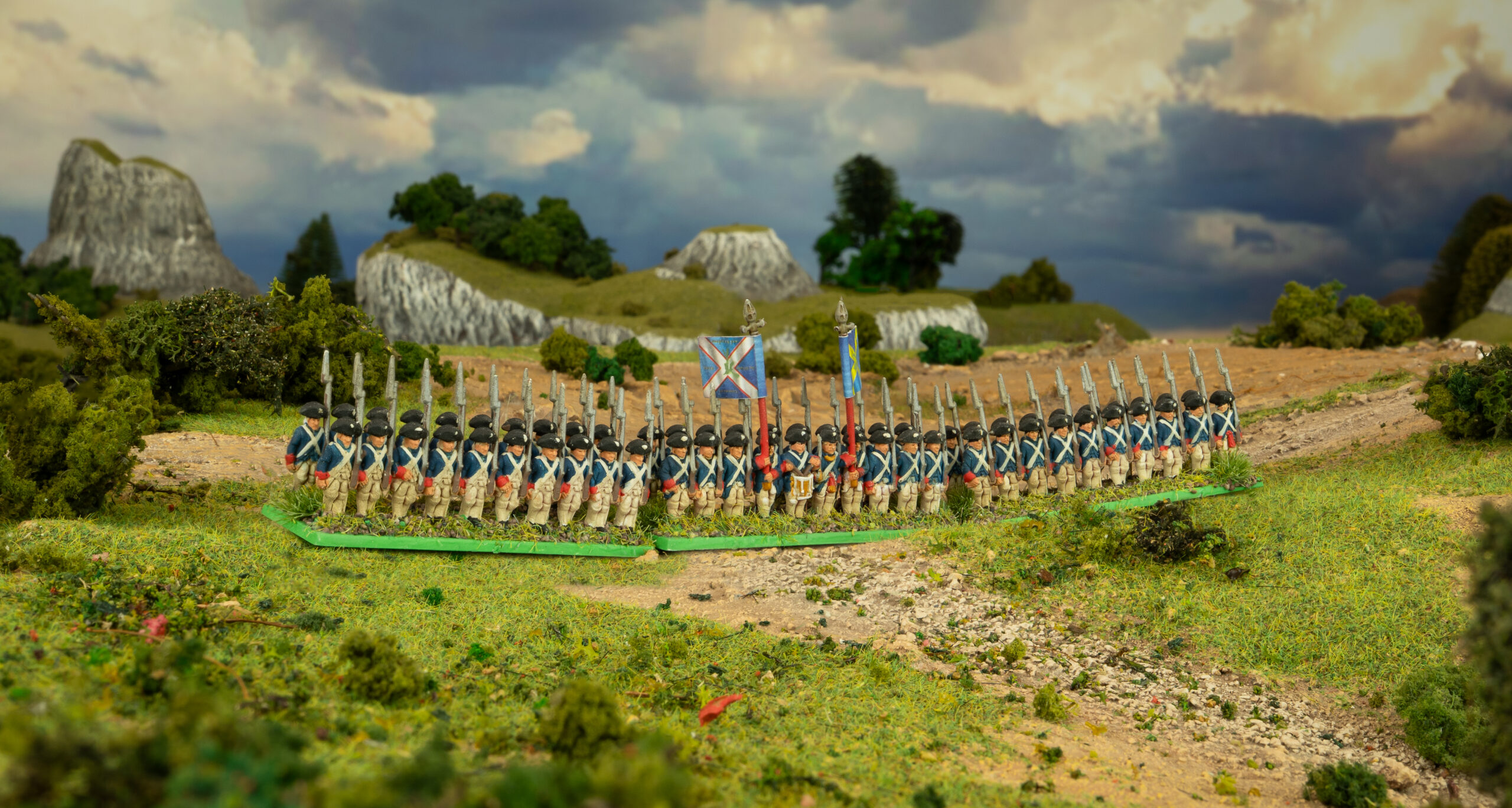
These were pretty easy. Despite being thirty years earlier, the redcoats of Cumberland looked very much like the redcoats shipped to America in 1776. It’s certainly the case in this scale!
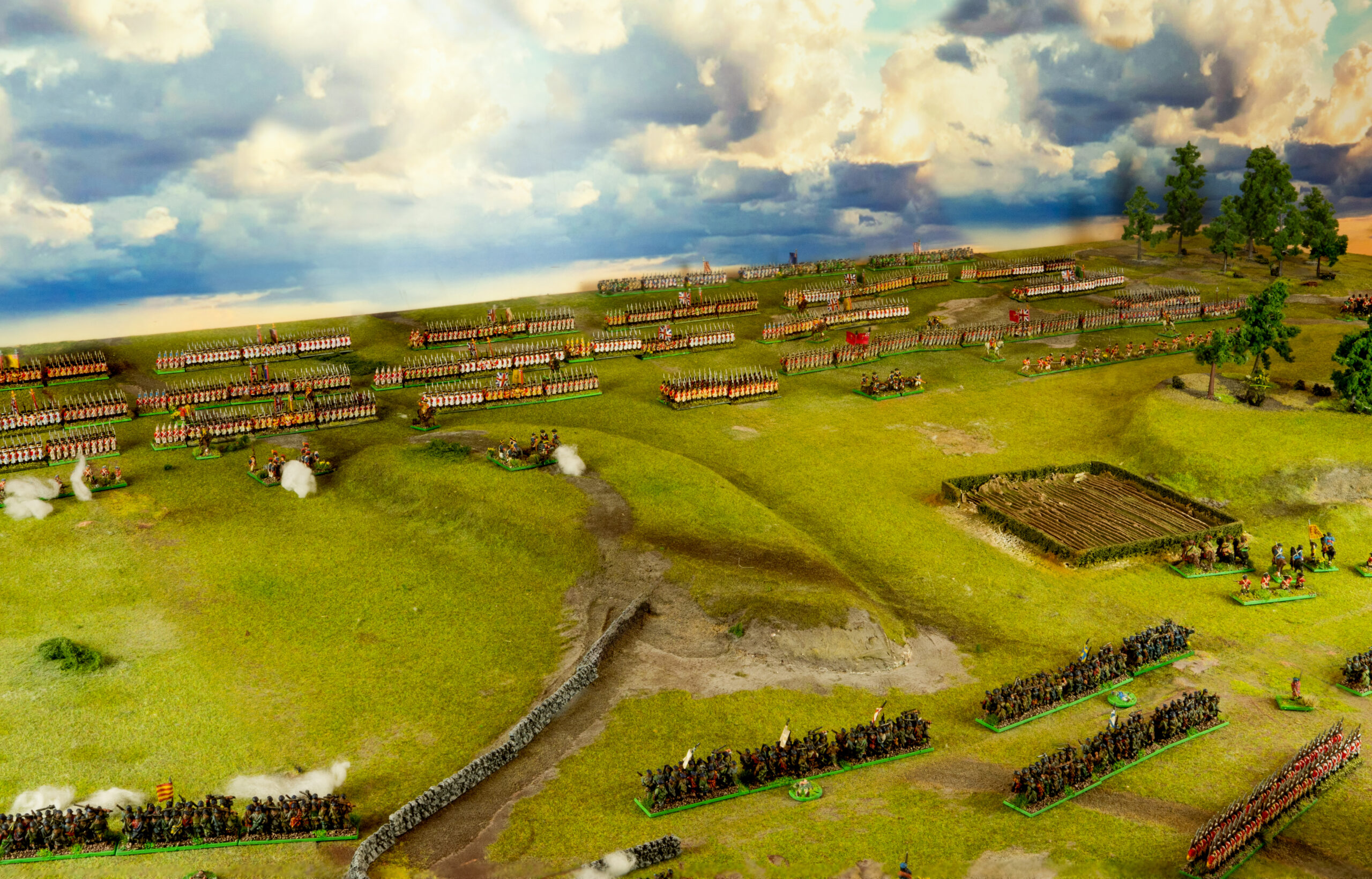
Foot regiments are standard in three bases, with a couple of stronger units to give variety. The big difference is that in the Revolutionary War, regiments had their light and grenadier companies detached and formed into separate battalions of shock troops. In 1745, the grenadiers, the units’ elite and best company, were formed on the right of the regiment’s line. They wore distinctive uniforms, most obviously the tall mitre cap which made these tall men look even taller. Later, this became the bearskin, but in ’45 it was the mitre. To best represent these elite troops, one turns to the Hessian sprue and their splendid German Grenadiers.
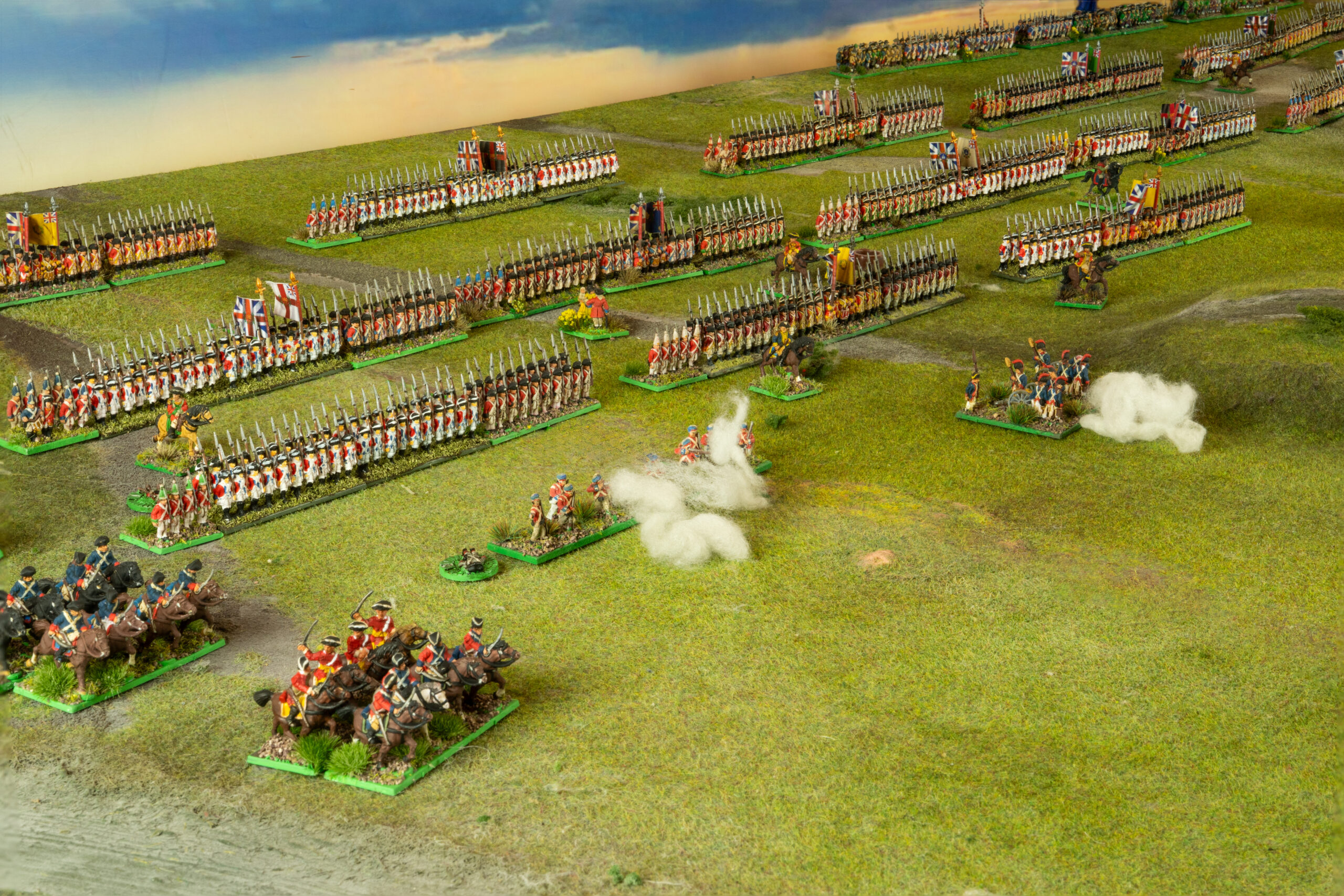
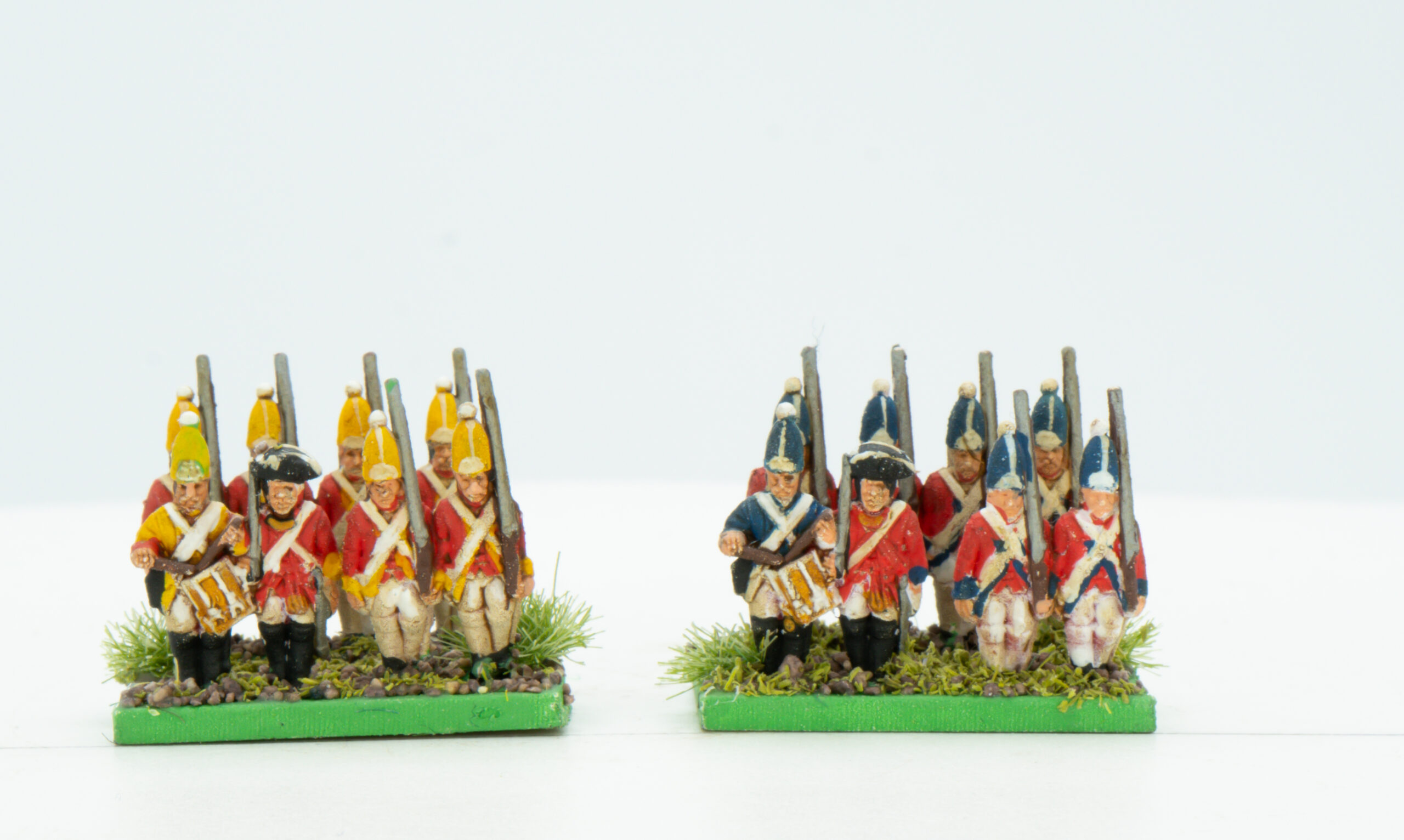
I trimmed the long braided hair to a more manageable length, and painted them with red coats and matching facing colours and mitres. I then placed a small unit of them on the right flank of each redcoat unit. You only need perhaps eight models in two lines per unit. When placed and matched up with their parent unit, they look terrific, and instantly transform a Revolutionary War unit into its earlier incarnation.
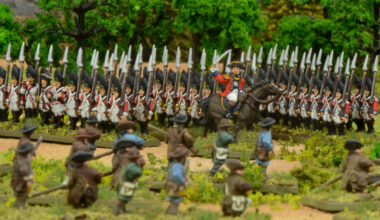
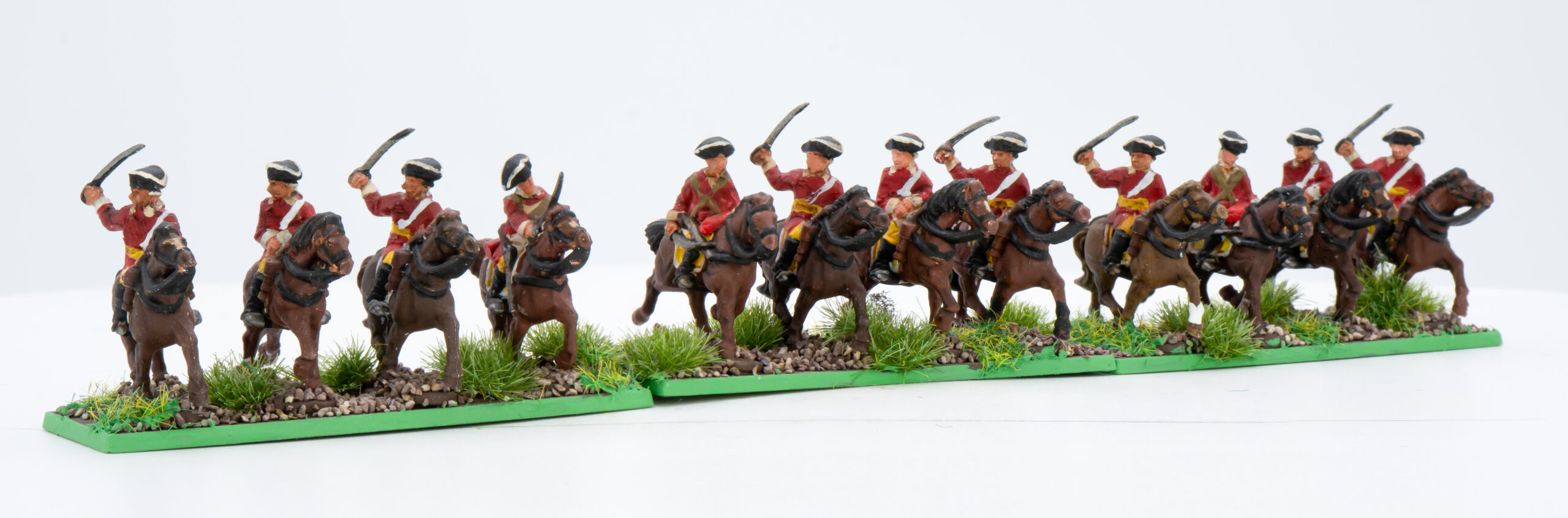
Cumberland fielded three strong units of mounted dragoons at Culloden, not of the best quality but a severe threat to Charles’ men nonetheless. The best way to form these is as follows. On the British sprues we provide lots of mounted officers, leaving one with a good many spares. Simply trim off the epaulettes, straighten the sword, and they can form the backbone of a dragoon unit. If you don’t have enough spares, then it’s a simple conversion job. Either of the light dragoons simply have to be decapitated and their heads be replaced with tricorn heads snipped off from spare infantry. It takes less than a minute to do each model, and it’s really satisfying and simple.
Cumberland fielded some well-served cannon, light guns in the main. He also deployed some ‘Coehern’ mortars which I represent with Epic Pike & Shotte resin mortars. These are technically too large, but they look great at this scale. A few head swaps makes them blue-coated Royal artillery in no time at all!
There you have the bones of my two new armies. It was great fun to design and paint them, and I hope this will inspire you to have a go. The Epic models we produce are so flexible that all manner of armies can be created surprisingly easily if you do a little research.
Simple as that, eh, boss? Well, the proof is in the pudding, and John’s armies look absolutely glorious when arrayed for battle against each other. If you want to follow in John’s footsteps and recreate the Jacobite army at Culloden for Epic Battles, there’s no need to go rummaging around in the depths of your bits box, or try and remember which boxes and sprues you need as you dash around your local gaming store. We’ve put together a handy bundle, giving you everything you need in one easy click – it really couldn’t be any easier!