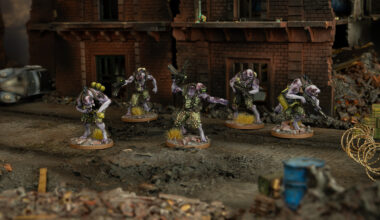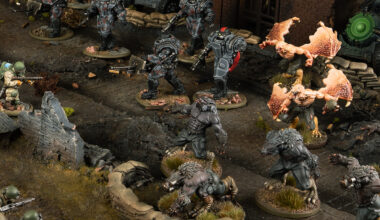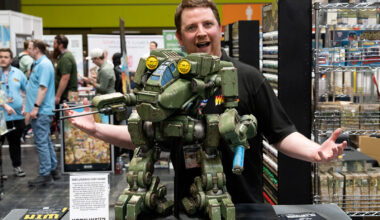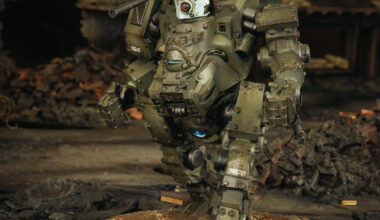
In our series of articles revealing the lore and rules of Konflikt ’47, we recently looked at US Tesla weaponry, but the Americans aren’t having things all their own way! Today, we’re diving into the history of the Axis Schwerefeld weapons program, and seeing how these lethal gravity weapons can have an impact on the tabletop. Let’s get heavy!
Gravity Distorts…
When the nuclear death of Dresden brought about the opening of the Rift, Green Vault scientists watched with eager eyes. In heavily reinforced bunkers miles from the city, a wide range of sensors were trained on the expected detonation point, seeking to capture as much information as possible, as well as recording the event for posterity in as many different spectra as possible. What they saw surpassed even their most grandiose imaginings.
As tens of thousands of human lives flashed to vapour and Dresden’s buildings crumbled before the dreadful power of the opening Rift, the monitoring equipment began to record the impossible, the monstrous, and the wonderful. While much of the data gathered was nearly impenetrable, requiring months of study to even comprehend, one thing immediately became clear – the Rift had a direct and unnatural impact on the Earth’s gravity.
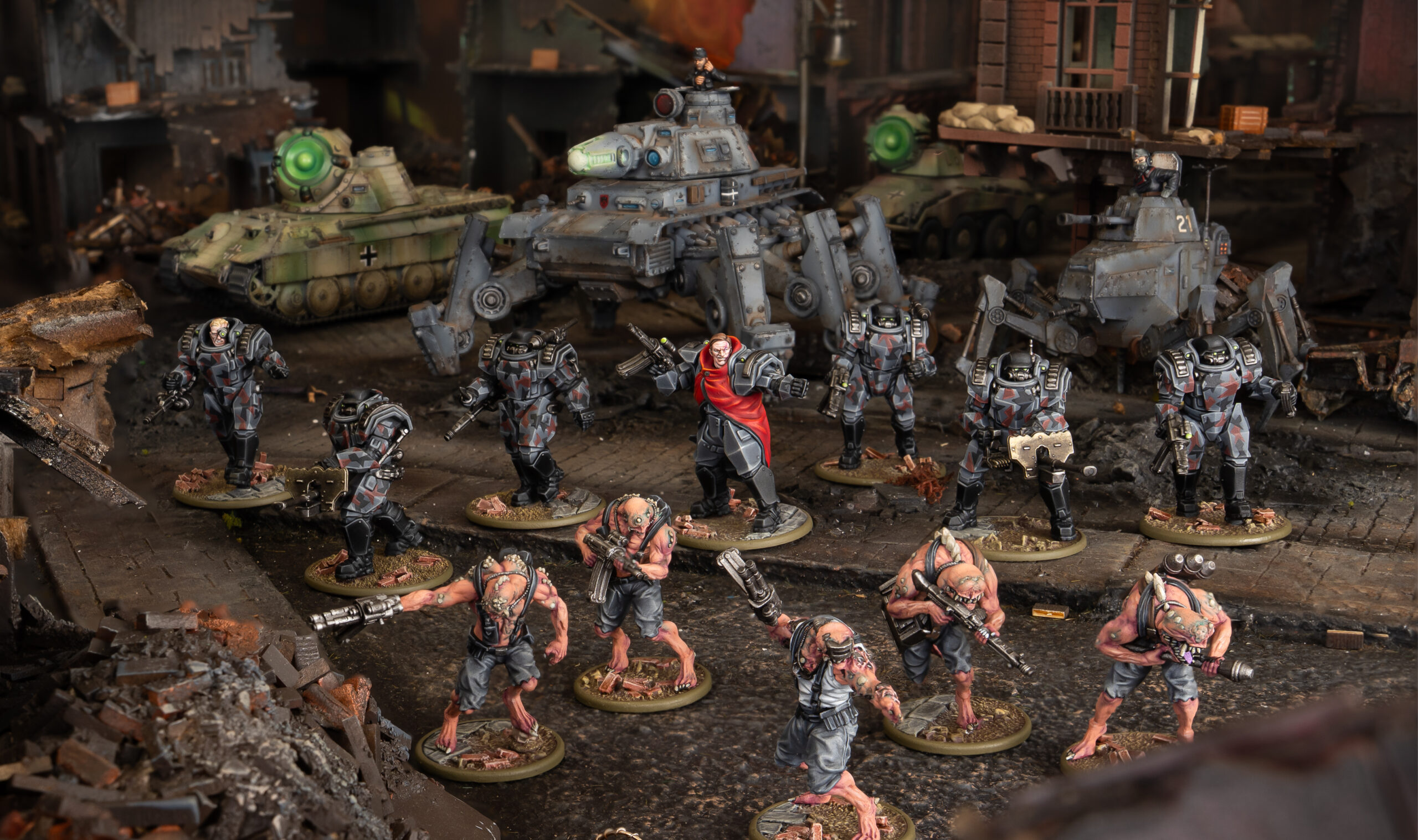
With the radioactive dust settling over Dresden’s corpse, the Green Vault’s top minds sprang into action, desperate to understand what they had witnessed, and bring the power of the Rift to the battlefield. Months of frantic research ensued as they raced to explore the dead city and analyse the strange energies emanating from the Rift at its heart. This was an undertaking fraught with danger, as the streets were not only alive with radiation, but stranger phenomena besides.
The first of the Rift ‘anomalies’ to be fully explored and understood was that of gravitational distortion. It would be ‘discovered’ by unfortunate scientific scouting parties stumbling into areas of high uncontained Rift energy – those few survivors who returned spoke of men being instantly crushed into unrecognisable puddles of flesh as though by a steam-hammer, or torn limb from limb, while those furthest from the anomalies felt immense pressure, as though their bodies suddenly weighed many more times heavier than normal.
Weaponising the Anomalies
As Axis understanding of the Rifts improved, and test and research facilities began to spring up around the Dresden Schreckzone, these gravitational anomalies were first isolated, then stabilised, and finally reproduced on testing rigs. The lethal nature of a high-gravity pulse or field was of course well understood, and testing quickly moved towards weaponising the concept for battlefield use.
At their core, gravitational weapons (dubbed Schwerefeld or ‘heavy field’ by the Axis) work by amplifying the Earth’s natural gravity to many times its natural strength, by projecting strong magnetic fields. As the magnetic fields travel invisibly through the air, they interact with both each other and the earth itself, growing in strength and potency until they reach a critical point. At this stage the fields collapse and implode in on themselves, creating a brief instant of ultra-high gravity, deadly to anything caught within its area of effect.
Early experiments in creating and projecting these fields proved fruitful, and in late 1944 Axis high command ordered the research teams to move out of the Dresden facilities and begin working with the arms industry, with the aim of delivering a workable prototype by early 1945. This led to something of a panic in the design team, who had anticipated having more time to study and stabilise the technology, but the Green Vault’s demands for newer and deadlier weapons were insatiable.
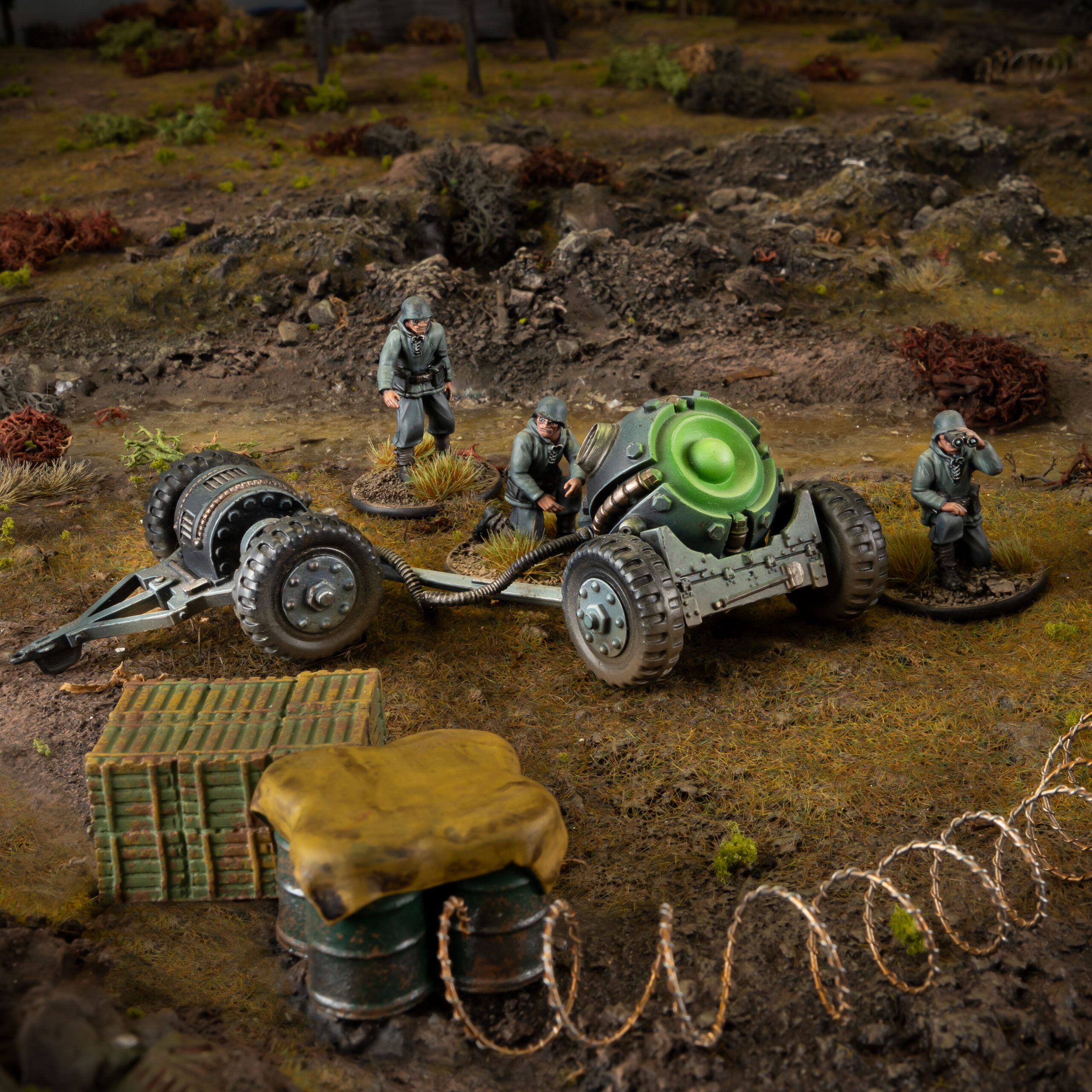
The first viable prototypes of what became known as the Schwerefeld Projektor were ready for field trials in March 1945, mere days before the project’s deadline. The brutal timeline pressures had necessitated a number of compromises, and the weapon that emerged was something of a jury-rigged beast. The spherical projector array, resembling nothing so much as a giant eyeball, was mounted on a repurposed PaK 40 gun carriage, with the vast amounts of power required to produce the magnetic fields coming from a generator mounted on a separate carriage. The whole assembly required two vehicles to tow it, consumed enormous amounts of fuel to power the generator, and proved extremely unreliable, but – crucially – was able to demonstrate that it could be brought into action and used to good effect on practice targets.
Into Production
With the concept proven, full-scale production was ordered, with Schwerefeld Projektors intended to replace half of the Axis’ conventional anti-tank guns by mid 1946. A series of improvements were made to the original design, incorporating the latest Rift-tech powerplants to produce a smaller and more reliable generator, and a new carriage was designed for better mobility when towing. Additionally, the range-setting system was simplified for ease of use and training – all the gunner would be required to do was identify their target, determine the range, and compare the data against a table. This would give them the required power setting to produce a Schwerefeld anomaly in the immediate vicinity of the target. It also allowed the Projektor to be quickly fired in a series of low-power waves, or charged to unleash a single, devastating pulse, increasing tactical flexibility.
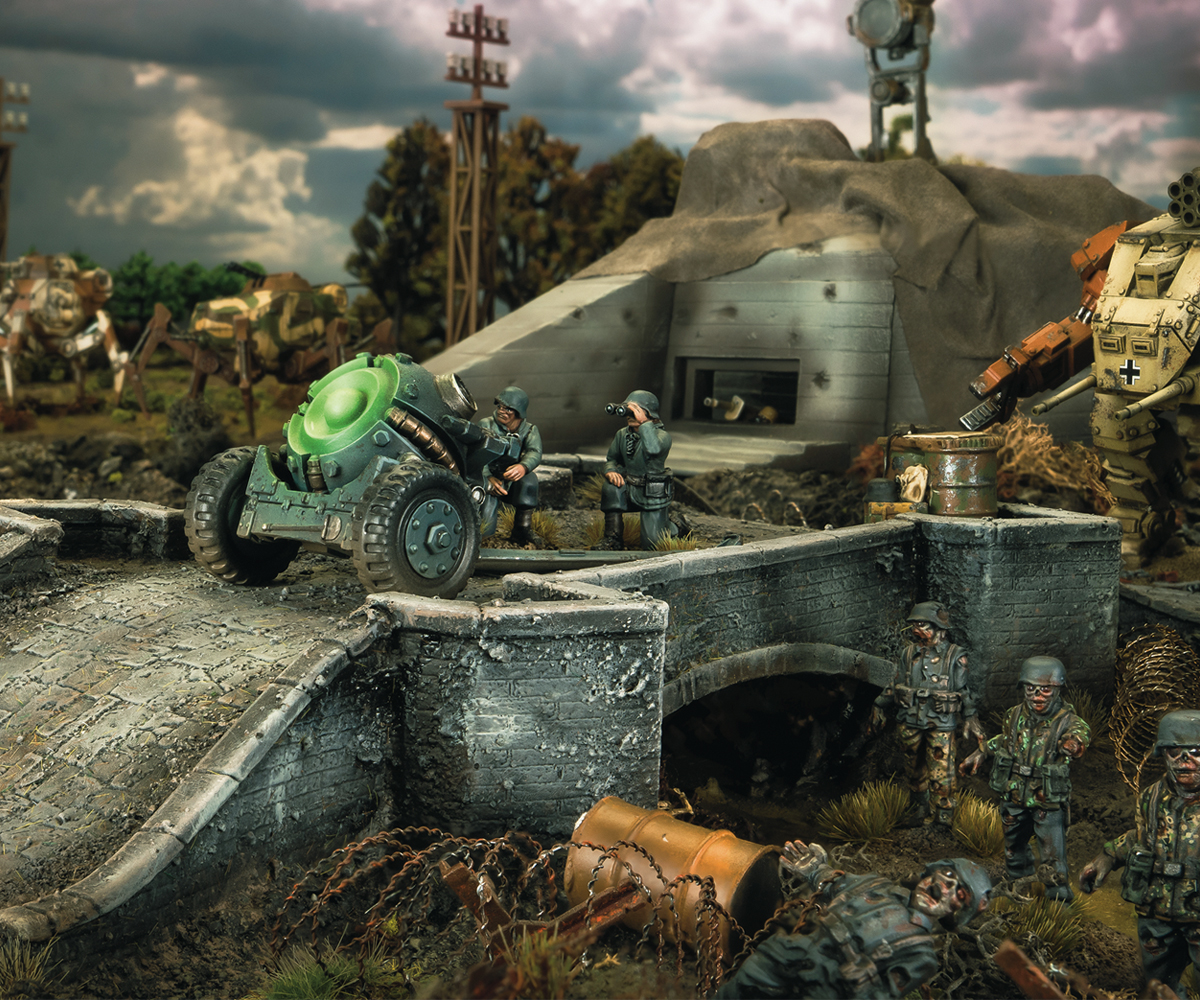
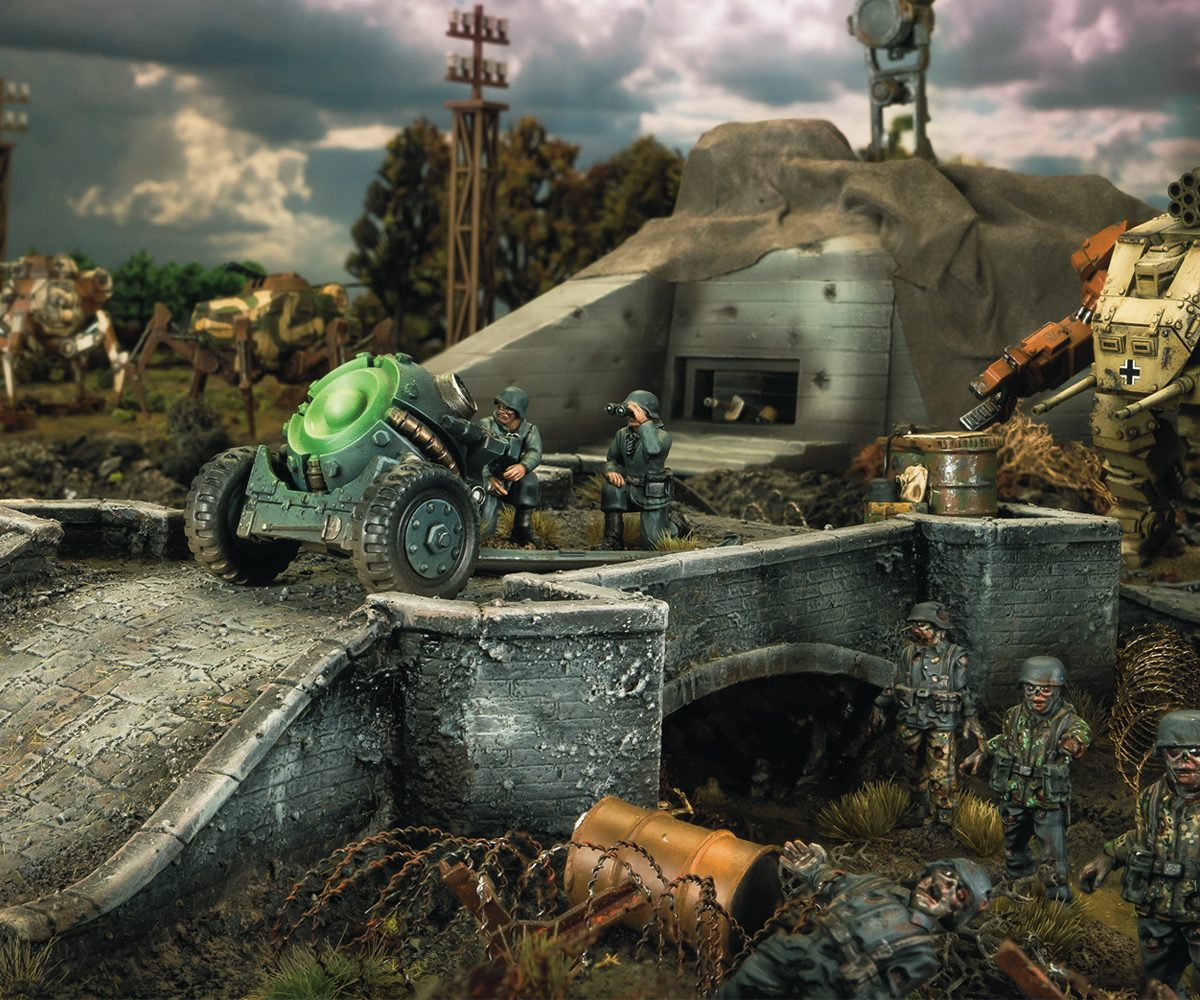
June 1945 saw the first limited combat deployment of the Schwerefeld Projektors in the Low Countries. Although their electronics proved vulnerable to wet weather, and the latent magnetic fields played havoc with radios and compasses, the devastating effects of their fire on infantry and vehicles alike quickly endeared them to Axis commanders. Cover provided no detection against the primal force of gravity, and the nature of the projection meant that there was little warning of an incoming attack, save for the whine of the generator and a brief, uncanny glow from the weapon itself. Commonwealth and US troops quickly learned to fear the Schwerefeld units, as did the Soviets when the first units reached the Eastern Front in October.
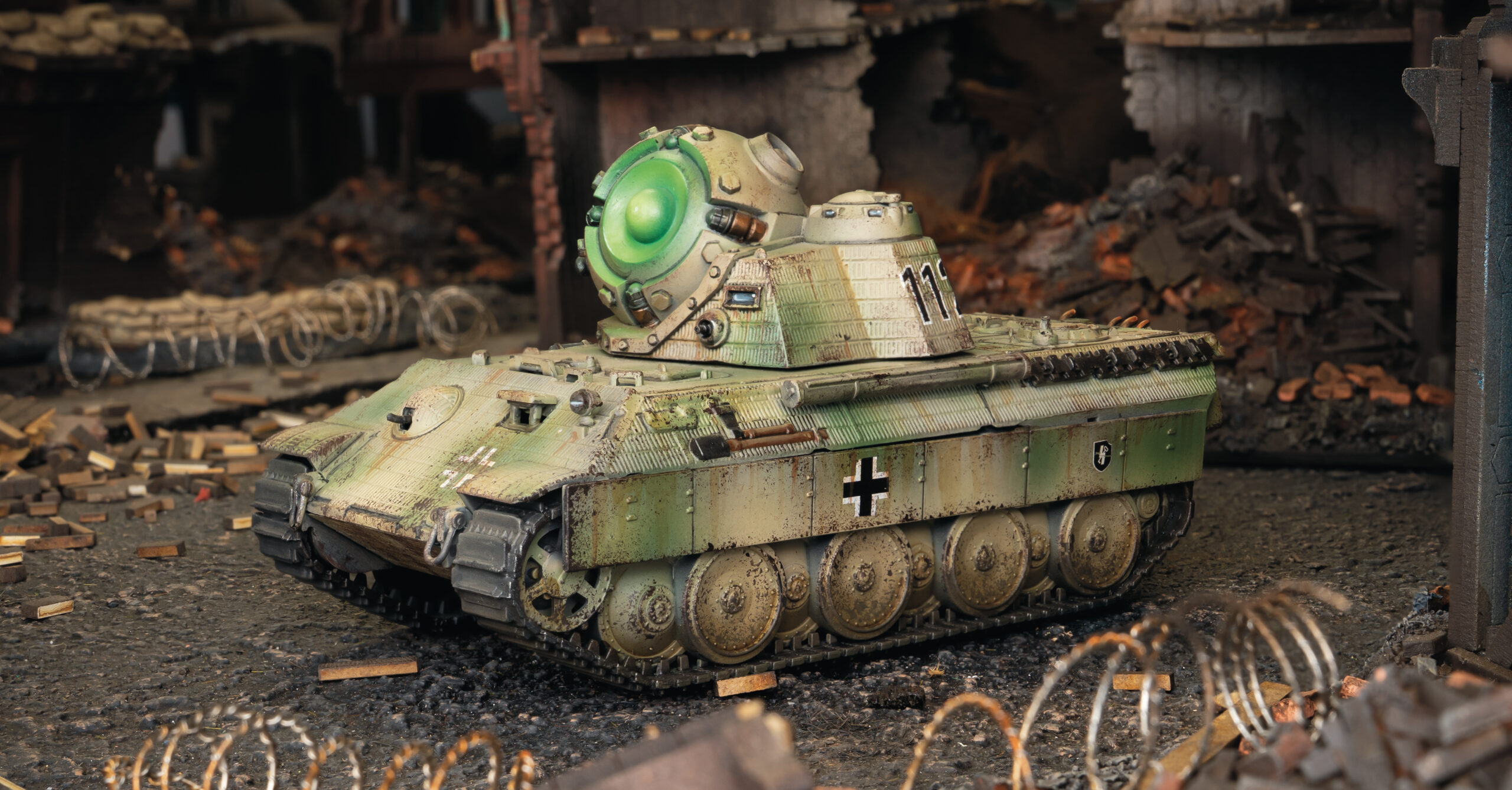
While production ramped up steadily and more and more units were rushed to the battlefield, development continued apace. As a proven, effective weapon, Axis leadership desired to implement the Schwerefeld system on as many platforms as possible, particularly in armoured units to improve the weapons’ mobility. The first iteration of this was simple and effective. By removing the main gun and ammunition storage and eliminating the loader’s position, many Axis armoured vehicles could accommodate a turret-mounted Schwerefeld Projector. This worked well enough for series production, and many Panzer IV, Panther, and Puma hulls were converted to the weapon. Although serviceable, it was noted in the field that the strong, fluctuating magnetic fields caused significant metal fatigue over time, as well as rendering radios and electronics liable to fail at inopportune times.
Maschinen Schwere!
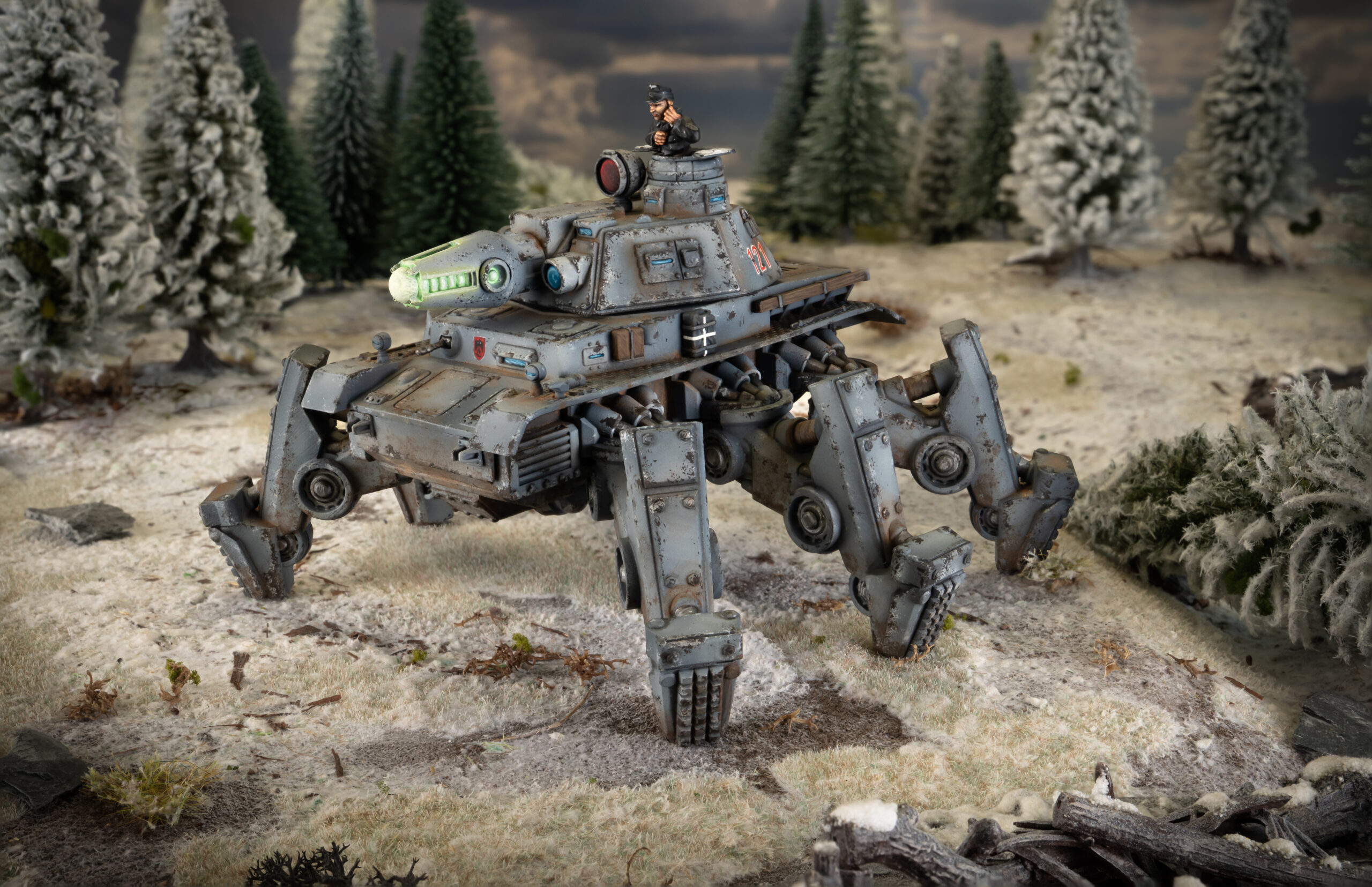
As a result of the challenges experienced in the vehicle-mounted versions, a new variant entered development in May 1946. Lighter and smaller, it was designated Maschinen Schwere, and was intended as a supplemental weapon for armoured vehicles, much in the vein of a co-axial machine gun or light autocannon. Featuring a revised, conical projector array and integrated generator, plus increased magnetic shielding, it largely resolved many of the issues with the original design, and first entered service in late 1946 on the Vogelspinne light walker.
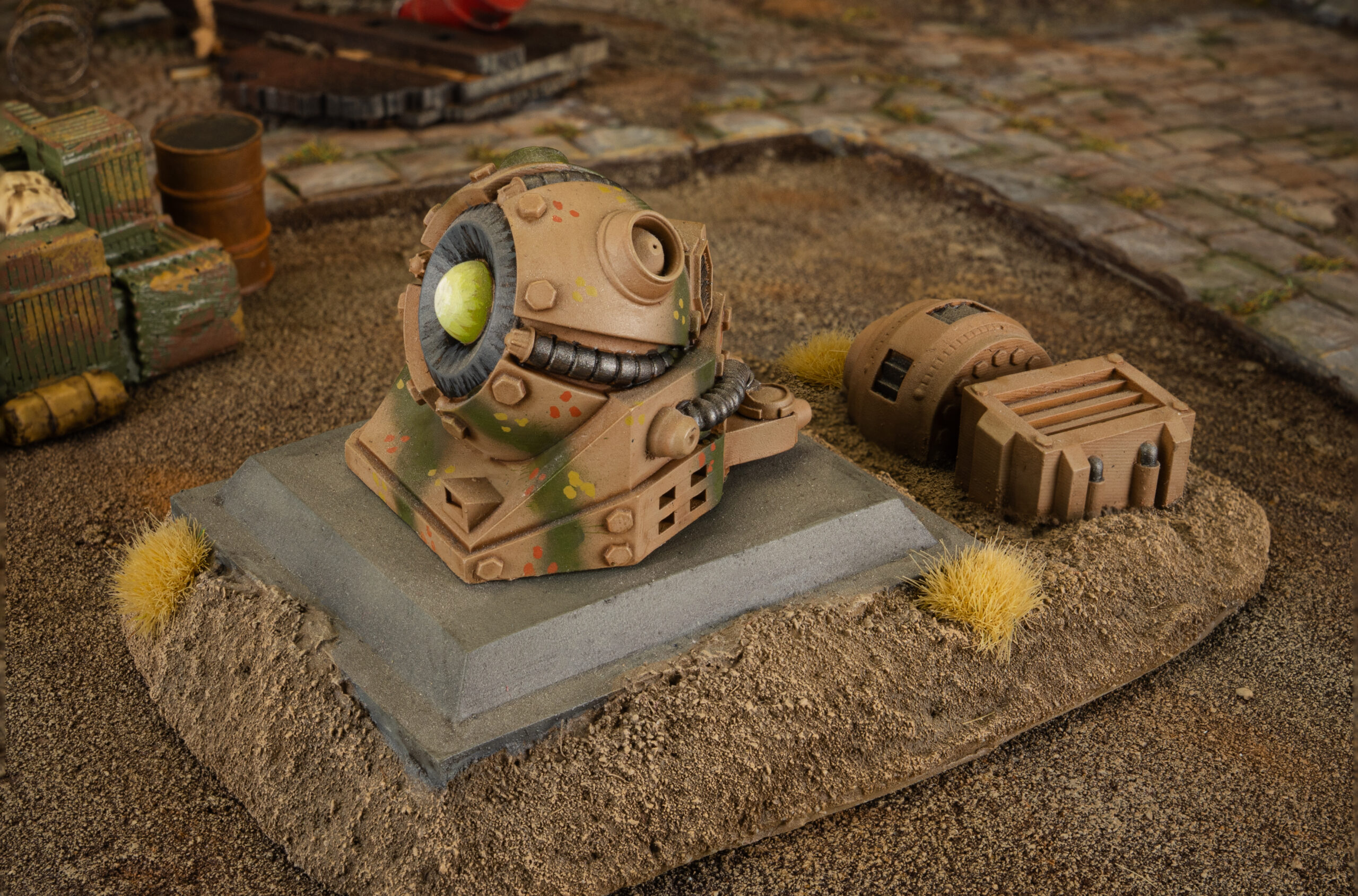
The success of the Maschinen Schwere’s design led to a scaled-up version, of the same magnitude as the original Projektor, being developed. First introduced in early 1947 on the now-legged Panzer IV chassis, it quickly became apparent that it was the superior design, and work began in earnest to bring it to the front lines in quantity. Many of the older models were repurposed as static defensive emplacements, providing additional security to many critical Green Vault sites.
Although the initial Schwerefeld Projektor batteries had been operated by ordinary artillerymen, the efficacy of the weapons soon saw them being deployed into more and more intense combat, and it became necessary to protect the crew as much as possible from incoming fire. While the array’s size made a gun-shield impractical, it was found that a man in Panzerharnisch 46 powered armour could still operate the controls effectively enough, and many units were re-trained with the heavy suits to better withstand the rigours of battle – sometimes proving a nasty surprise for enemy light units seeking to outflank and overrun Axis artillery positions.
1947 sees Schwerefeld weaponry at the heart of Axis strategy, both in attack and defense. Whether generated by a battery of towed Projektors, or from the turret of a fast-moving armoured vehicle, lethal gravitational fields have become a part of the waking nightmare endured by soldiers on the battlefields of the Rift War. While other nations have taken gravitational manipulation in different directions, such as the American repulsorlifts and Japanese Shiboru weapons, the Axis application remains the most direct and visceral reminder that the Rifts have turned many of the laws of physics and nature on their head
On the Tabletop:
On the Konflikt ‘47 tabletop, Schwerefeld weapons are one of the Axis’ signature pieces of Rift-tech, and can dish out some serious damage at medium to long range. Their ‘basic’ profile enables them to pump out a couple of shots with good Pen, perfect for dealing with light vehicles or troops in powered armour, but they really shine (or glow!) when using their Gravity Pulse Rift Ability.

This allows them to place a 3” template anywhere in range and line of sight, and roll to hit any models caught underneath it with the weapon’s total number of shots – this can mean a unit taking a frankly staggering number of hits! Against vehicles, it can generate a seriously high Pen hit, and in addition, Cover is no protection. If that wasn’t deadly enough, if you Exhaust a Surging Rift Die to activate its Overload ability, you get an extra shot, which of course means even more potential hits on a target unit!
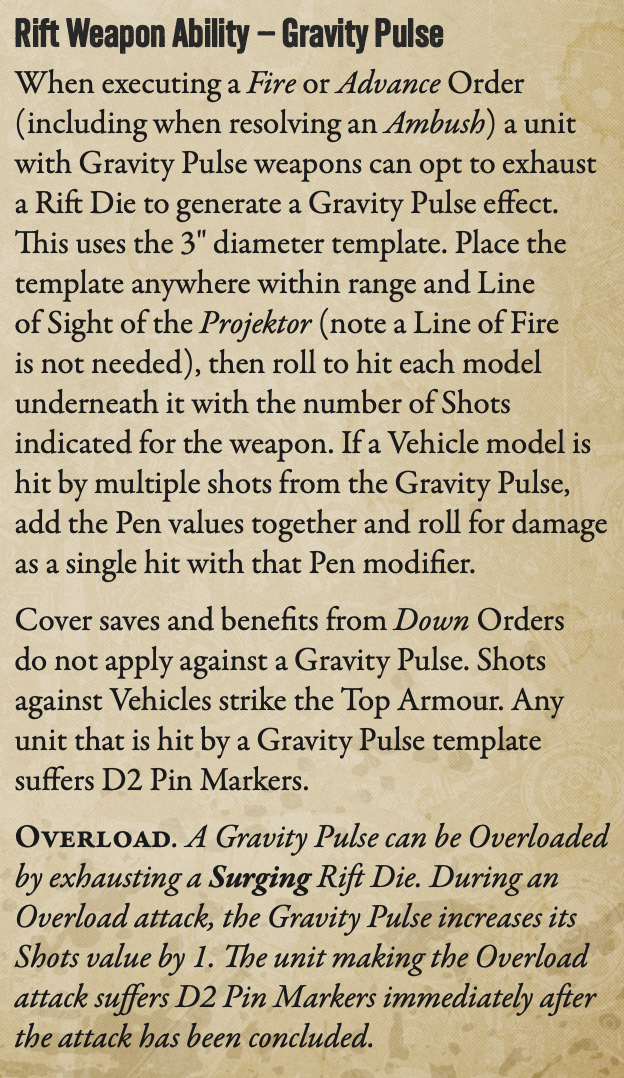
We can see that this makes Schwerefeld weapons a seriously dangerous proposition for any enemy to face, and they’re certain to be high priority targets. Getting the most out of them requires careful handling to keep them out of danger, and smart management of your Rift Dice to ensure they can make the most of Gravity Pulse, but if you manage to pull it off then they can quite literally squash even the most powerful units flat!
Konflikt ‘47 is coming. Are YOU ready for the Rifts to open?