The Enduring Soldier
As mechs stride across the battlefields of Konflikt ‘47 in support of their smaller Power Armoured infantry support, this article takes some time to look past the Rift-born advancements of the latest super weapons, and explore the options offered by the humble Basic Infantry.
Each nation has access to a Basic Infantry squad of one form or another, and while they can’t fill the compulsory slots of your Assault Platoon, they can be taken in its Optional Slots, and also make appearances in the Recce Infantry, Engineer, and arguably in the Artillery and Heavy Weapons Platoons (It’s a bit of a stretch for those last two, but stay with me!).
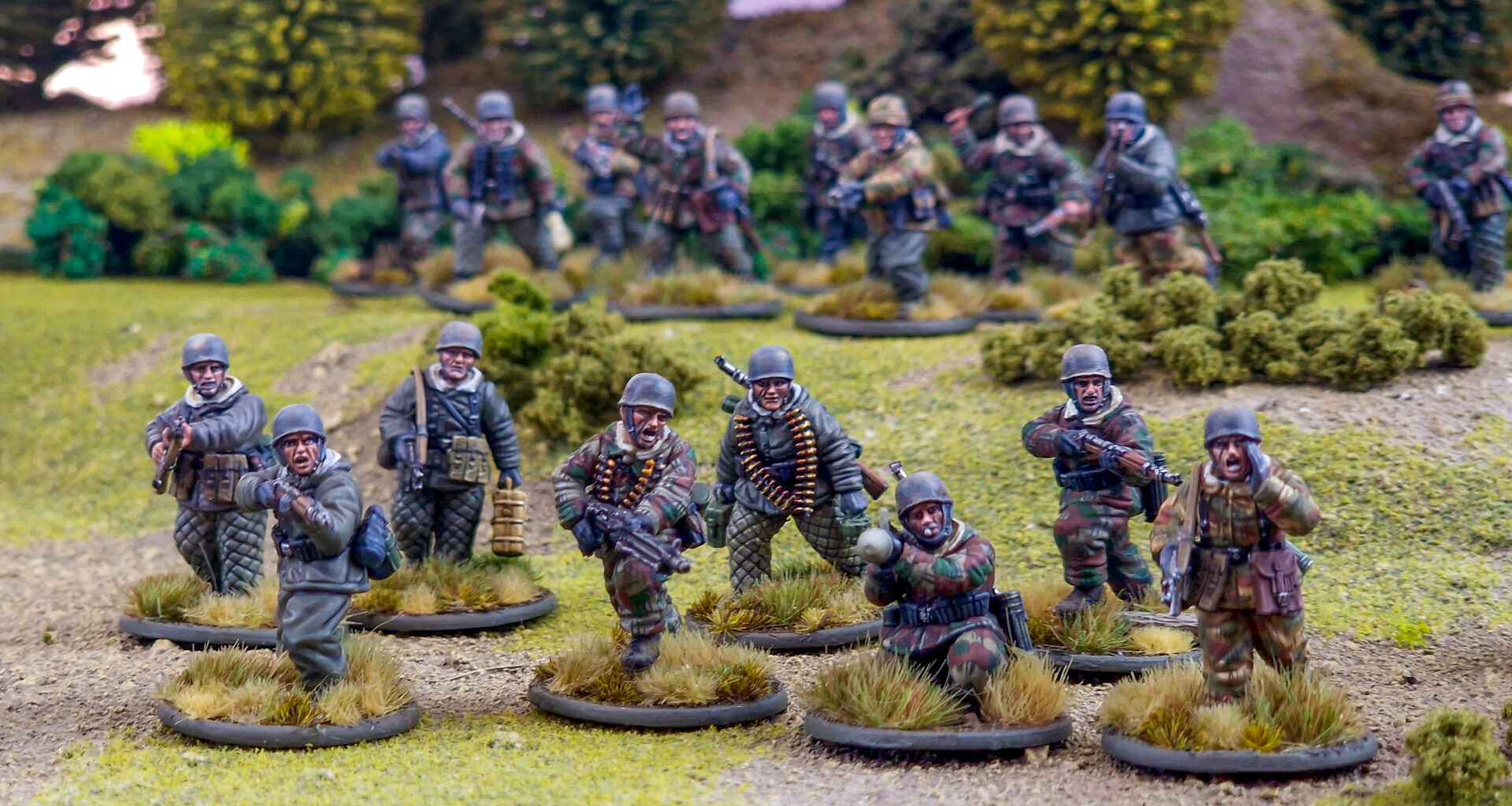
Whilst at first glance it may appear that a unit like the US Rifle Squad is a little ‘bland’, it can actually cover a lot of options. A Regular squad with 1 NCO and 5 Soldiers with rifles for 60 points may just seem like filler, but it’s actually the base around which we can build out some extremely useful units that can plug a variety of holes.
But first, let’s address the elephant in the room…
The same, but different…
It’s easy to think about K47’s basic infantry through a Bolt Action lens. They feel familiar to us, the names resonate, and the models you use might often come in Bolt Action packaging, so it’s understandable to reach for the recognisable, especially when theming a force. Whereas in Bolt Action, infantrymen with rifles are the core of your force and will be expected to be a leading element in all aspects of your plans, in Konflikt ‘47, it’s a different story.
The Hobby & Modelling Opportunity
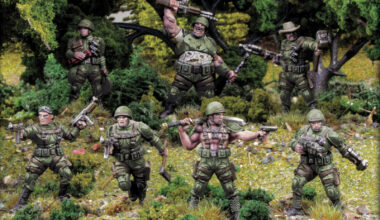
The Basic Infantry squads of Konflikt ’47 can do a huge amount of heavy lifting for your army and its look on the tabletop. Perhaps you want to represent a veteran unit that is sceptical of new technology, or a desperate hold-out where Rift resources are scarce – or just the poor bloody infantry, caught in a fight that they didn’t sign up for.
One of the great joys of K47 as a setting is the freedom it gives you to make the force truly your own. The Rift war fractured nations, supply lines, and doctrines alike, so there is no single ‘right’ way for a unit to look. If you want to paint a digital camouflage pattern on a force fighting across a desert tundra, or field a mixture of equipment that never would have shared a front in the real world, this is the place for you!
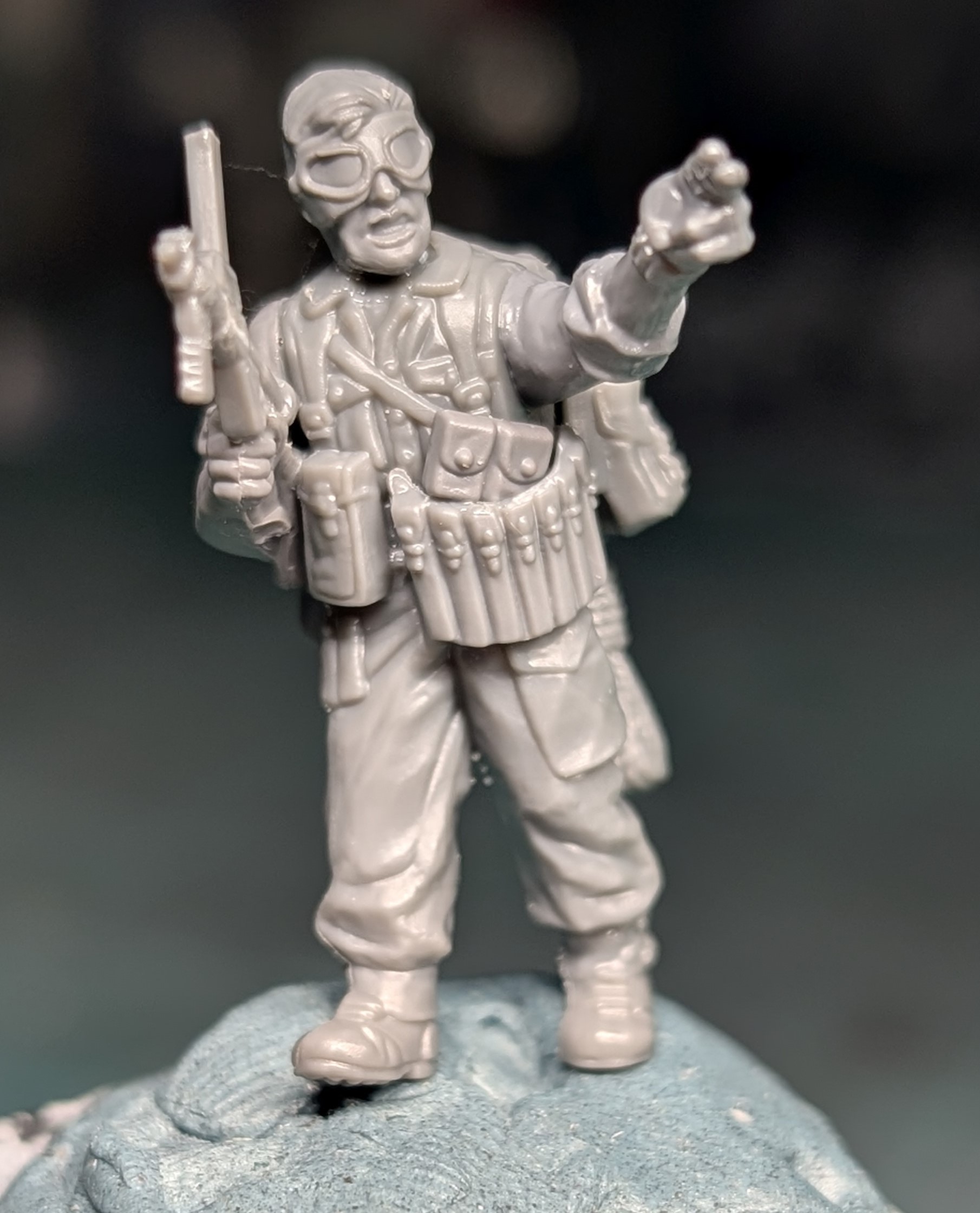
Our plastic ranges offer plenty of opportunities to add character. Mixing components from our many compatible kits, adding small field repairs, scavenged equipment, or unique weathering effects all help bring your story to life. A few creative touches can make a standard infantry squad feel distinct and truly like your army. In addition, incorporating a few components from K47 kits will instantly transport your troops to the front lines of 1947!
Ultimately, Konflikt ’47 rewards imagination. The war has already changed, and your soldiers should reflect that change on the tabletop. Every squad tells a story, and once the dice start rolling, that story becomes their purpose on the hellish battlefields of the Rift war.
The Tactical Gaps They Fill
Once you’ve decided what story your infantry tell on the tabletop, the next question becomes what role do they serve once the shooting starts? Every nation’s riflemen fill gaps that their Rift counterparts can’t. They’re the ones holding ground, soaking fire, and keeping your force functional when the more exotic units are off earning glory and winning medals!
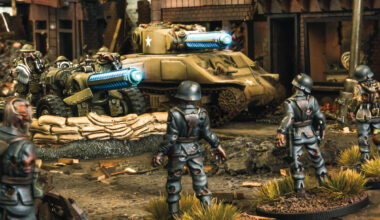
Whether you’re running Commonwealth Riflemen to anchor a line of Tesla-equipped Cromwells or Soviet conscripts rushing objectives while the mighty Ursus Infantry punch holes in the enemy formation, these squads are what keep your army honest. They don’t rely on Rift energy to get the job done, just discipline, a sense of duty, and a rifle at their side.
Objective Holders
The first question they can answer is relatively simple: they are cheap infantry and so can march up to an objective and then try to keep their heads down long enough to score it at the end of the game. I would much rather have a 78-point Veteran Rifleman Squad holding an Objective, as this frees up my 162-point Fireflies to apply their not inconsequential firepower where it’s needed on the table. Throw in a couple of BAR’s and they are still only 90 Points but are now throwing dice at range, and are just as resilient as their Firefly brethren.
Monster Hunters
Basic Infantry squads make an ideal home for Anti-Tank Launchers. Whether it’s British PRIAMs, Axis Panzerfausts, Japanese Yoroi-kumi, Soviet RPG-1s, or American ATRDs, the principle is the same: at 5 points per model, they give your riflemen the tools to survive in a world of horrors.
While the Shaped Charge rule loses some of its punch against Walkers and Power-Armoured Infantry (halving its Penetration to +3) it still hits full-force against Rift-spawned horrors like the Shreckwulfen, damaging these beasts on 2+.
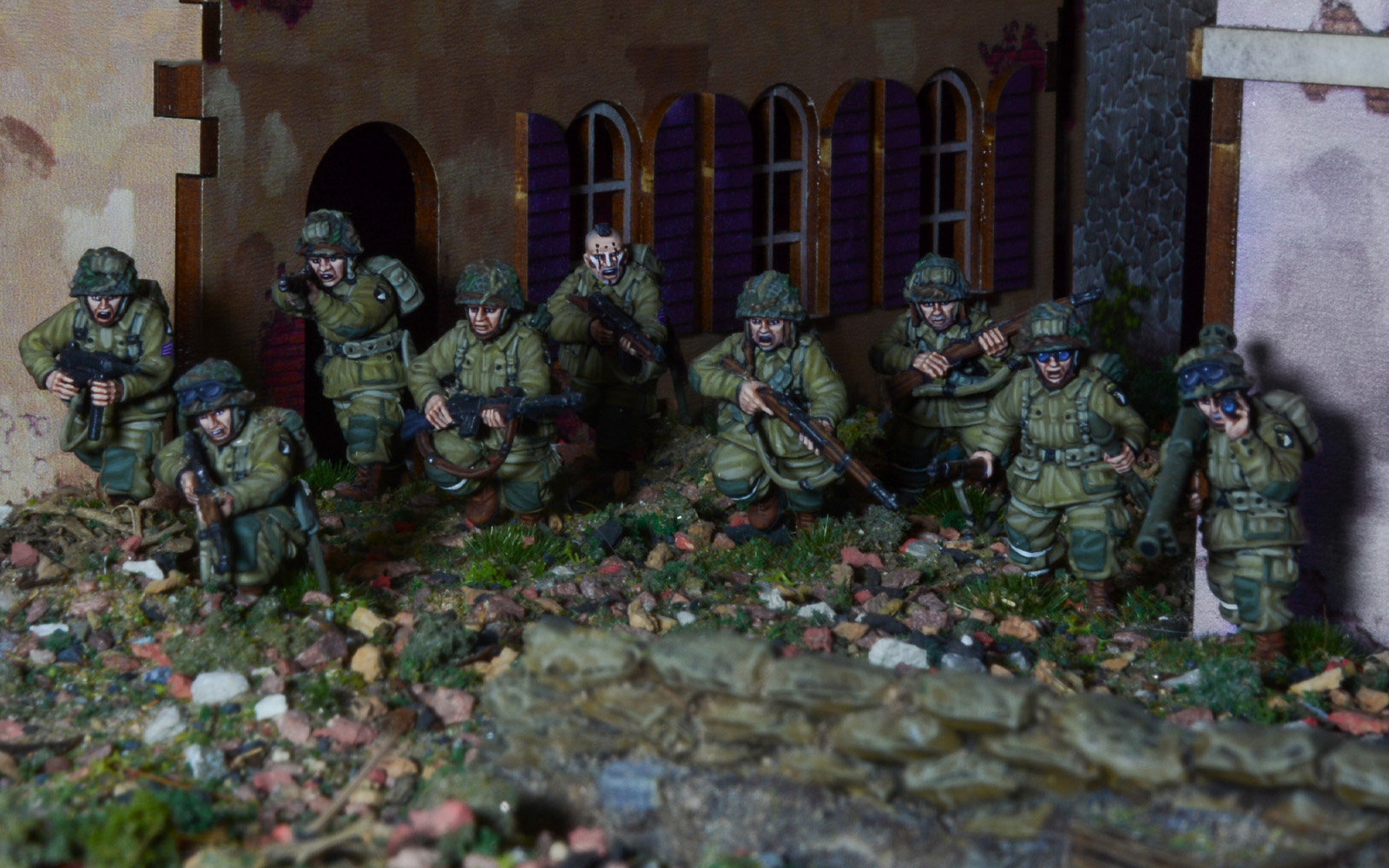
A small squad using the Anti-Tank Launchers special rule, which allows you to unleash all your ammunition in a single volley of d6 shots (up to the current unit size), can be a serious threat to these elite monsters. Add a point of Luck from an officer for reliability, and aim to fire from within 6″ to gain the Point-Blank to hit bonus. Even a modest 75- to 90-point squad can become a nightmare for small, high-value Rift infantry in this way, letting these ordinary soldiers punch well above their weight.
The Cost of Attention
Veteran infantry may be expensive on paper, but the value they bring is not always measured in firepower. A ten-man Veteran squad at 13 points per model, or 14 when upgraded with Stubborn, can become an anchor unit that is far harder to remove than its cost suggests.
In my own games, I have been running a Veteran Volksgrenadier squad with two SMGs and Stubborn, mounted in a Hanomag. It is not there to win firefights outright, rather its job is to claim ground and force choices. By pushing up early, dismounting onto an objective, and then letting the Hanomag screen the line of sight, the squad becomes a tough, frustrating problem for the opponent. Unless they commit Rift-tech or dedicated assault troops, it often takes several activations to clear them, and if that is happening away from the core of my force, all the better.
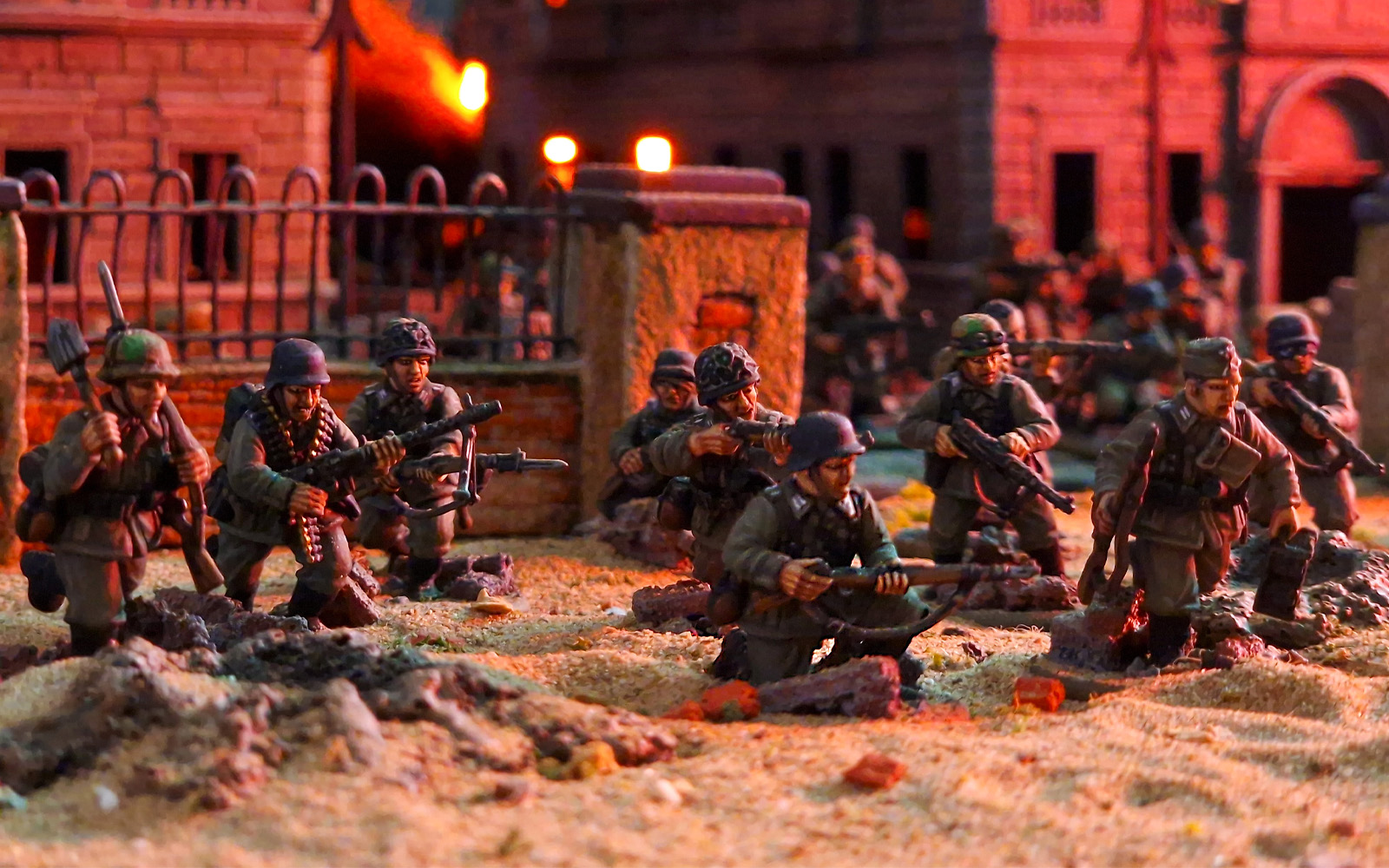
In Konflikt ’47, where every activation counts, that kind of unit is priceless. Every Order Die your opponent spends trying to dig out a handful of Veterans is one they are not using on your key assets. They do not just absorb fire; they absorb focus. That wins games.
The Desperate and the Damned
Not every unit on the battlefield is made up of disciplined soldiers or even volunteers. Most nations, apart from the United States, have access to the Shirkers squad upgrade when taking their Basic Infantry as Inexperienced. This ‘downgrade’ reduces the cost of each model by 2 points, but at a heavy price — Shirkers always count Pin markers as double, and must take an Order Test every time they are issued an order, even if they are not Pinned.
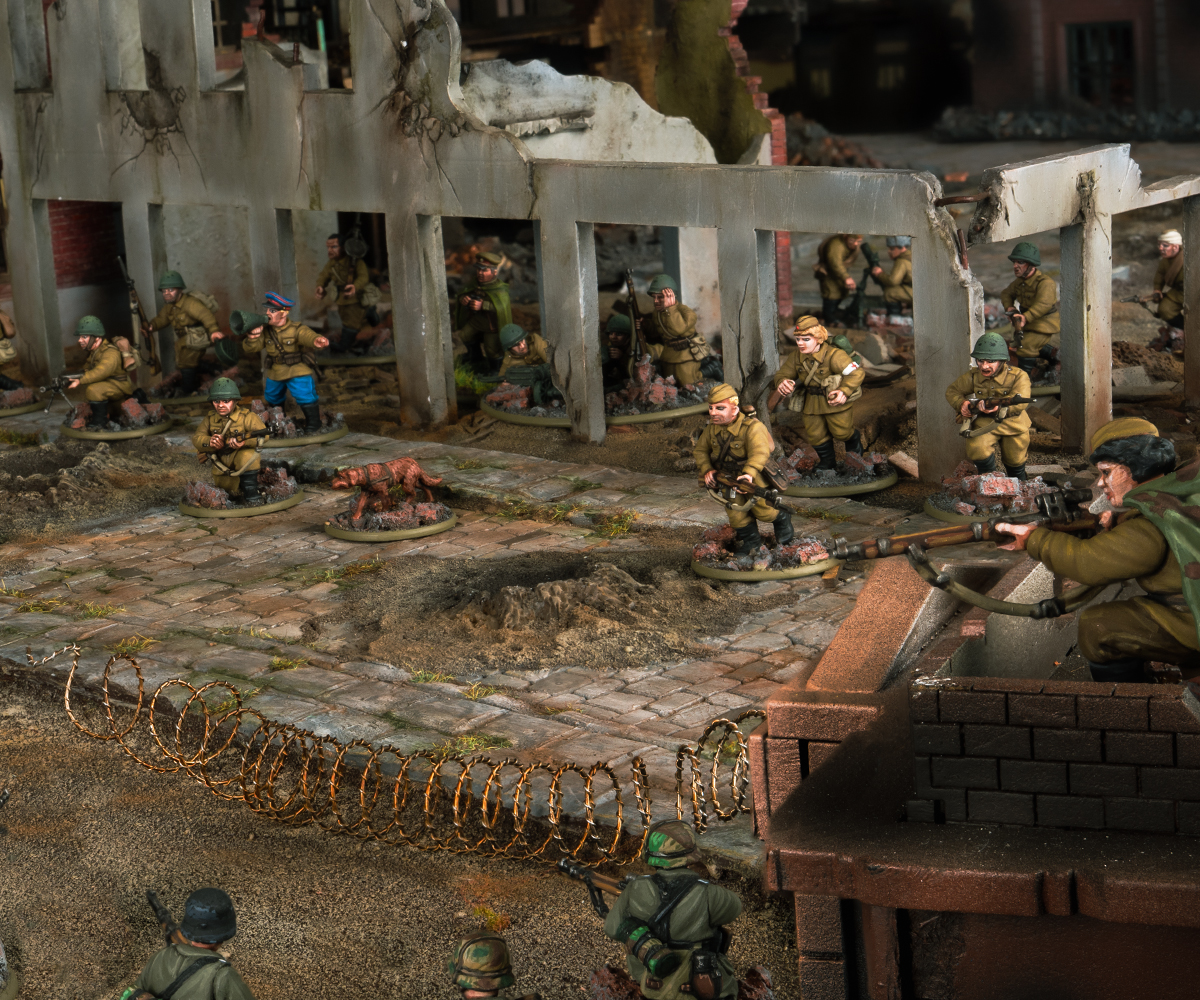
On paper, that sounds like a disaster waiting to happen, and often it is! However, there are situations where these reluctant troops can still have a role. A full twelve-man unit of Shirkers costs just 60 points, making it the cheapest way to put boots on the table. They are unreliable, but in missions where holding an objective is all that matters, sheer numbers sometimes outweigh quality.
Used correctly, they can sit in cover on a backfield objective, soak up enemy fire that would otherwise be aimed at your specialists, or simply force your opponent to divert attention to deal with them. They will not win the war on their own, but sometimes they can quietly win you the scenario.
Correct Tools for the Job
Basic Infantry may not tear open armour the way specialised Rift-tech squads can, but they still bring a surprising amount of utility when you equip them correctly. Several nations can upgrade their squads with tools that help you control space, force movement, and threaten light vehicles or dug-in infantry.
British and American forces can upgrade up to three rifles with Rifle Grenades, granting Indirect Fire and HE 1”. It’s a small change that adds a flexible harassment tool, letting your squad chip away at targets behind cover or pin down advancing Infantry. Japanese Rifle squads take a different approach: while they can only upgrade two rifles with Rifle Grenades, they can also add two Light Mortars to the unit, giving you a rare four indirect shots from a single squad. It’s a potent way of projecting pressure across the table without relying on heavy support choices.
When upgraded to Engineers, all nations’ Basic Infantry gain access to an Infantry Flamethrower. While it demands careful handling, it gives your squad the ability to deal with fortified Infantry and even threaten armoured targets through morale pressure. A Flamethrower carried by a dependable, scoring unit adds real bite to an otherwise straightforward Infantry choice.
These upgrades don’t turn Basic Infantry into a frontline anti-tank solution, but they plug important gaps. A few inexpensive tools can meaningfully widen the situations your Infantry can solve, and that’s often exactly what your assault platoon needs.
The Company They Keep
Basic Infantry are far more than filler for your Assault Platoon’s optional slots. They are the connective tissue of an army, appearing across multiple formations and supporting the more glamorous units that define Konflikt ’47.
Fielding a Recce or Engineer Platoon is a great way to boost your numbers without cutting into your Specialist Infantry. Platoons like the Artillery and Heavy Weapons formations also add tools to your toolbox which are often crewed by Basic Infantry. These units might appear underwhelming at first glance, but a Heavy AT Gun is still flinging a Pen 6 shell 72 inches across the battlefield!
From the 6-pounders and PaK 40s on the front line, to the howitzers thundering from the rear, it is these same soldiers who keep the weapons firing. Even the most advanced Rift-tech force still needs men to carry shells, haul ammunition, and follow orders under fire. Without them, the line collapses, no matter how many mechs you bring.
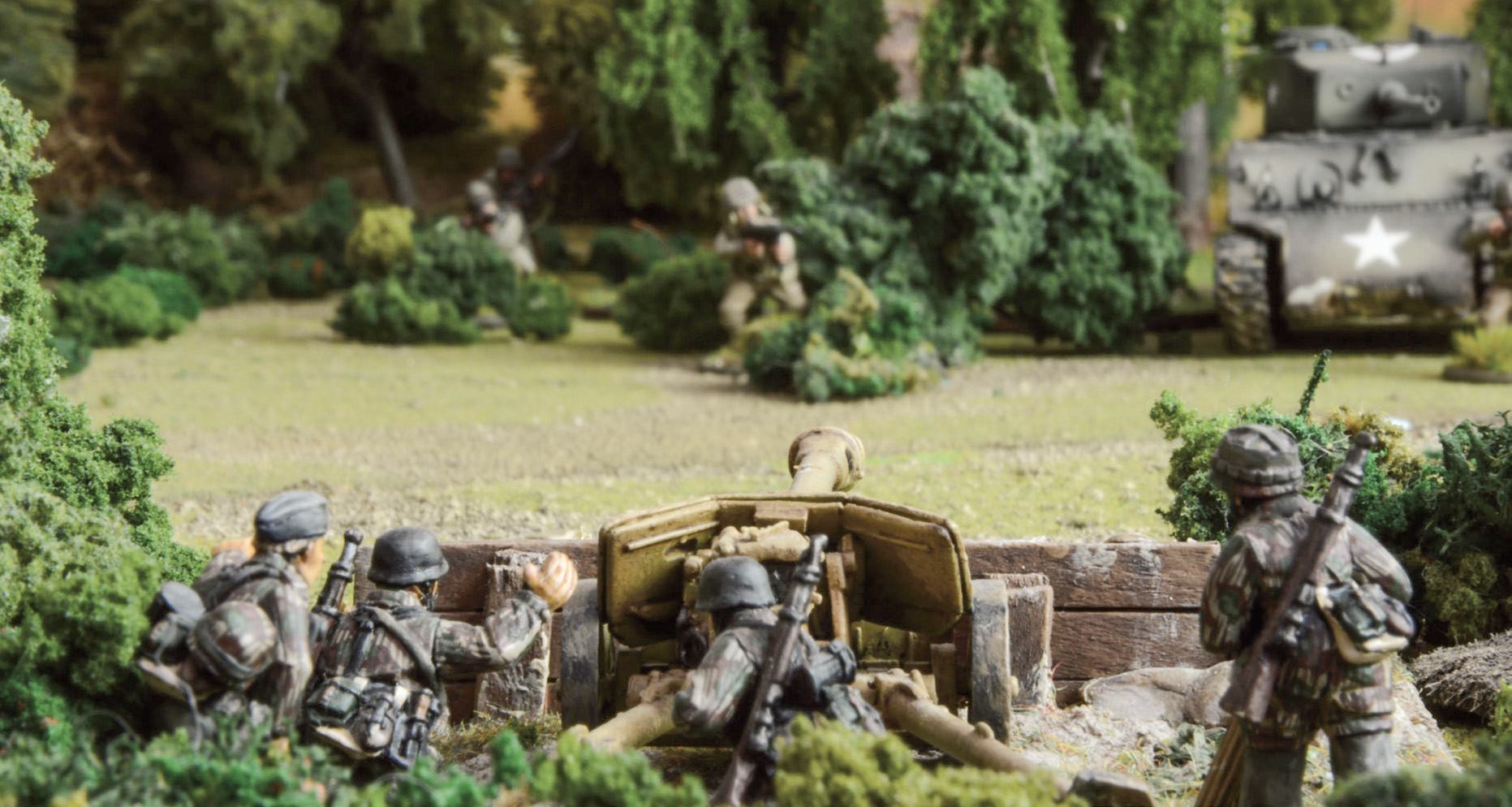
It might be tempting to think of them as ordinary, but that is their strength. They are the foundation upon which every innovation and experiment in the Rift war rests.
This Is My Rifle
At the heart of Konflikt ’47, beneath the walking tanks and crackling Rift energies, ordinary soldiers still fight on. Whether they are veterans holding the line, conscripts dragged to the front, or engineers keeping the guns firing, they all serve the same essential purpose: to make every Order Die count.
In a world of extraordinary weapons, there’s still the chance for ordinary men to influence or decide the outcome. That is why, no matter how strange the war becomes, there will always be room for the rifleman.
A previous version of this article referenced an incorrect interaction with the Tough Fighters rule. The recent FAQ has clarified its intended function, and the affected section has been removed to ensure the article remains accurate.
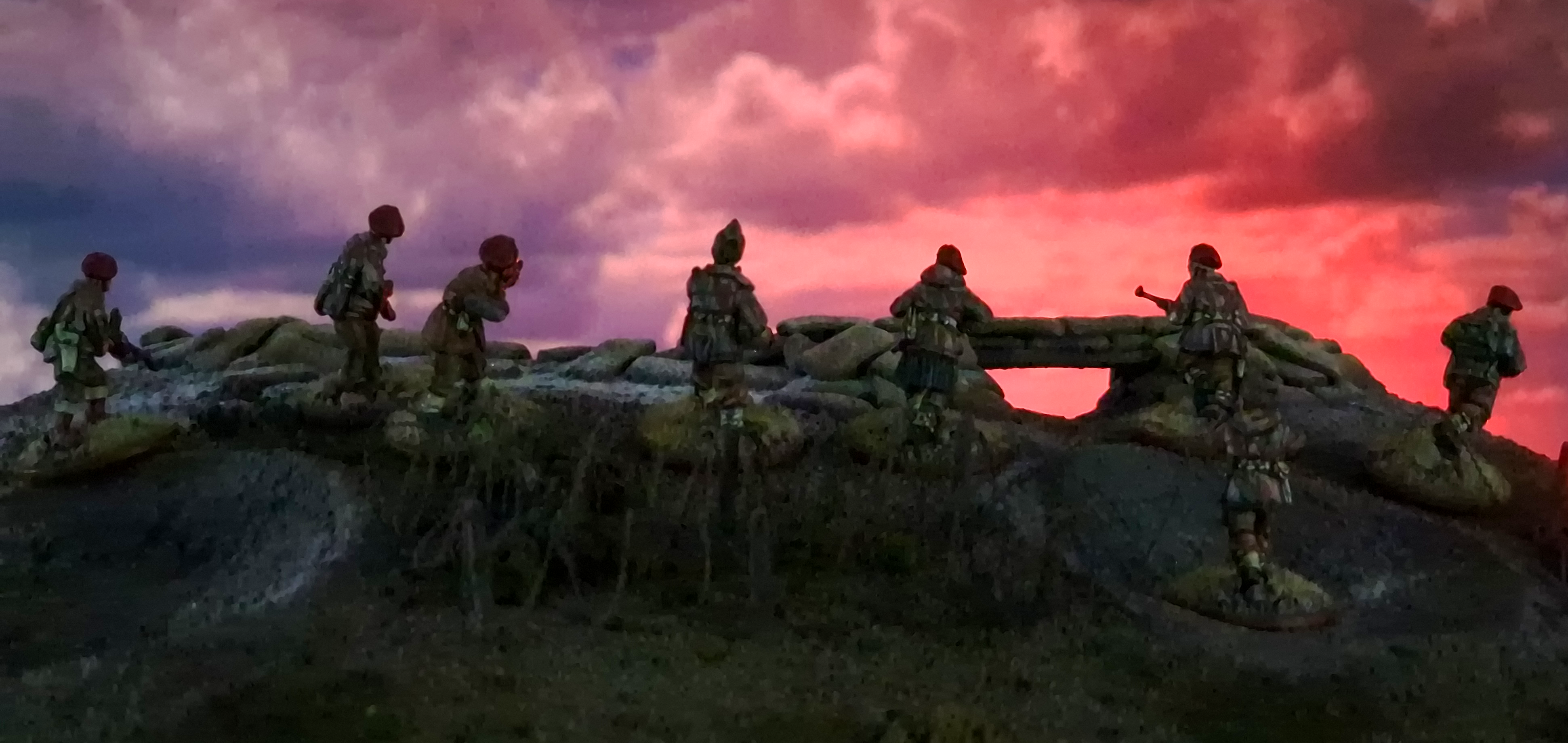
Looking for some Basic Infantry to punch above their weight and support your forces on the Konflikt ’47 tabletop? Our Bolt Action range has an enormous variety of infantry kits, perfect for converting to K47!