Epic Battles: Zulu! pre-orders are well underway. We recently took a look at what you get on the Zulu frame, but it’s hard to have a war with only one side. As it’s the Anglo-Zulu War, the opposition should come as no surprise – let’s meet the British, and their two sprues!
British Infantry
When you think of 19th Century British infantrymen, you think of red coats. In the latter part of the era, those iconic jackets are paired with the pith helmet and Martini-Henry rifle to produce an instantly recognisable image. Naturally, these stalwarts of the British Empire play a crucial role in Epic Battles: Zulu!, and as such are well represented on the British infantry sprue.
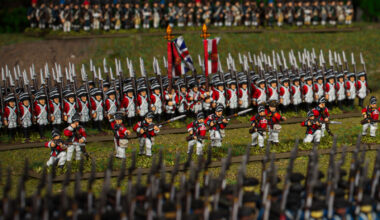
The British infantryman of the period was part of one of the most efficient imperial forces created since the Roman Empire. His equipment, training, and drill had been methodically standardised and modernised in the decades following the Napoleonic Wars, and his tactics on the battlefield remained essentially the same as those employed by his great grandfathers. He would stand in line or square with his comrades and deliver withering volleys of rifle fire into the enemy until they broke, or fix his bayonet to repulse any brave or lucky enough to reach him. By the Anglo-Zulu war, he was also supported by modern artillery and early machine guns, with his supply lines stretching all the way back to England.
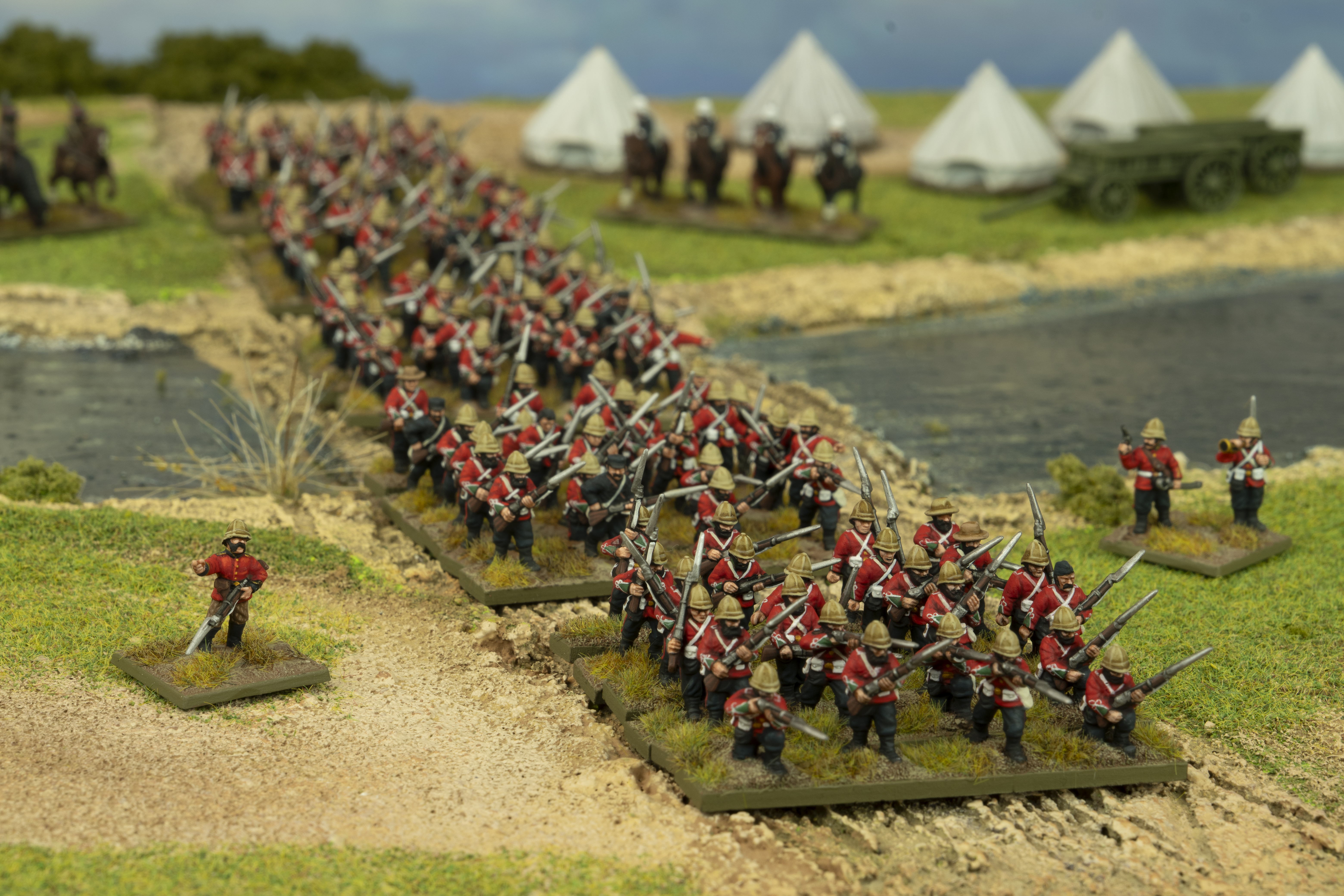
Organised as they had been for the last two centuries into the traditional ‘County Regiments’, British infantrymen marched into Zulu lands with a well-earned confidence in their abilities. However, as they would find out at Isandlwana, the Zulu army proved to be an incredibly dangerous foe.
British troops were not alone in their advance into Zulu lands. Alongside them marched the men of the Natal Native Contingent (NNC). These auxiliary troops were drawn from Basuto and Mpondo tribesmen, longtime enemies of the Zulu kingdom, and were organised along broadly the same lines as a British infantry battalion, with African troops commanded by European NCOs and officers.
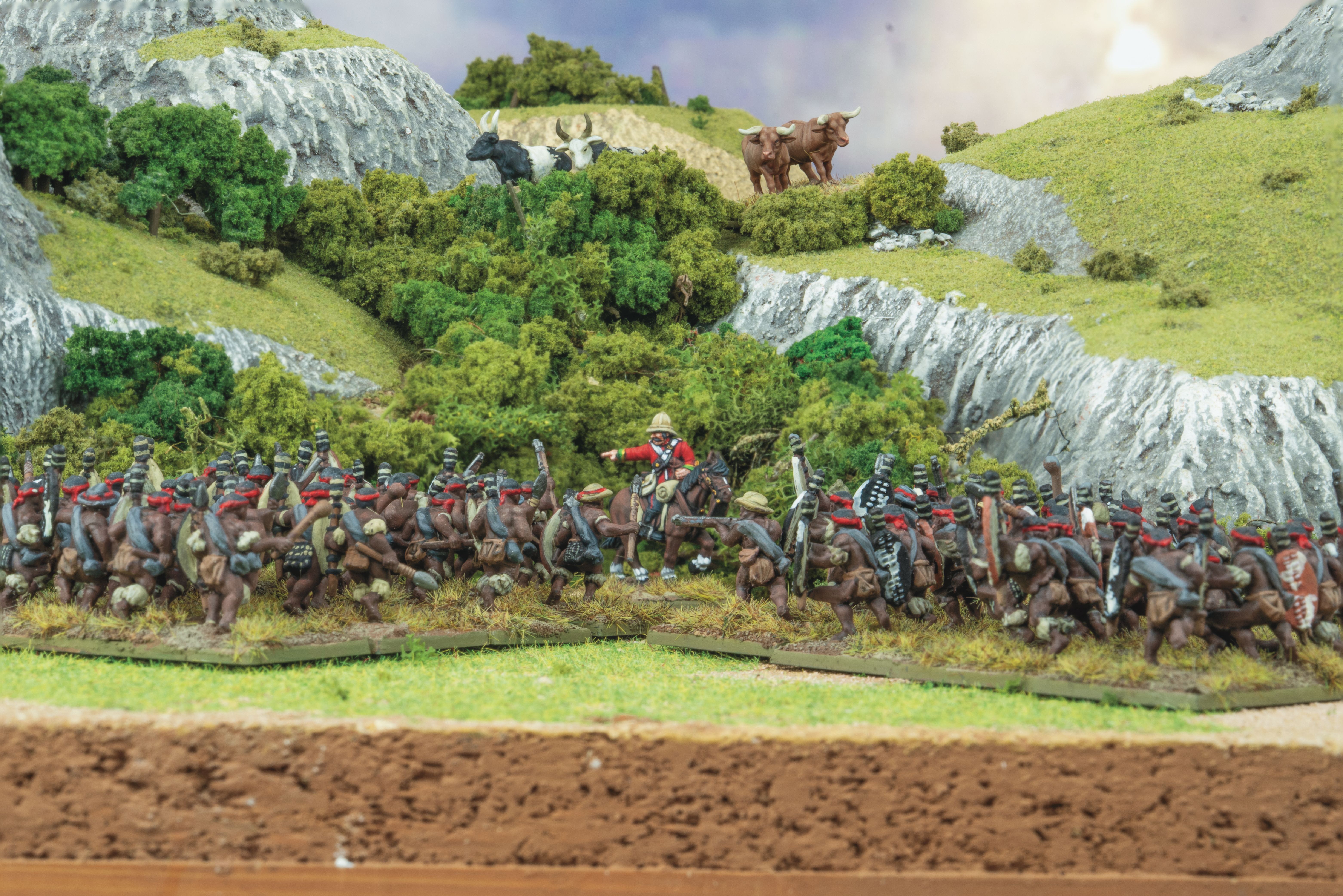
Training was extremely basic, and no uniforms were issued to the rank and file – instead, they fought in their traditional garb which was almost identical to that of a Zulu warrior, being issued with strips of red cloth for headbands as an identifying mark. The vast majority of the men were not issued with firearms as the British establishment feared a native uprising, and instead wielded the assegai – only around one in five men had a gun, and those who did were issued with extremely little ammunition.
The NNC were not utilised particularly effectively by British overall Lord Chelmsford, who put them to menial tasks over the objection of their field commander, Colonel Durnford. At Isandlwana, the NNC infantry fought hard and sustained heavy casualties, including Durnford, while at Rorke’s Drift all but a few of the NNC present fled at the first sign of Zulu forces. Of course, with you in charge of them on the tabletop, that need not be the case!
With that information in mind, let’s take a look at the sprue itself:
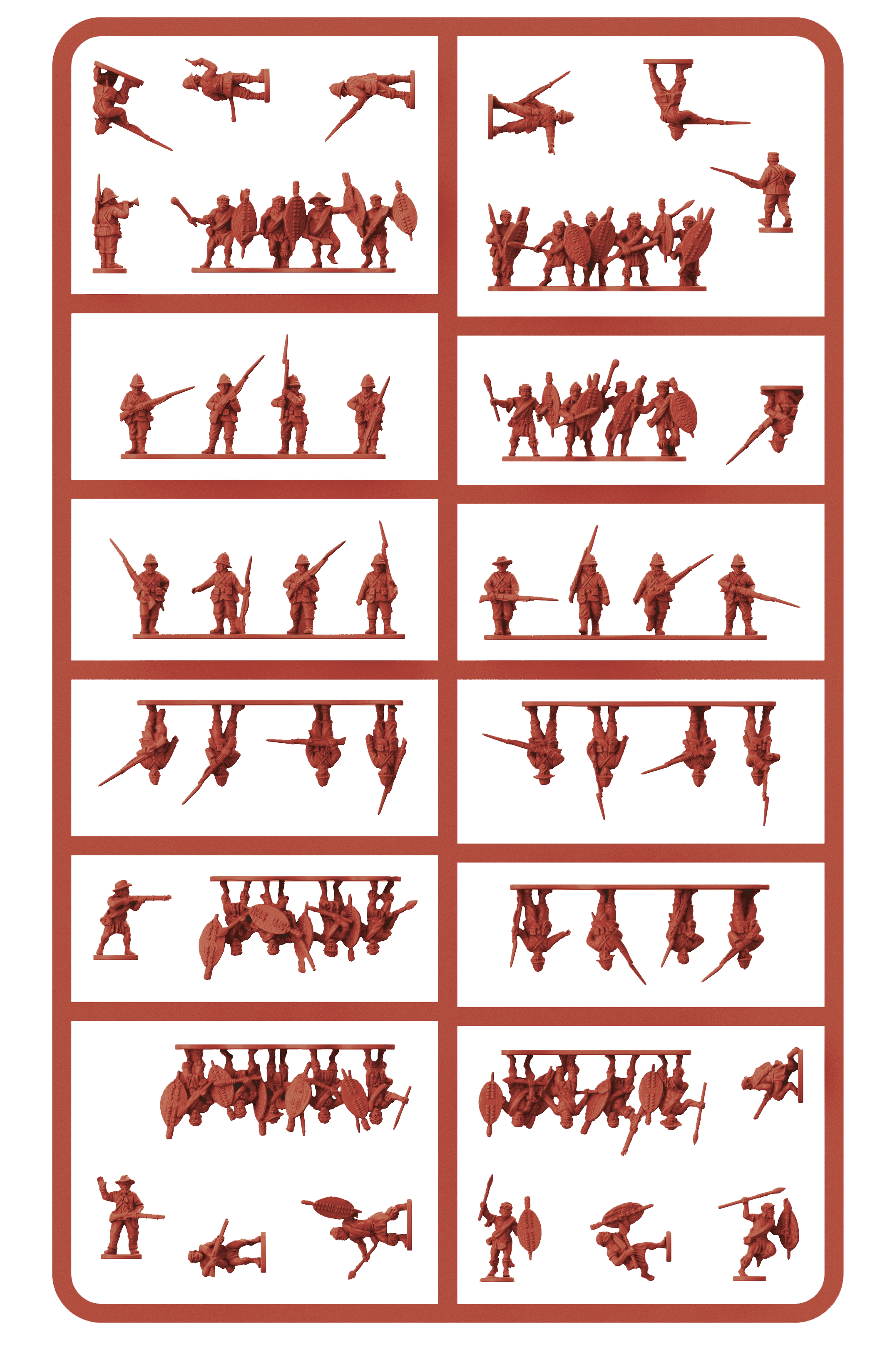
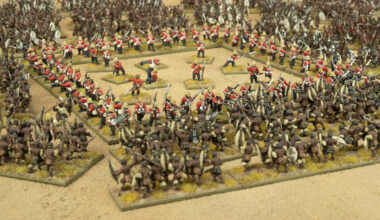
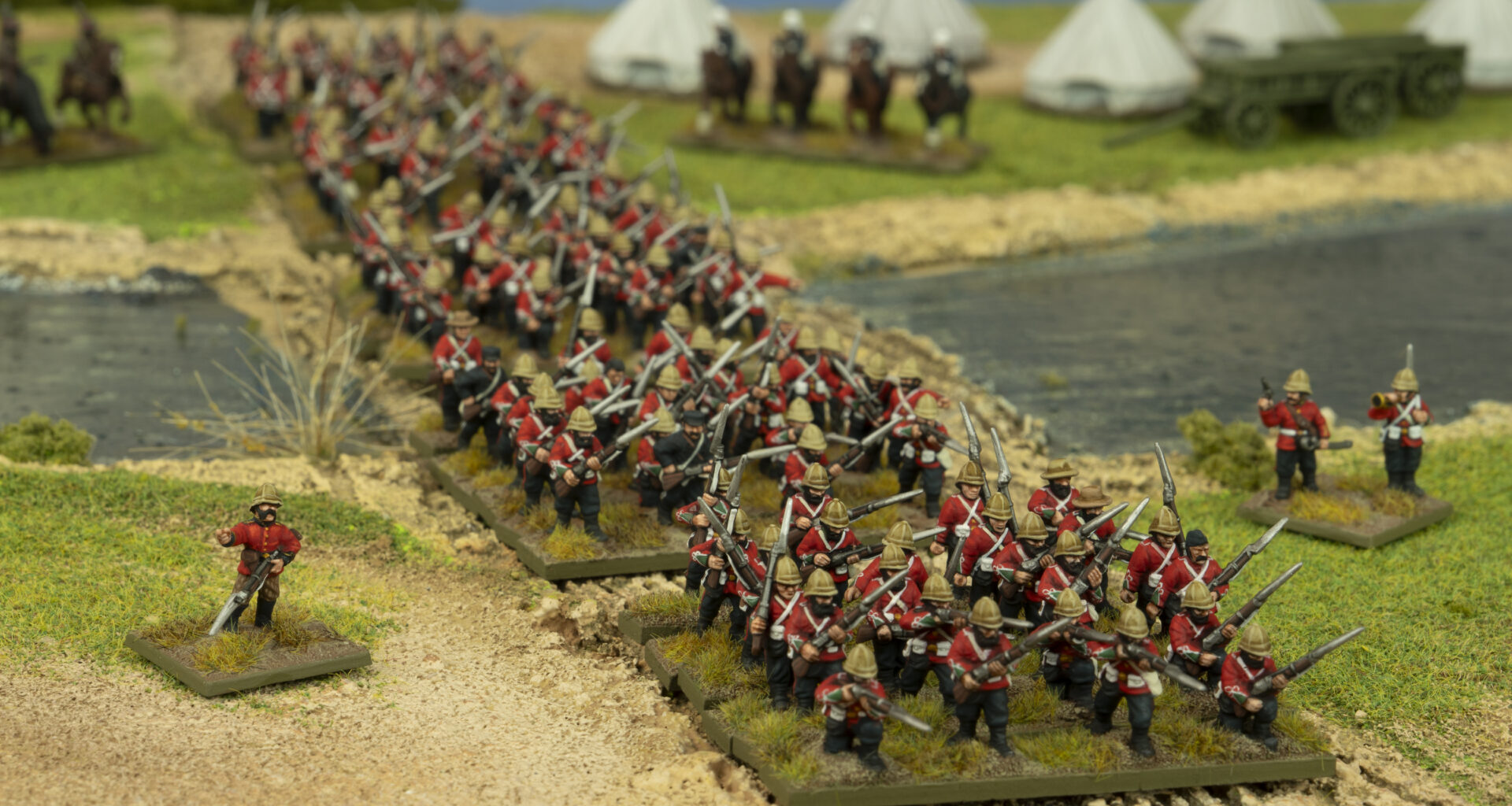
We’ll start with the redcoats – six strips of four men each, with Martini-Henry rifles in a variety of poses, plus eight individual figures including an officer, NCO, and bugler. The mixture of poses is designed to give each sprue the appearance of being in the thick of the action, after the order for independent fire has been given. It also ensures that the models actually form properly, which would be impossible to do with a ‘face-on’ firing line. Don’t worry, though – two of the individual figures are posed with levelled rifles, and if you want to make stands all in the same pose, it’s a trivial job to clip them up and re-base them! We’ve gone for the vast majority of the figures in pith helmets, but there are a couple of little details in there, including a forage cap and slouch hat, to add just a little flavour to your collection.
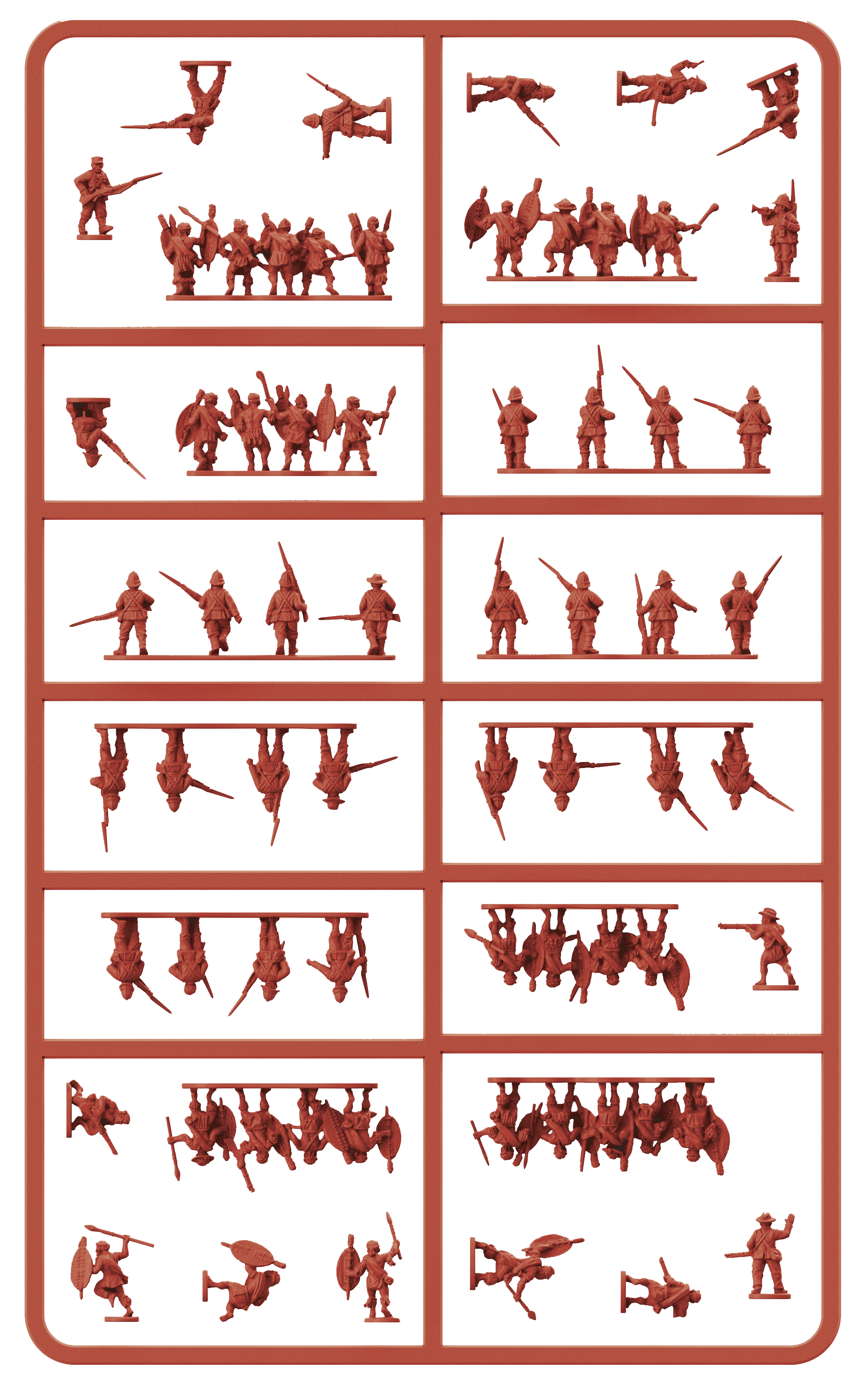
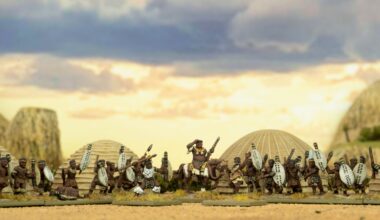
You’ll notice the British infantry are spaced further apart than any of our other Epic Battles ‘line infantry’ stands, as we’re dealing with a period where shoulder-to-shoulder formation was firmly on the way out, and this makes it incredibly easy for you to mix and match models to create your own unique bases if you want to. On the other hand, the Natal Native Contingent troops are, as you might expect, basically the same as their Zulu counterparts, in much closer formation. You get six stands of these chaps as well, plus eight skirmishers (including a European NCO), and at first glance they look just like the opposition. However, these sculpts all include the red headband to mark them out, and a slightly different mixture of weapons.
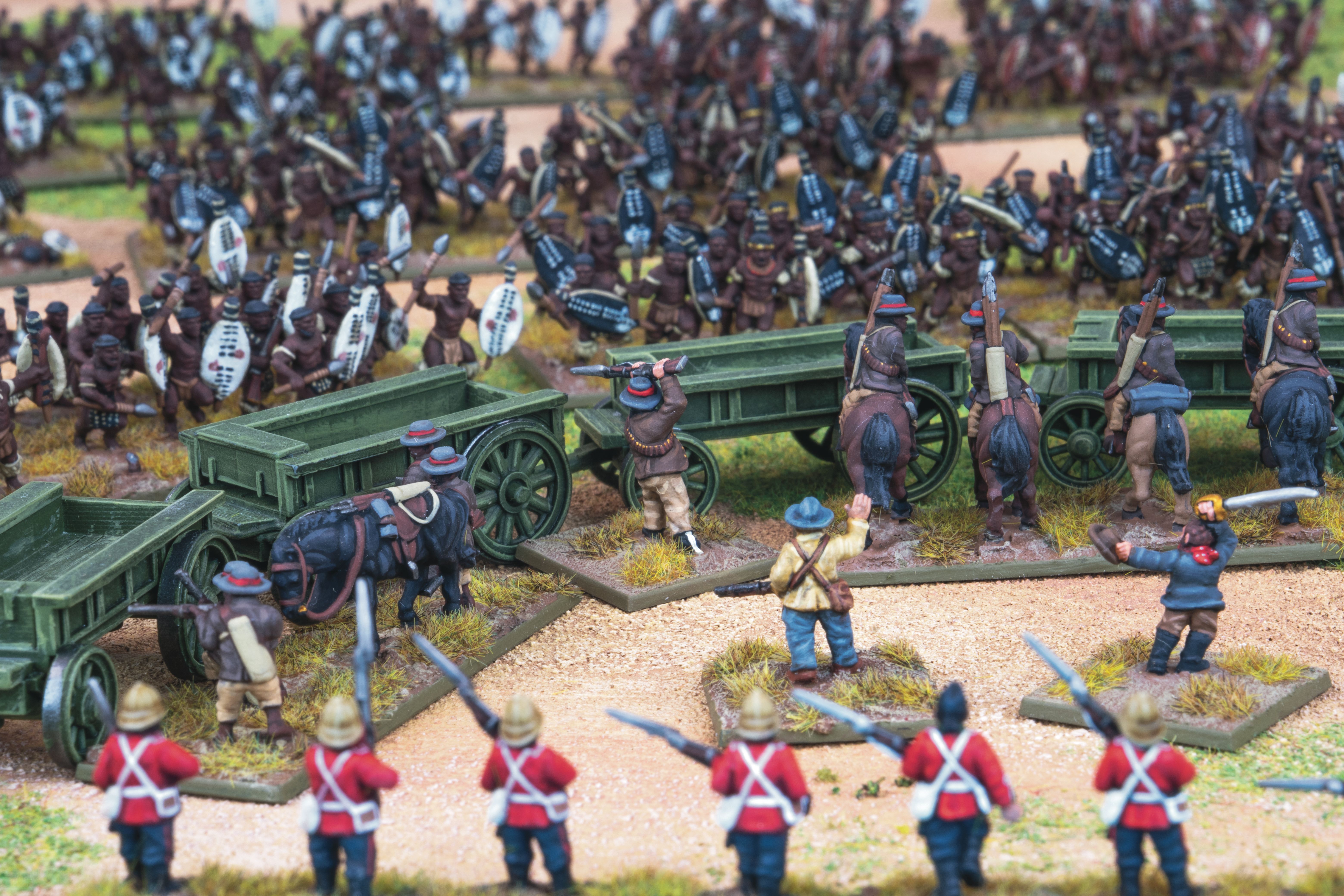
The British Army Brigade box gives you enough models to field three large units each of redcoats and NNC, making it the ideal core of any force for battles large or small.
British Cavalry
The British aren’t done there, either! They’ve also got a half-size Cavalry frame, giving you even more tactical options when building your force. Cavalry in the Anglo-Zulu War was a very different beast from its earlier heyday, being used essentially as mounted infantry for scouting and patrolling duties, dismounting to fight in the vast majority of cases. The British Cavalry sprue gives you two (technically three, but we’ll get to that!) flavours of horsemen to protect your flanks, easily distinguishable by their uniforms.

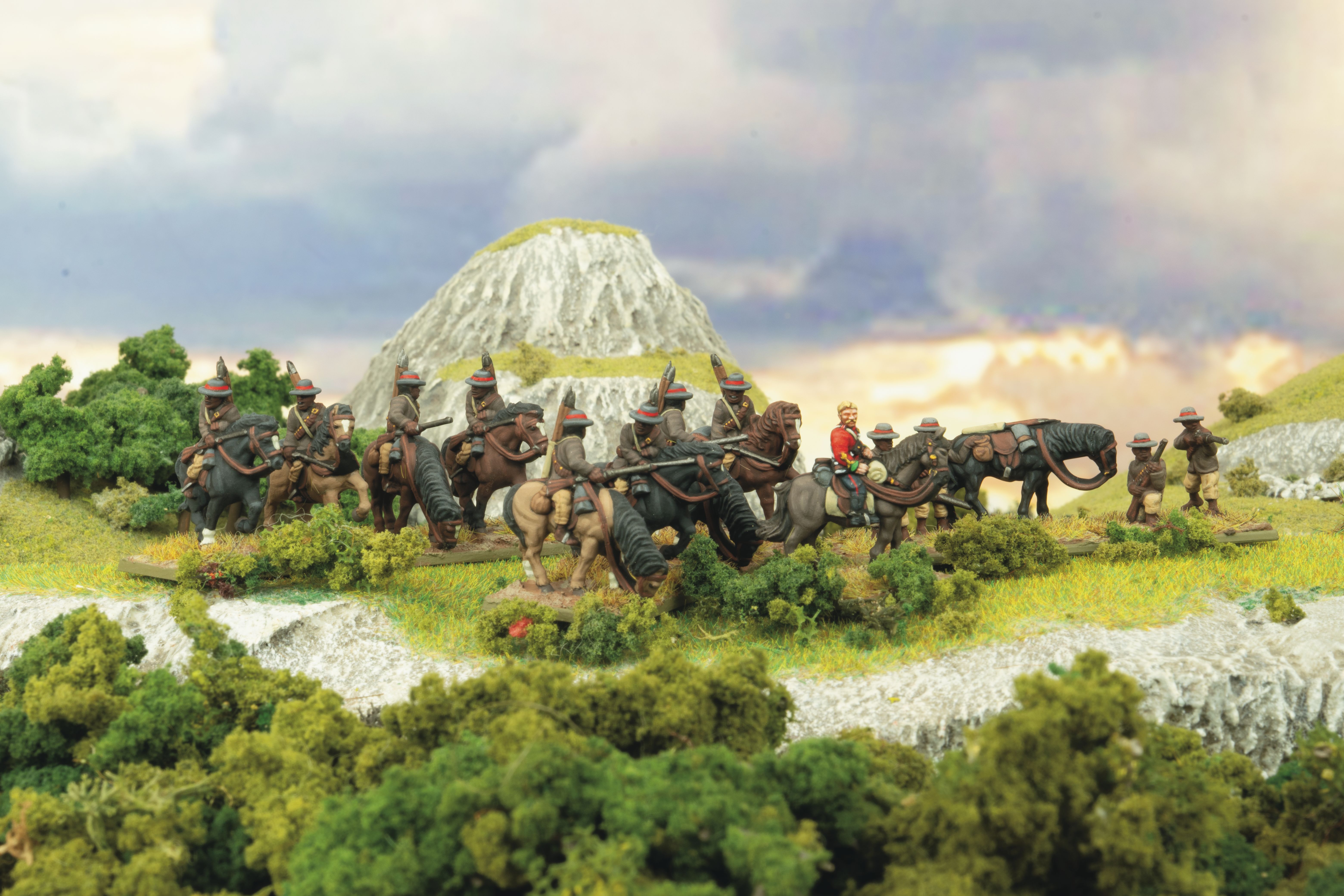
We’ve already met the infantry of the Natal Native Contingent, and the NNC also fielded a cavalry contingent – the Natal Native Horse. These men were much better equipped than their infantry counterparts, with every man having a uniform and carbine, and were certainly the better-regarded of the two formations. They largely escaped the massacre at Isandlwana (thanks in no small part to their horses!), and continued to serve all the way through the war.
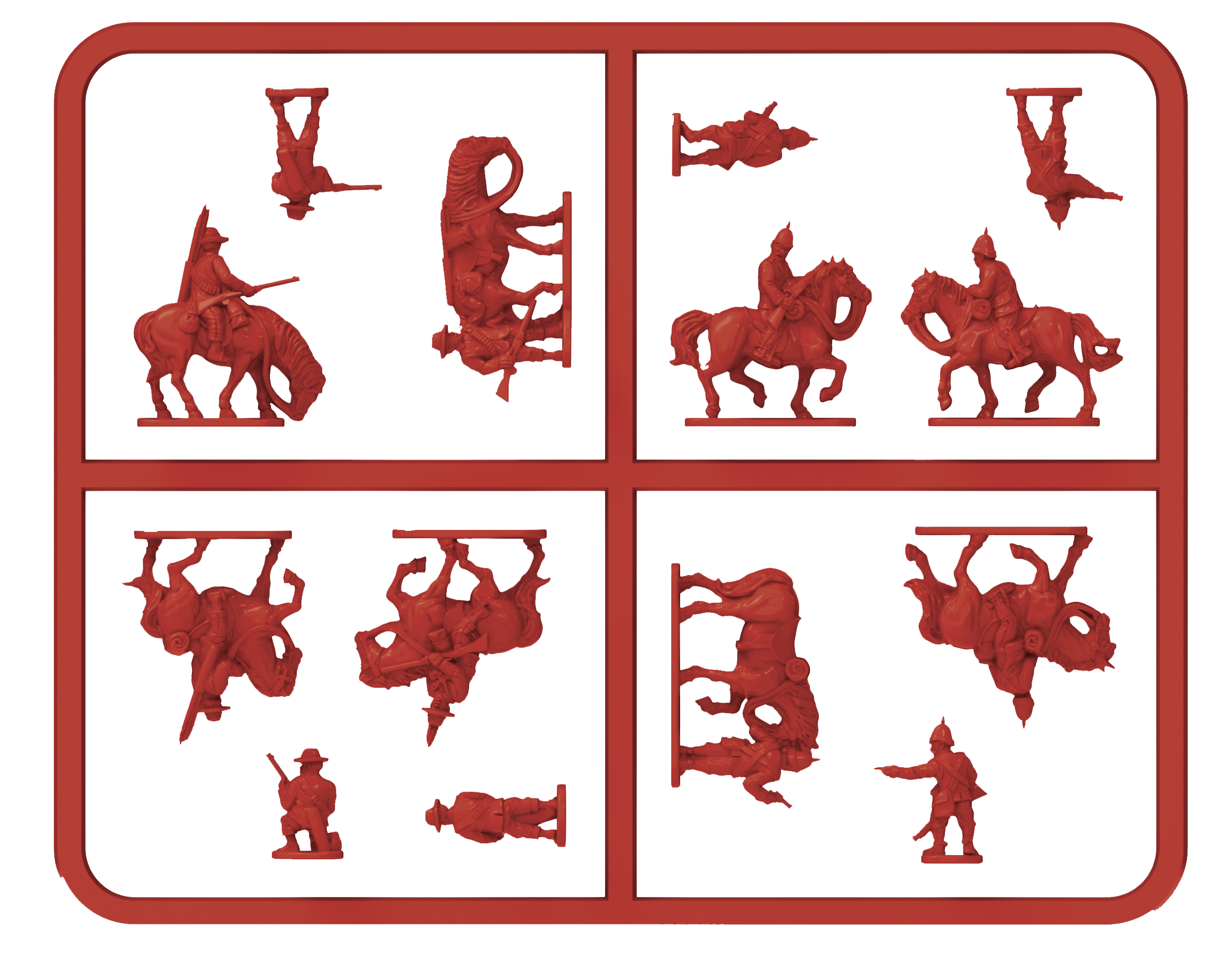
The NNH troopers are recognisable by their simpler uniforms and broad-brimmed hats, and you’ll find three mounted and four dismounted (including a horse-holder) on the sprue. If you want to bulk out your NNC infantry, you can also use these dismounted troopers as infantrymen, representing NCOs, and mix them into your units!
Joining the Natal Native Horse on the sprue are the rather more snazzily attired Natal Mounted Police! As the name suggests, they were the colonial police force of Natal, and also fought during the Anglo-Zulu war as cavalry. Their European uniforms and pith helmets (complete with spike) ensure they stand out on the battlefield, and also allow them to stand in for the regular Natal Carbineers with whom they shared the field at Isandlwana. Just like the NNH, you get three mounted and four dismounted, and all of these cavalrymen can be found in the British Army Cavalry Brigade box, which gives you enough models to make three small mounted units and four small dismounted units of each type!
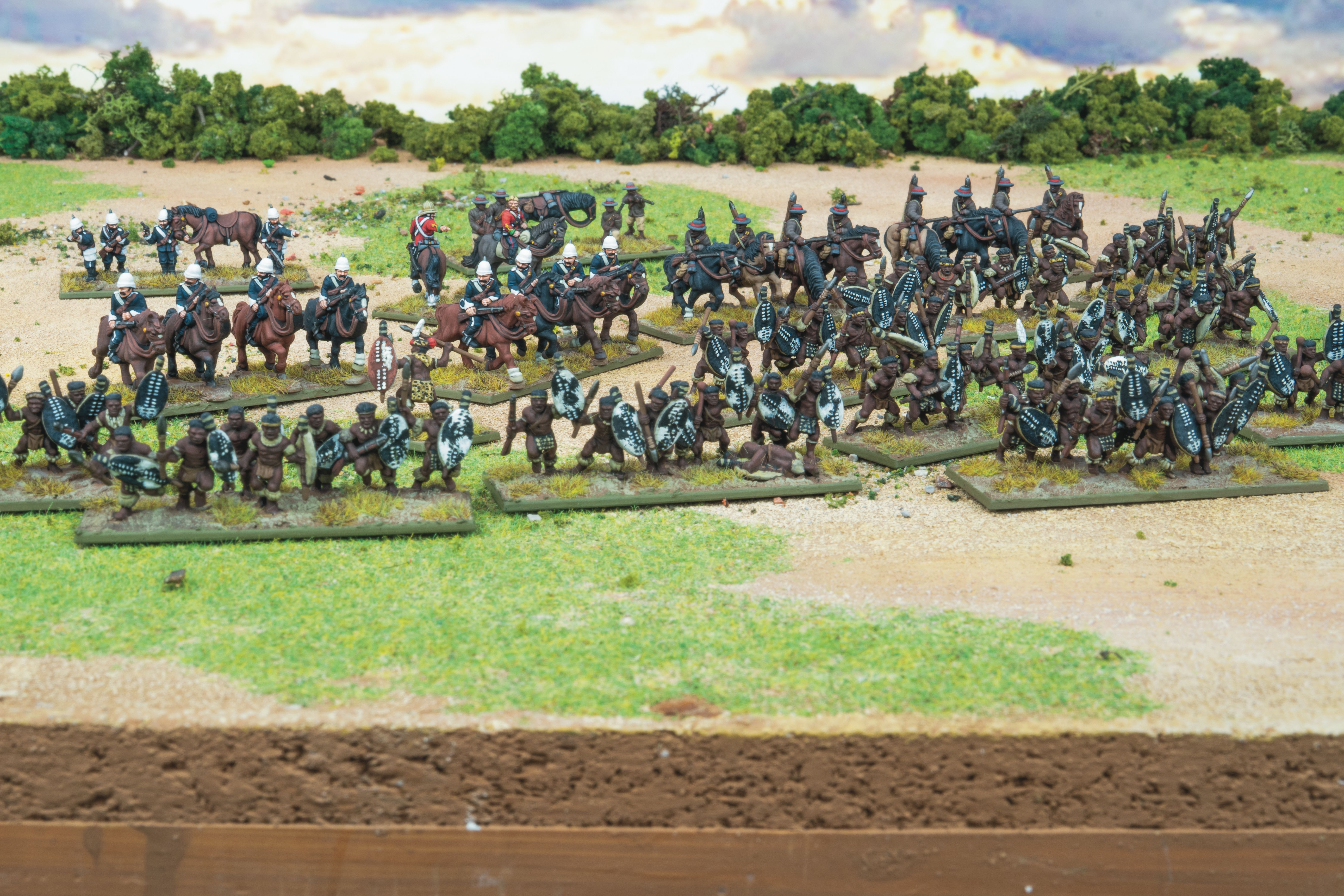
Armed with plastics like these, you’ll be ready to face down the armies of the Zulu Kingdom! The Empire calls – will you answer?