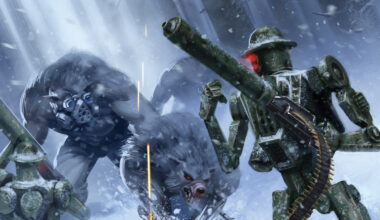
In our last instalment, we explored the Heroes of Konflikt ’47, individuals whose courage, luck, or mastery of the Rift could turn the tide of battle. However, not every act of heroism comes from flesh and blood…
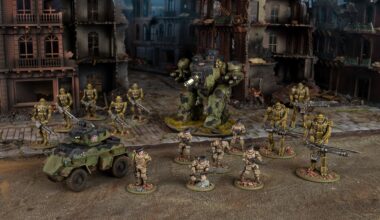
As the Rifts reshaped key areas of military technology, nations began to build their own legends in steel and servos. From lumbering heavy walkers to agile scout mechs, these machines have become the new face of warfare. In this article, we’ll explore how walkers shape national playstyles and the commanders who rely on them, and look at how you can use them to best effect.
What Makes a Mech?
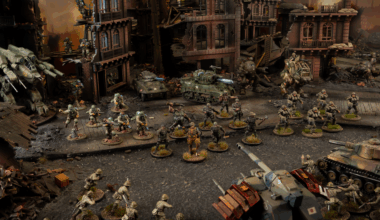
In Konflikt ’47, mechs form the armoured backbone of many forces. While each nation fields its own distinctive designs, this article looks at how these towering war machines define a force’s identity and battlefield approach. These are the walking tanks, support platforms, and experimental Rift-powered constructs that can bring a nation’s doctrine to life.
From a rules perspective, mechs are Vehicles defined by their method of movement rather than a unique unit type. Each mech’s entry lists a Size – Light, Medium, Heavy, or Super-heavy – along with how many legs it has. Those two details determine its Damage Value and whether it follows the Two-Legged or Multi-Legged rules. Most mechs are piloted by a crew, though a few lighter or experimental designs use the Single-Crewed Walker rule instead. Together, these simple traits define how a mech behaves on the table.
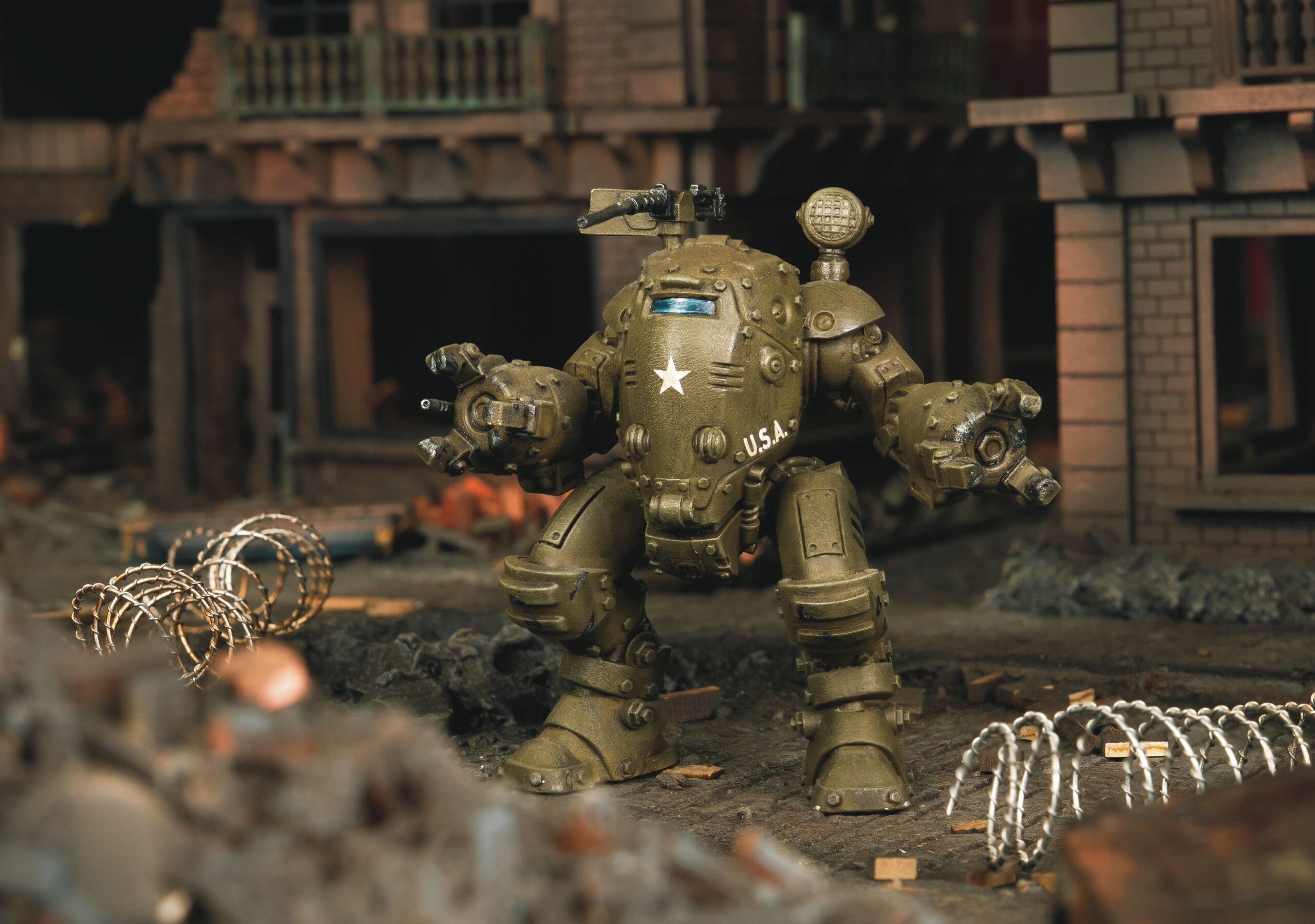
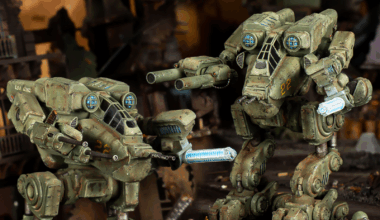
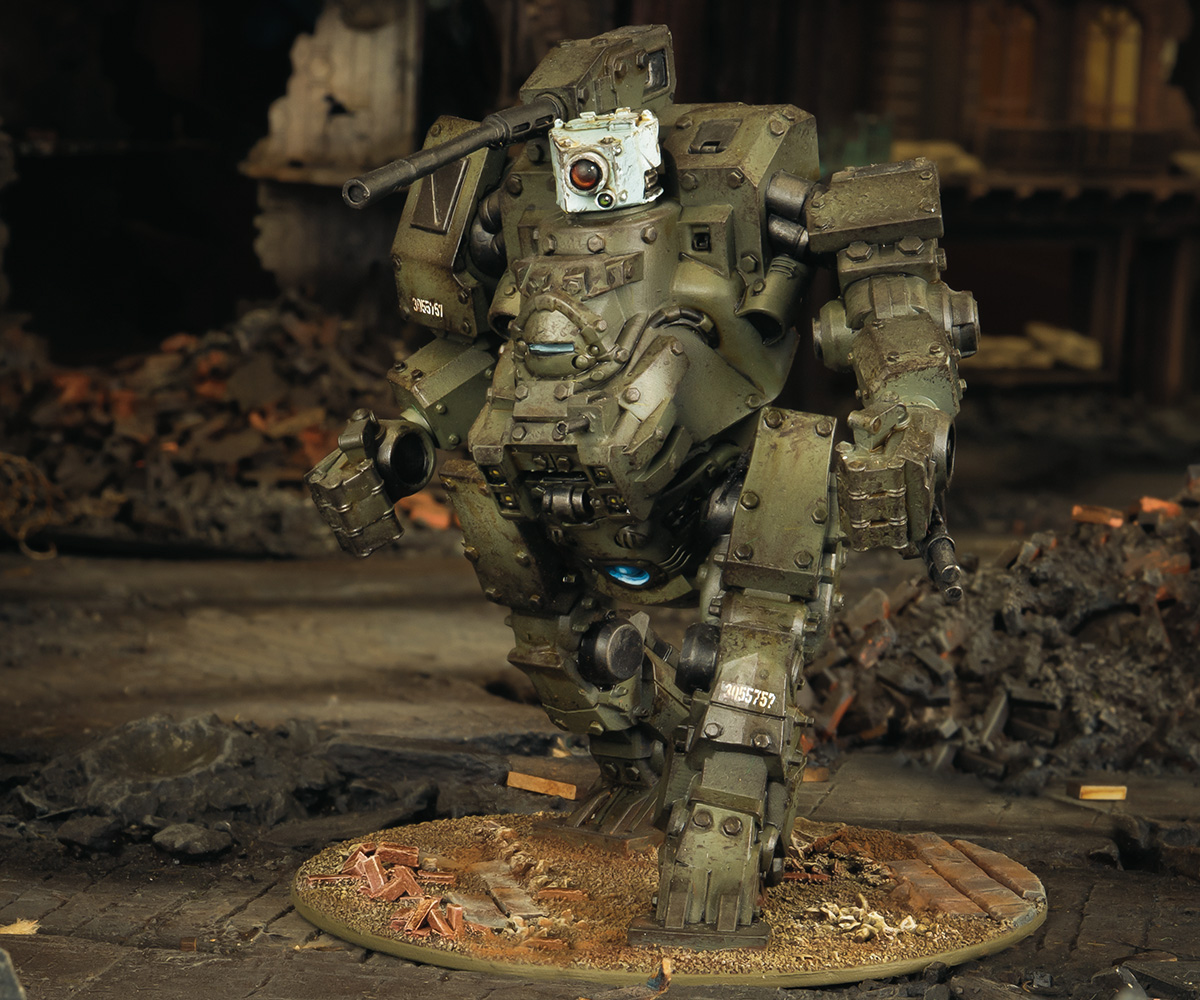
Similar to the vehicles of pre-Rift design, mechs can feature turret-mounted or hull-mounted weaponry. Where they truly differ is in their arms. As well as being deadly weapons in their own right, they offer other advantages:
- Arm-Mounted Weapons can fire into both the front firing arc and the arc associated with which side of the mech they are on (so the left arm can fire in the front and left arcs, for example), and gain the Flak rule.
- MMGs and HMGs mounted on an Arm Mount do not have their number of shots halved for being vehicle-mounted.
All of these traits define what a mech is. Now it’s time to look at how they come together on the table, starting with how they move!
Movement
As previously mentioned, mechs follow the rules for Vehicles in most things, as they have facings, damage values, and movement rates. It’s the additional rules like Multi-Legged or Jump that really define how their movement feels on the table.
Two-Legged Walkers
Most vehicles in Konflikt ’47 are limited to a single 90° pivot during a Run move, which can make them feel sluggish once they’ve committed to a direction. Two-Legged walkers change that dynamic entirely. They can pivot up to twice while moving at Run speed, allowing them to weave through cover or swing their hulls toward new targets mid-advance. This agility suits aggressive play, keeping their strongest armour forward while staying mobile.
Multi-Legged Walkers
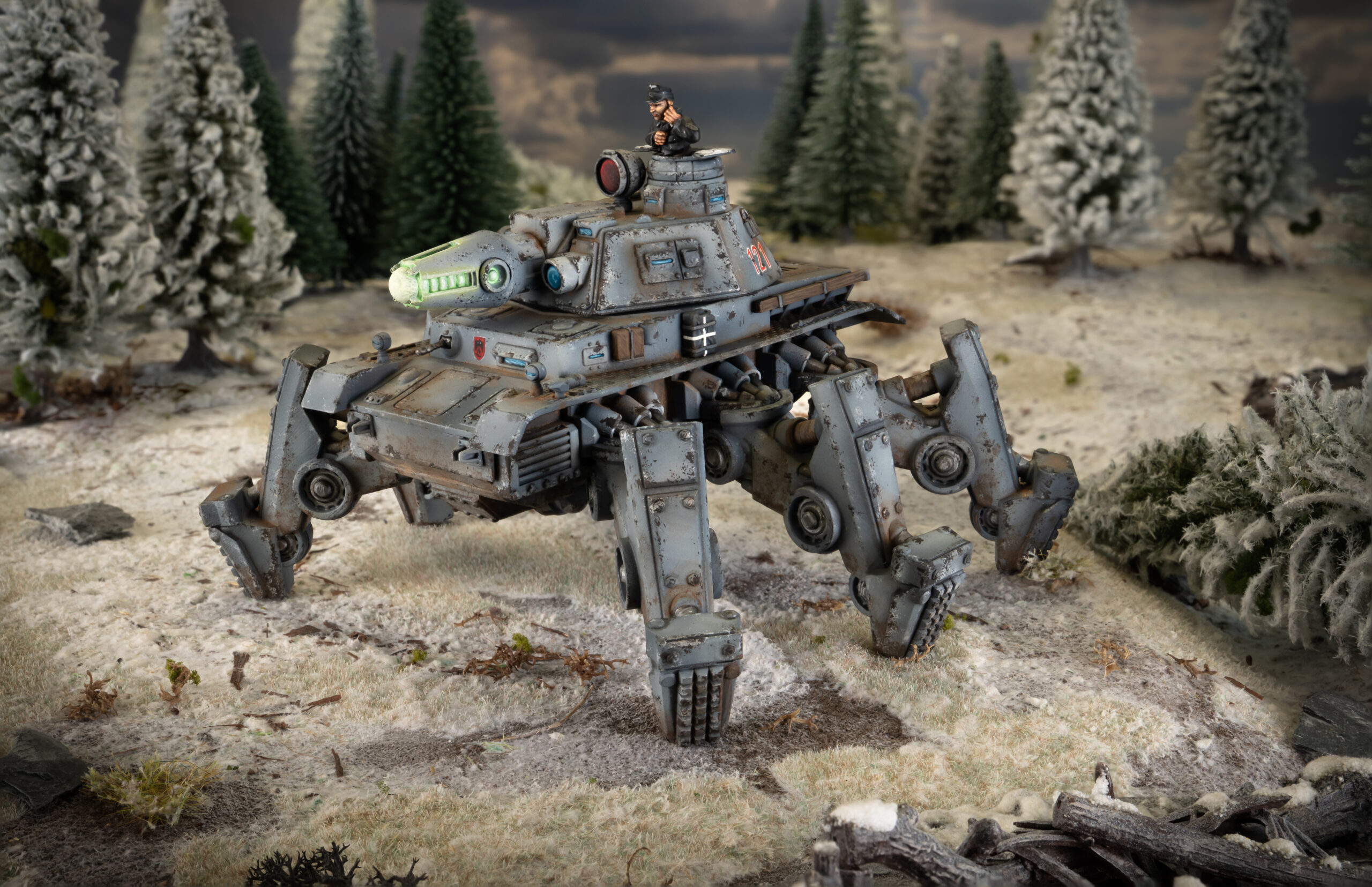
Walkers with four or more legs trade that agility for stability. Their additional legs let them reverse at full speed instead of half. On the table, this means a Multi-Legged mech can withdraw from a dangerous position or realign its firing arc without losing tempo. It’s a subtle but powerful advantage for heavier machines, especially those built around short-ranged or forward-facing weapons that need to reposition quickly between shots, and benefit from consistent range control.
Jump Movement
Some Mechs – particularly the latest Rift-enhanced designs – use thrusters or repulsorlift systems that grant them Jump Movement. When issued a Run or Advance order, these mechs may choose to Jump instead of moving normally. They only get one pivot (up to 90°) at the start of the move but then ignore all intervening terrain, effectively leaping over obstacles, buildings, or rough ground!
If using a Run order, they must land in open ground; with an Advance order, they can finish in rough terrain. The trade-off is precision for freedom: a Jumping mech commits to a direction but can reach firing positions other units simply can’t. In practical terms, this makes them perfect for threatening objectives or outflanking static defences, provided you plan your landing zone carefully.
Movement decides where a mech can be, but it’s their weapons that decide what happens when they get there!
Weapons and Firepower
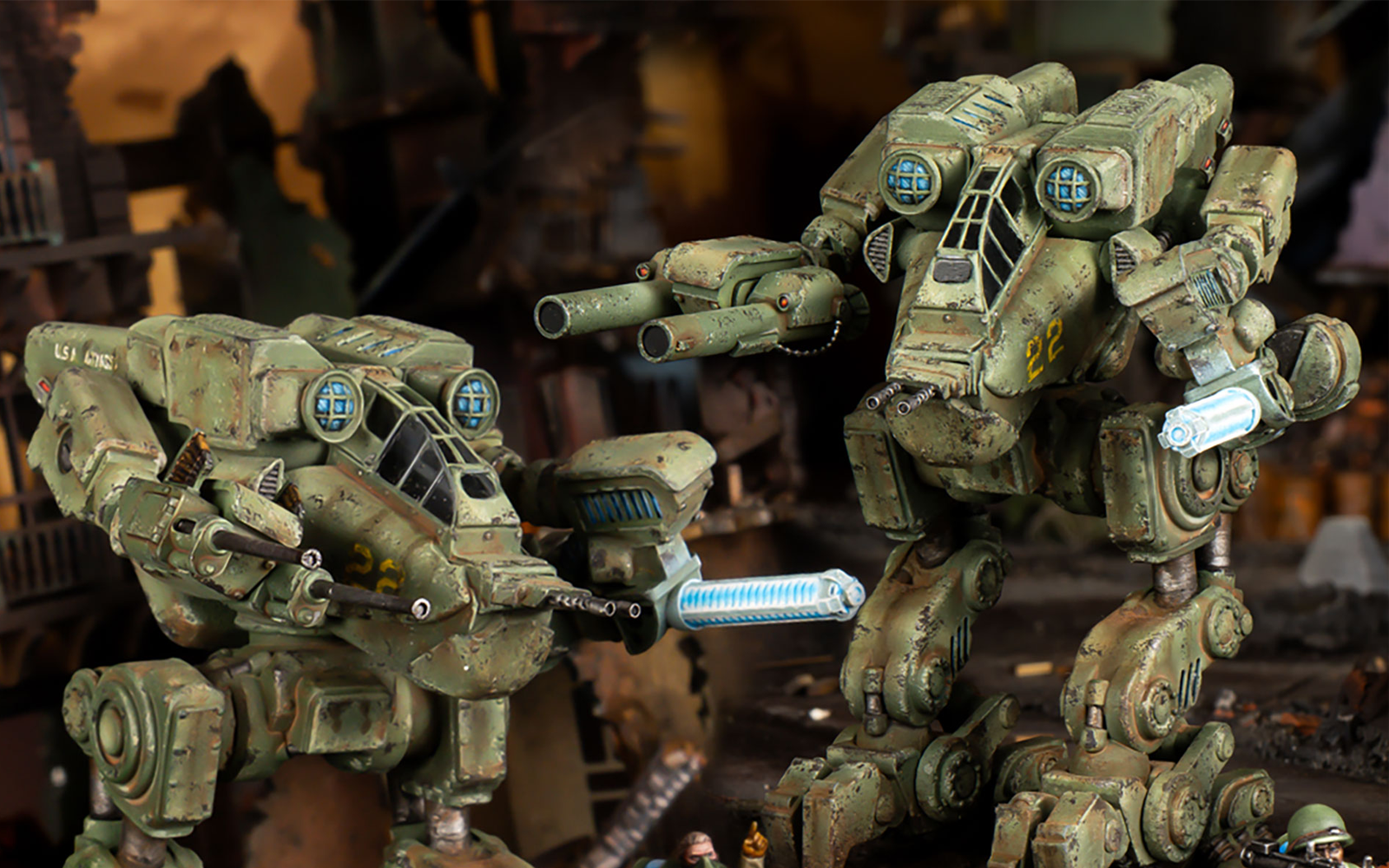
A mech’s true strength lies in the versatility of its weapon mounts. Unlike conventional vehicles, which rely on turret or hull-mounted weapons, Mechs combine those systems with articulated arm mounts that make them deadly and flexible firing platforms.
Arm-Mounted Weapons
Arm mounts offer a versatility unmatched by other options for numerous weapons systems, giving it the ability to bring devastating firepower to bear at multiple angles. Arm-Mounted Weapons gain both the front firing arc and the side arc of the arm they’re mounted on, and also benefit from the Flak rule.
While multiple weapons mounted on the same arm must fire at the same target, MMGs and HMGs mounted on those arms fire at full effect, ignoring the rule for being mounted on vehicles. Well-placed arms can dominate wide areas of the battlefield, but poor facing can leave weapons wasted for an entire turn.
Turret and Hull Mounts
Turret mounts remain popular with larger mechs, offering full 360° coverage and allowing a mech to engage threats without changing its facing. Hull mounts, by contrast, are limited to a narrower front arc but often benefit from heavier armour and stability, making them perfect for larger guns that need accuracy over reach.
Close-Combat Systems
While most mechs dominate through ranged firepower, their sheer mass makes them formidable in close combat. In Konflikt ’47, a mech’s number of attacks in close quarters is determined by its limbs:
- Each Arm provides one attack at +4 Penetration Value (Pen).
- Each pair of Legs provides one attack at +2 Pen.
This pool of attacks is capped at four dice, regardless of how many limbs the Mech has. These attacks can be made when the Mech passes through an enemy unit as part of an Advance or Run order, or reactively when charged by infantry, with the Mech even striking before the charging unit’s attacks are resolved.
This makes mechs extremely dangerous to engage in melee, especially for lightly armoured or inexperienced infantry. Even a light walker can crush attackers outright, while heavier designs with multiple limbs can reliably clear objectives or defend chokepoints through raw attrition.
Other Rules and Upgrades
Beyond their core movement and weapon systems, many mechs feature additional rules or upgrades that refine their battlefield roles. Here are some of the more impactful examples that really shape how a mech performs once the dice start rolling:
- Recce: Seen on lighter mechs like the Vogelspinne, this rule allows them to reverse at full Advance speed and make an Escape reaction when targeted by enemy fire. The Escape move lets the mech advance or reverse out of Line of Sight before the attack is resolved, potentially forcing the enemy to miss entirely. Used well, Recce walkers can bait shots, draw attention, or survive situations that would destroy a standard vehicle.
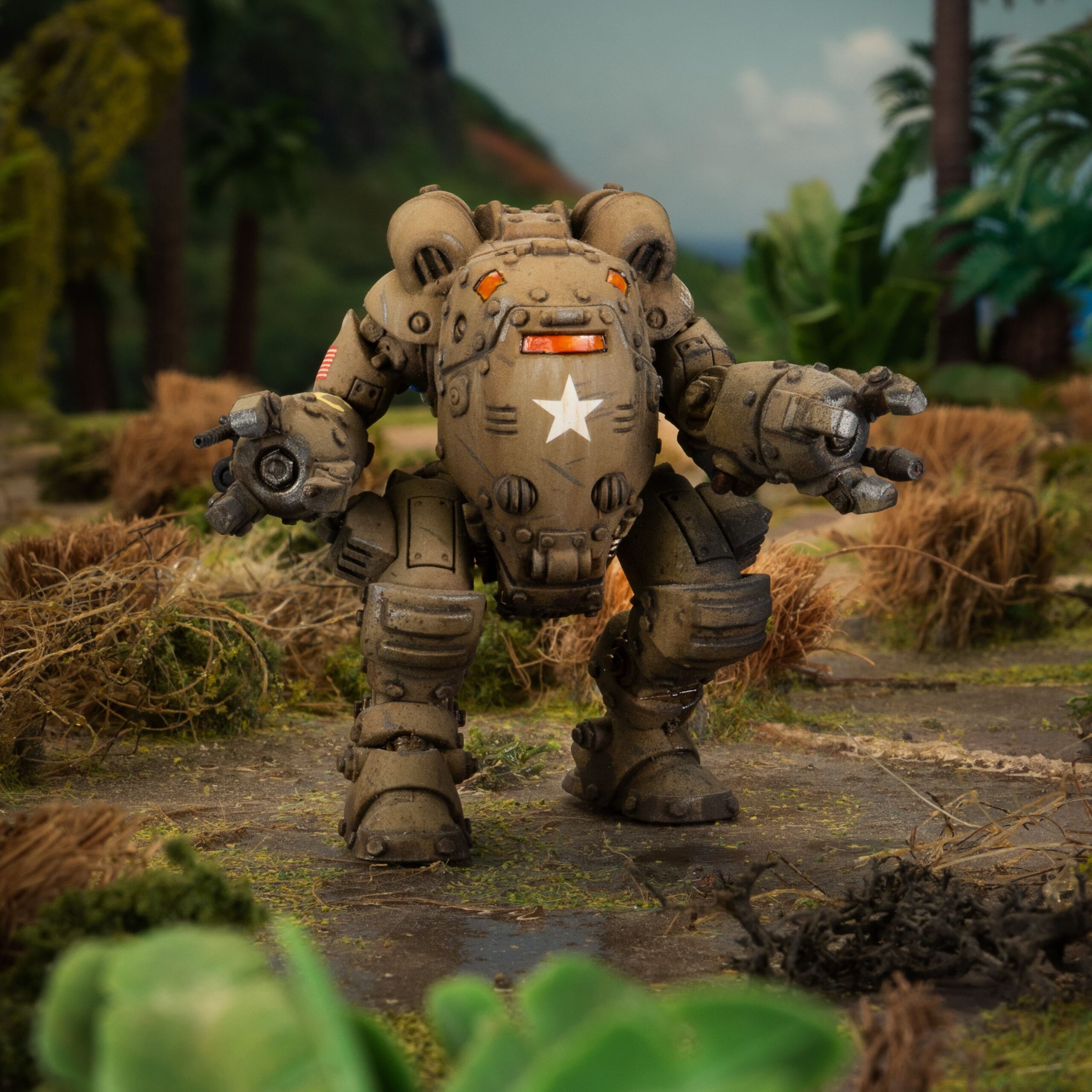
- Reinforced Front Armour: A hallmark of heavier Axis and Soviet designs, it increases a mech’s Damage Value by +1 on its front arc, helping it shrug off fire and survive punishing engagements. The rule isn’t limited to the biggest walkers either, with the US Linebacker making excellent use of it, turning what would normally be a 9+ Medium Walker into a formidable 10+ front-armoured brute.
- Slow: Typically seen on the largest mechs, Slow limits their movement distance but reflects their immense mass and stability. These walkers act as mobile strongpoints, advancing methodically to dominate fire lanes rather than racing for objectives.
Each of these traits highlights how a Mech’s special rules define its battlefield identity, whether it fights as a nimble scout, a resilient gun platform, or a walking fortress.
On the Tabletop
Every nation approaches mech warfare differently, shaped by their technology, resources, and battlefield needs. While they share many of the same core rules, their roles and design philosophies vary widely, giving each army its own distinct mechanical character.
United States
The United States boasts the most diverse range of mechs in Konflikt ’47, fielding everything from agile Jump Walkers who take advantage of the Death From Above Army Special Rule to ignore the -1 Morale Penalty to arrive from reserve, to heavier fire-support platforms like the Kodiak, whose impressive Arm Mounted Light Autocannons and Twin HMGs output unmatched volumes of fire. All are Two-Legged, giving them excellent mobility and freedom of movement. This flexibility makes American mechs ideal for players who value manoeuvre, adaptable firepower, and the ability to reposition quickly under fire.
Axis
The Axis powers favour engineering precision and Rift-enhanced durability. Their Spinne and Vogelspinne designs benefit from the Recce rule, and their Schwerefeld Mastery Army Special Rule allows mechs like the Panzer. IV Ausf. X to begin the game with a Surging Rift Die. The heavier Axis constructs are among the most resilient in the game, culminating in the Wotan, a near-impervious Super-Heavy mech with access to Reinforced Front Armour. Axis mechs reward methodical, positional play, once they’re in place, dislodging them is no small task.
Soviet Bloc
The Soviet Bloc fields fewer designs but covers a balanced spread of Light, Medium, and Super-Heavy Walkers across both leg types. Soviet mechs emphasise endurance and raw striking power. Built for attrition rather than finesse, they generally mount traditional weaponry on resilient frames. The Kazak can bring a Light Anti-tank Gun to the field and benefits from the Recce rule, while heavier designs have access to Reinforced Front Armour. Whether Two-Legged or Multi-Legged, they’re at their best when absorbing punishment and slinging large calibre shells across the table.
British Commonwealth
The Commonwealth combines British engineering with American designs, backed by advanced automation. Their Computational Systems rule lets Walkers ignore the –1 to hit penalty when Advancing, making them some of the most accurate mobile units in Konflikt ’47. The Merlin Heavy Walker exemplifies this with its Guinevere AI, enhancing both resilience and reliability. As both a Rift Unit and a Vehicle, it also benefits from the Automated Recovery Army Special Rule, allowing it to ignore Crew Stunned results. Commonwealth mechs reward careful positioning and steady fire, excelling when they stay mobile and keep their guns on target.
Empire of Japan
Japanese mechs combine speed, agility, and precision. Even their Inago Medium Walker can benefit from Recce, giving it unmatched flexibility for a mid-weight design. The Shadow Work Army Special Rule further enhances their survivability, granting Walkers an improved Cover Save while on Ambush Orders, perfect for strike-and-fade tactics. The Type 7 Sasori Light Walker stands out with two arms and two pairs of legs, hitting the maximum combat dice cap for Walkers and excelling in close combat. Japanese mechs reward careful timing and positioning, striking fast and vanishing behind cover before an opponent can respond.
This wraps up part two of Of Heroes, Mechs, and Monsters. From the versatile walkers of the United States to the super-heavy behemoths of the Axis, mechs define how every nation fights, and how far they’ll push the limits of science to win.
Next time, we’ll explore what happens when that science slips its leash — the Monsters that prowl the battlefields of Konflikt ‘47…
Ready to armour up and go for a little walk? Konflikt ’47 is the perfect place to stretch your legs!