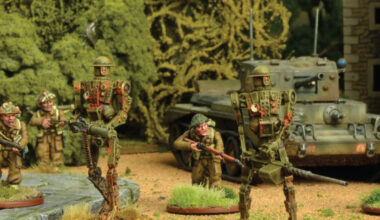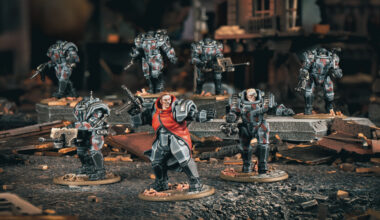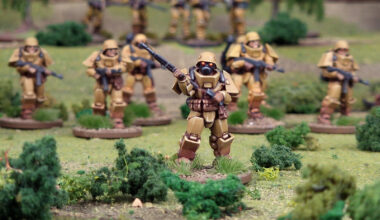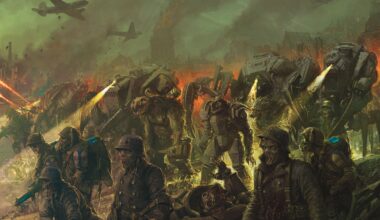
Got your British Commonwealth starter set this week? Excellent, His Majesty’s Government has need of top-quality officers. Now, it might all seem a little daunting, what with the mechanical men and strange new weaponry, but fear not! Your instructor today is Kris Sherriff, one of the brainiest boffins to come out of Bletchley Park, and he’s an expert in all aspects of warfare. Heed his advice, and you’ll be leading the lads through the smoking ruins of Berlin in no time!
The British Commonwealth bring a steady, methodical rhythm to Konflikt ’47. Where the Axis lean into extreme Rift-tech spikes and the United States favour brute force and aggression, Commonwealth forces excel through controlled tempo, consistent output, and precise sequencing. They are an army built around reliable dice, steady advance, and the ability to keep pressure on without needing to ‘turtle’ or stand still.
This is not a ‘point and click’ force which you just plonk on the table and aim at the enemy. Commonwealth armies reward players who enjoy building a deliberate game plan, executing it tightly, and squeezing value from the mid-game where combined-arms decisions matter most.
What Defines the Commonwealth on the Table?
Several traits set this army apart, even before you look at individual units.
1. Reliability and Consistency
Commonwealth units rarely rely on explosive moments or high-risk mechanics. Their guns generally hit on fixed values, their armour shoots while moving thanks to Computational Systems, and their infantry can stabilise under pressure. You’re not gambling on spikes, you’re building incremental advantage.
This steady performance allows Commonwealth forces to push forward, maintain lanes of fire, and trade effectively throughout the game.
2. A Combined-Arms Identity
The faction is at its best when infantry, armour, and specialist units support one another. Commonwealth lists don’t have to be built around stacking extreme synergies or leaning on exotic Rift-tech; instead, they reward correct placement, steady advancement, and sequencing.
3. A High Skill Ceiling
You can build a list that follows a formulaic approach around automation and activation order, but knowing when to break that formula is the skill that separates a competent Commonwealth player from a strong one. The army has answers to both the other factions’ threats, but those answers are often expensive and must be protected and their use timed well.
Core Tools: Infantry & Combined Arms Foundation
Before diving into Rift-tech, it’s worth grounding the faction in its most important assets. Commonwealth lists live and die by their solid, dependable infantry and flexible, reliable armour.
Galahad Armoured Infantry – Durable Line-Holders
Galahads are the Commonwealth’s flagship heavy infantry, built around steady firepower and reliable staying power. With heavy armour and the option to run them as Regular or Veteran, they’re difficult to shift with small-arms fire and excel at holding the midfield while the rest of your force manoeuvres. Their base loadout of five Light Machine Guns gives them remarkable efficiency when targeting opposing Regular infantry and light specialists. Galahads don’t rely on exotic movement or Rift tricks; they simply apply consistent, accurate fire over multiple turns, which fits perfectly into the Commonwealth’s deliberate playstyle. They’re at their best when reinforcing objectives, anchoring firing lanes, or acting as the dependable centre of a combined-arms formation.
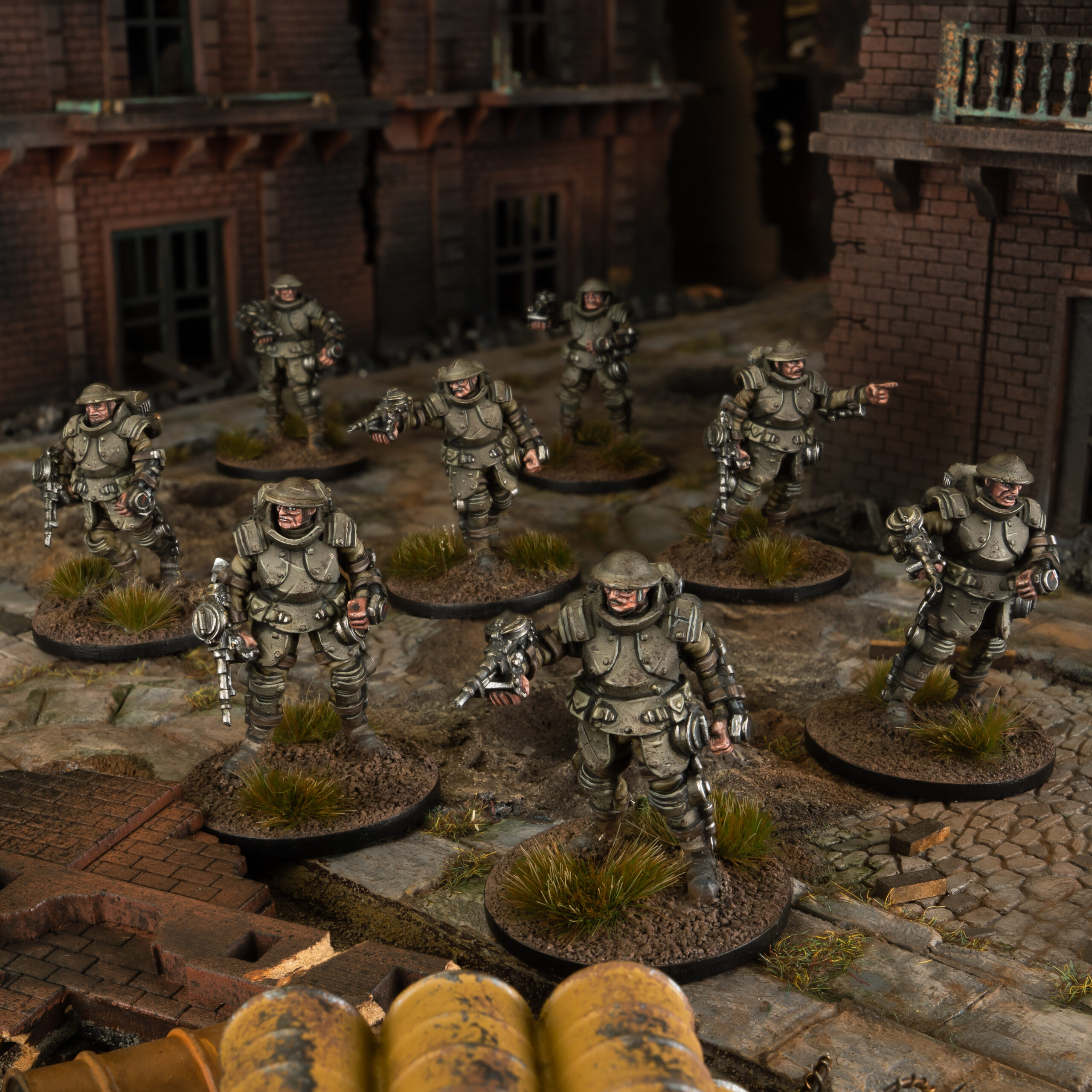
What elevates Galahads beyond a static gun platform is their toolbox of upgrades, allowing you to tailor them to your list’s needs without changing their core role. Engineers help them clear buildings and fortified positions; Tough Fighters give them enough punch to win close-quarters trades; Stubborn keeps them stable under fire; and Anti-Tank Grenades or PRIAM launchers let them deter light vehicles or punish heavy infantry.
None of these options undermine their core identity, but each one adds utility to a squad that already performs well on its own merits. In a faction built around reliability and tempo control, Galahads are the infantry unit you take when you want something that will always do its job.
British Grenadiers – Tesla Specialists and Mid-Range Pressure
Grenadiers are the Commonwealth’s elite specialist infantry, built around Veteran statlines, Assault Rifles, and the option to field a Heavy Tesla Rifle. They can fill the compulsory requirements of your Assault Platoon, but should be played with caution. Their blend of mid-range weaponry, assault weapon mobility, and Veteran durability lets them pressure enemy infantry, but be careful of overcommitting. Grenadiers are ideal for pushing into contested areas, supporting a hammer unit’s advance, or punishing exposed enemy infantry, but they’re only human. Stubborn and Keep Calm Lads helps them stay in the fight under pin pressure, but timing is key, which is very much the Commonwealth way.
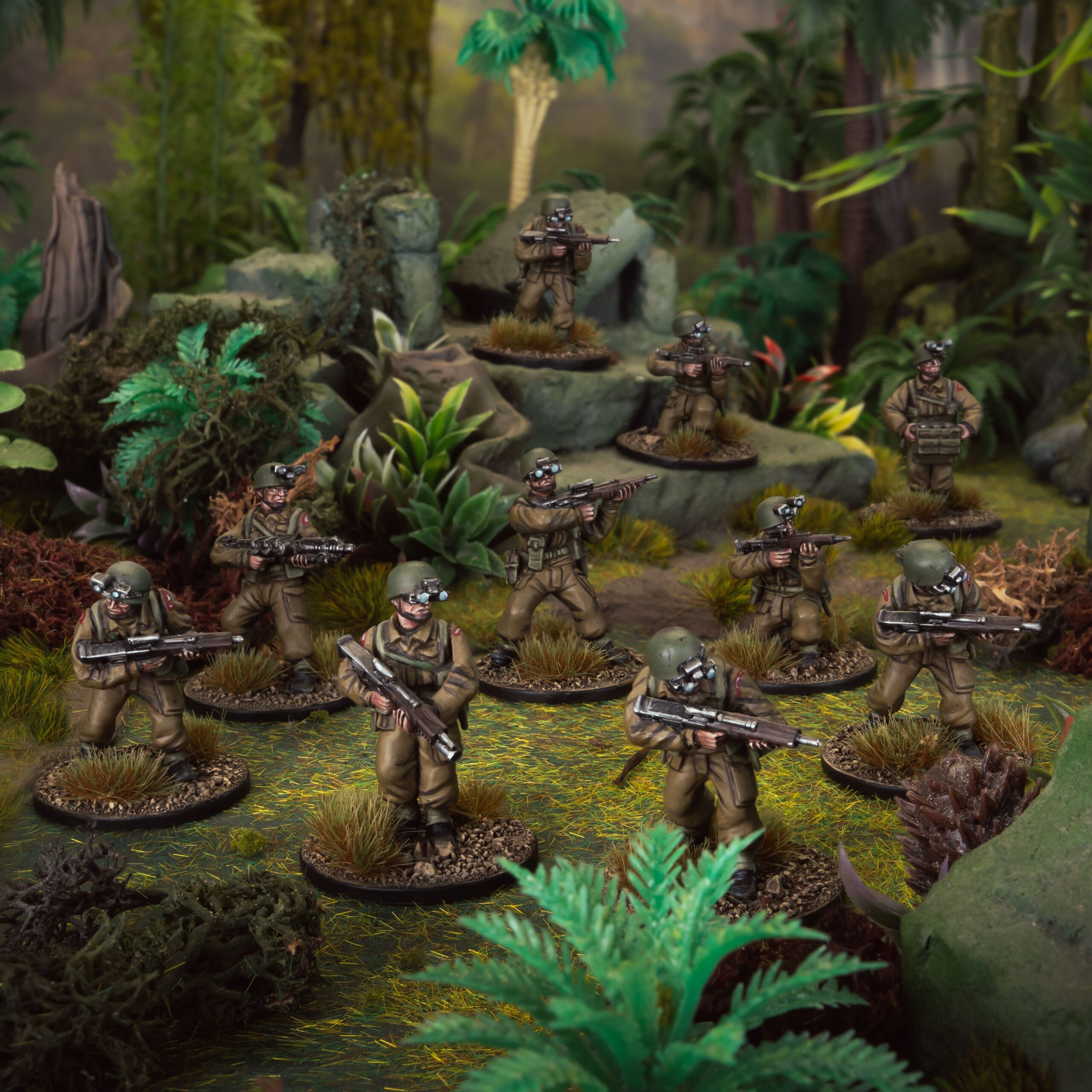
The real flexibility comes from their weapon options. Rifle Grenade Launchers add Pen 1 shots, and additional pin pressure. Meanwhile, the Heavy Tesla Rifle adds a Rift Dice that you are happy to spend, and can be a genuine threat against elite infantry and light armour. This makes Grenadiers surprisingly adaptable: they can act as a forward skirmish unit, a mobile fire support element, or a flexible midboard responder depending on loadout.
Cerberus Squads – Early-Game Bite
Cerberus Squads are the Commonwealth’s answer to early-game disruption: fast, fearless, and capable of delivering sharp, targeted pressure before most enemy units have settled into position. With a Movement value of 8″/16″, Fearless, and Tough Fighters on the War Dogs, Cerberus are designed to hit first, hit hard, and force reactions. They don’t win protracted fights, but they excel at punishing unsupported units, clearing out light screens, and creating the kind of immediate problems that buy your firing line time and space.
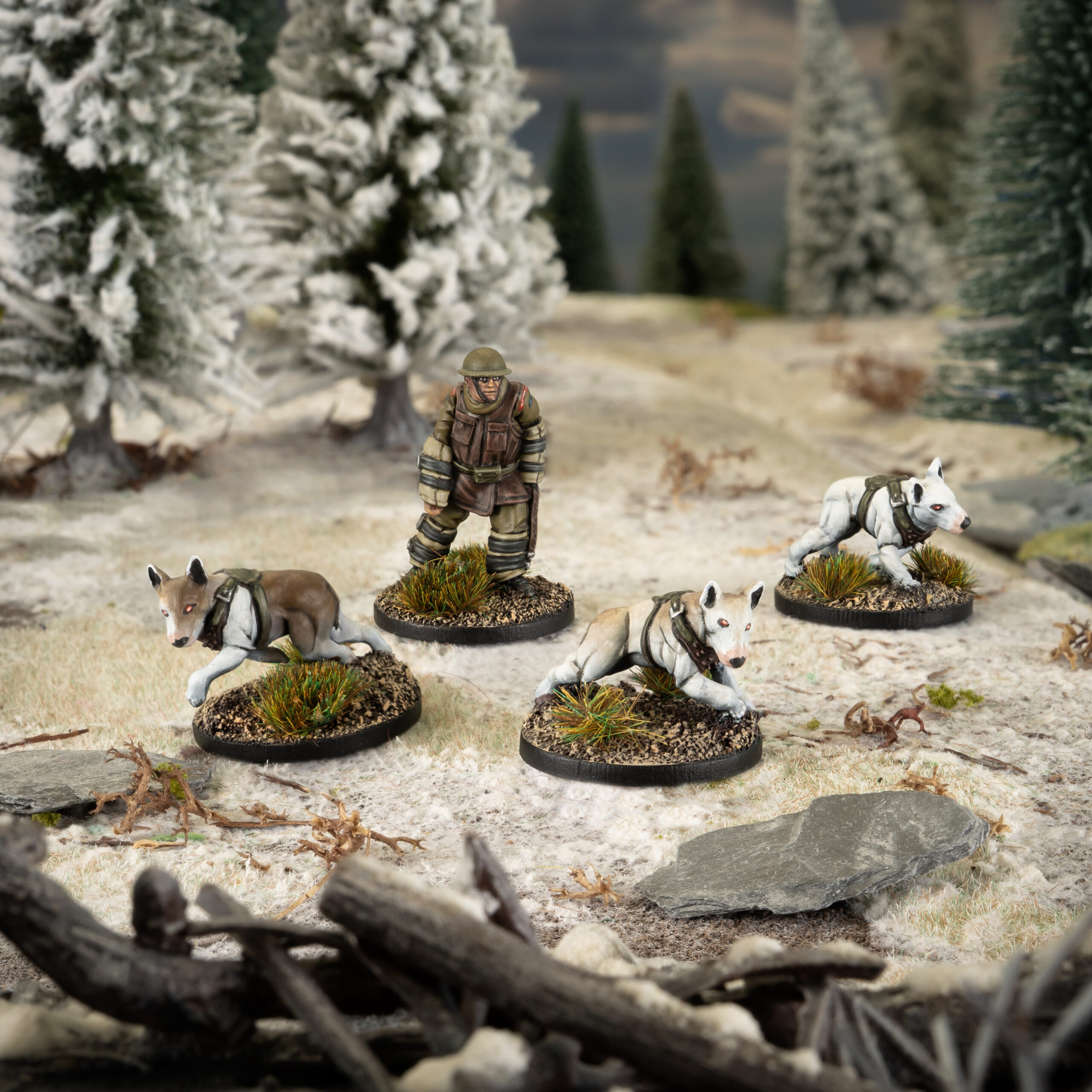
Cerberus shine when used as a tempo piece: something that shapes the opening exchanges rather than acting as a long-term damage dealer. They operate as a flexible vanguard that can soften targets before your hammer commits, or as a reliable counter punch unit that can respond to an enemy close assault threat. They don’t rely on Rift Dice or heavy support, so they fit naturally into both traditional infantry builds and automation-heavy lists. The key is restraint – Cerberus aren’t a unit to throw away on a coin-flip charge. Used smartly, they create space, force inefficient enemy activations, and open the path for your main force to take control of the midboard.
Automation, Synergy, and the Commonwealth Command Game
With the core infantry covered, it’s time to look at the one of the other pillars that sets the Commonwealth apart, the automated systems that underpin many Commonwealth lists.
Mk II Heavy Automated Infantry – The Automation Anchor
While we will be doing a deeper dive into all of the Automated Options in Part two of the series, Mk IIs aren’t just another specialist infantry unit; they’re the piece that makes automation viable. Their own profile is steady and reliable, but their real impact comes from how they enhance every automated unit around them.
Even a single Mk I Automated Infantry squad or an Automated Carrier improves dramatically when a Mk II is nearby. You don’t need multiple units for this effect — one Mk II is enough to stabilise a whole automated wing.
This makes the timing for using them and their Co-ordinated Strike Active Rift Enhancement another subtle layer of planning that you need to account for, if you exhaust their dice too early, your other automated units will suffer.
Rift Mastery & Guts – The Commonwealth’s Heroic Tools
Commonwealth officers don’t get the same explosive mileage from Rift Mastery that the Axis do, but it still plays an important supporting role. Giving a Mk II an extra Rift Die lets it keep its buff online while still spending one to trigger Co-ordinated Strike, preserving your activation flexibility. Guts, on the other hand, still provides controlled double-activations when you need to reposition, set up a Cerberus strike, or secure a key objective late in the game. Neither is a must-take in most Commonwealth builds, but both reward thoughtful planning, a theme that runs through the faction as a whole.
Superior Codebreaking – The Faction’s Signature Tempo Lever
If the Mk IIs define the faction’s mechanical backbone, Superior Codebreaking defines its command identity. Once per game, choosing the first die from the bag in a turn lets you steal initiative when it matters or, just as importantly, force your opponent to commit early during a scoring turn. It’s not flashy, but it’s one of the strongest tempo tools in Konflikt ’47, and it often decides close games. Used well, Superior Codebreaking lets the Commonwealth dictate the rhythm of the mid-to-late game, which is exactly where the faction excels.
Taken together, Mk II synergy, Rift Mastery, Guts, and Codebreaking, form the pillars of an automation-and-command engine that sets the Commonwealth apart. Their mechanics and interactions with Automated units deserve their own focused treatment, and Part Two will break down exactly how automation shapes list-building in practice.
The Big Hammer Unit: How Centrepieces Shape List Identity
Commonwealth lists often revolve around a single major investment piece – not because the faction demands it, but because each centrepiece naturally defines a different tempo, threat profile, and board plan. With infantry and automation providing a steady backbone, the hammer you choose determines how your list applies pressure and where your opponent must respond.
The Churchill Meteor – Standoff Control & Area Denial
The Churchill Meteor gives the Commonwealth access to one of the most oppressive indirect threats in the game. With devastating HE, Corrosive Rift options, and exceptional durability, it anchors a standoff gameplan built on forcing the opponent to advance into your lanes. A Meteor list typically leans on:
- Bombardiers or rifle grenade launchers for layered indirect pressure,
- Galahads or riflemen to hold the midboard,
- Codebreaking to secure activations when the Meteor needs them most.
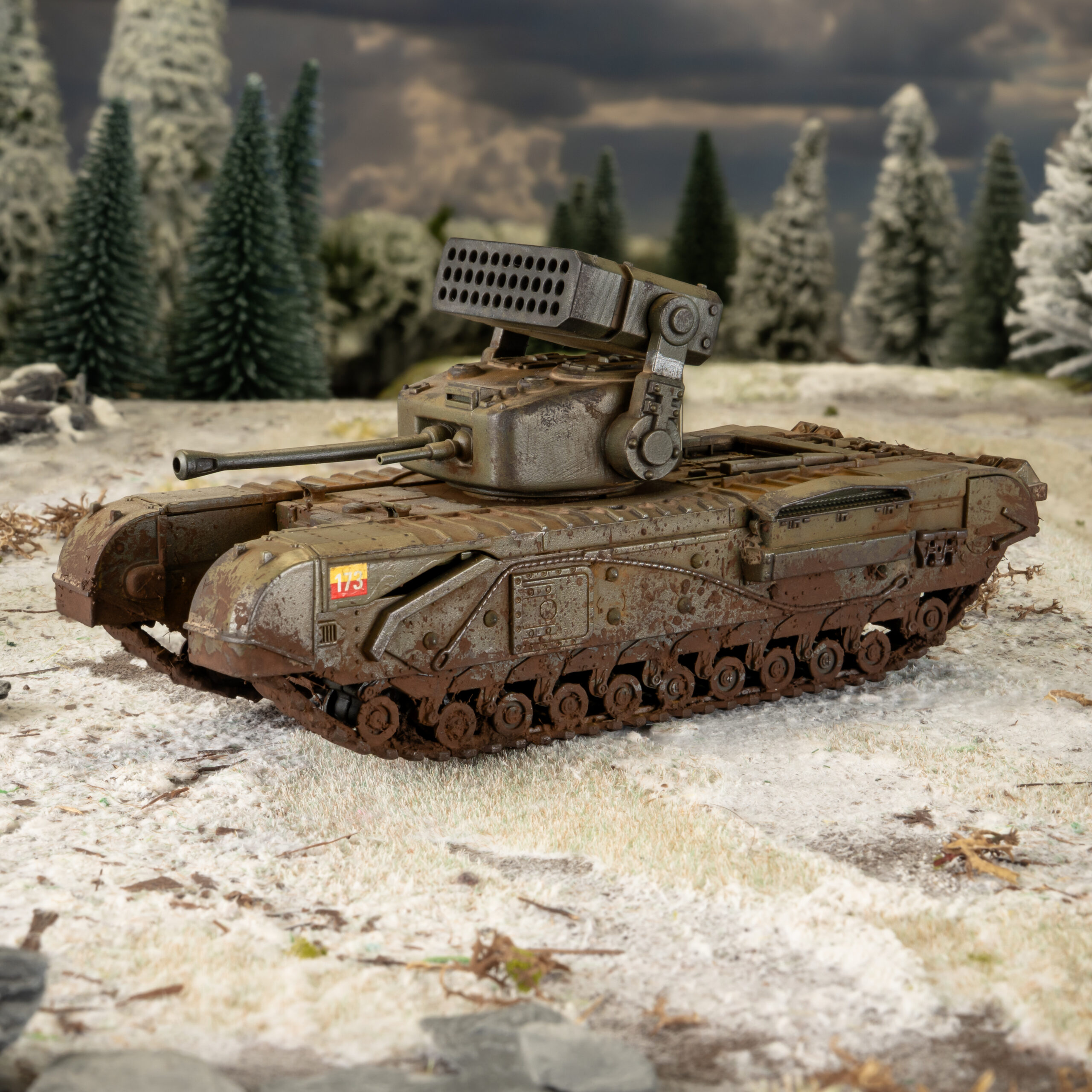
Meteor lists win through positional advantage and sustained fire, forcing the opponent to advance through punishing fire into chokepoints of your choosing.
Percival & Merlin Walkers – Independent Multi-Role Disruptors
These two walkers offer the opposite playstyle: they operate with minimal support and create pressure across multiple fronts. Their weapon loadouts threaten infantry, armour, and elite targets alike, and their mobility lets them exploit gaps in the enemy line. Either the Percival or Merlin is a good choice here, depending on exactly which weapons you prefer to use. A walker-led force typically spreads wider, using:
- Grenadiers or Humbers to probe flanks,
- Cerberus to punish early mistakes,
- Automated Infantry to hold central ground.
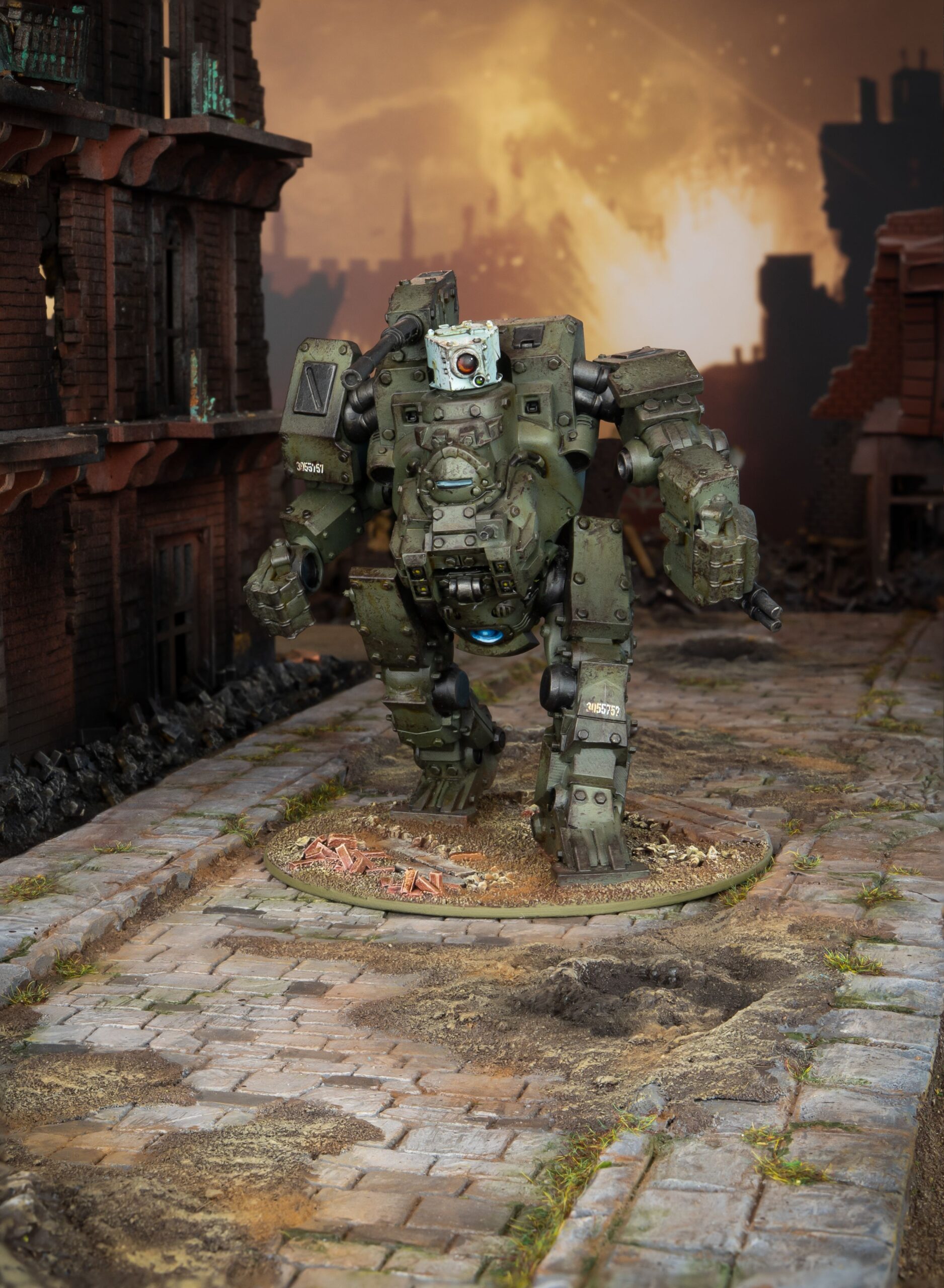
Where Meteor lists force the enemy toward you, walker lists force the enemy to split their resources and fight you piecemeal.
Veteran Tesla Cromwells – Tempo and Reactive Pressure
A Veteran Tesla Cromwell with Computational Systems gives the Commonwealth something they otherwise lack: a fast, accurate, mobile threat. It doesn’t dominate the table alone, but in combination with one or two Humbers it creates a reactive armoured group capable of collapsing flanks or punishing isolated units.
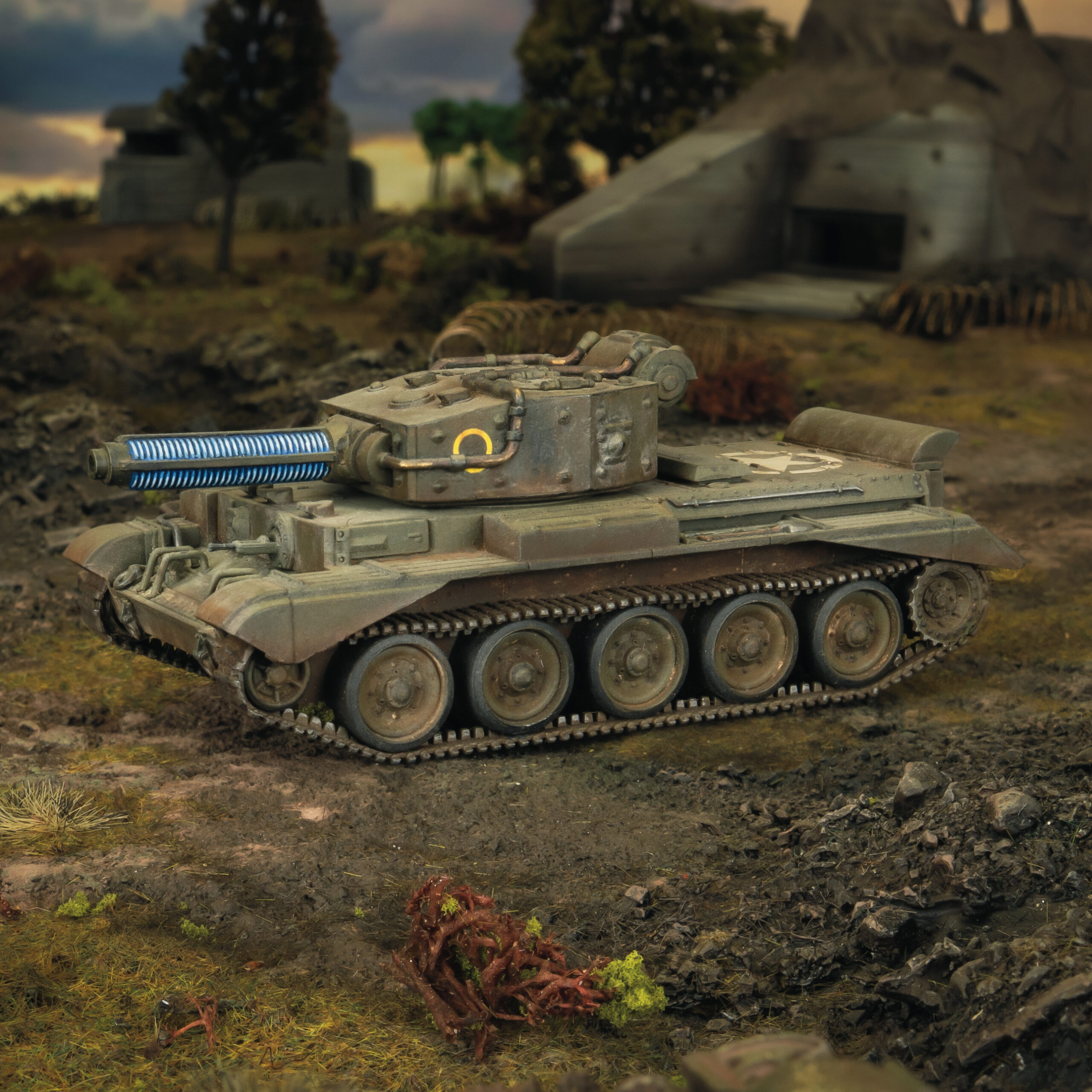
A Cromwell-led list typically rewards tight sequencing and mid-game pivots, using its mobility to dictate where engagements happen rather than waiting for the opponent to step forward.
Automated Infantry Blocs – Dice Volume as a Centrepiece
A full Mk I HMG squad backed by Mk II support forms a centrepiece of a different kind: threat saturation through sheer output. Even hitting on 5+ without Mk II buffs, the dice volume forces Order Tests and steadily strips elite units. With the First Off the Line penalty removed, they become brutally consistent shooting units.
Automation-centric lists lean into:
- Mk II positioning,
- Mid-range control,
- Layered supporting fire from infantry or carriers.
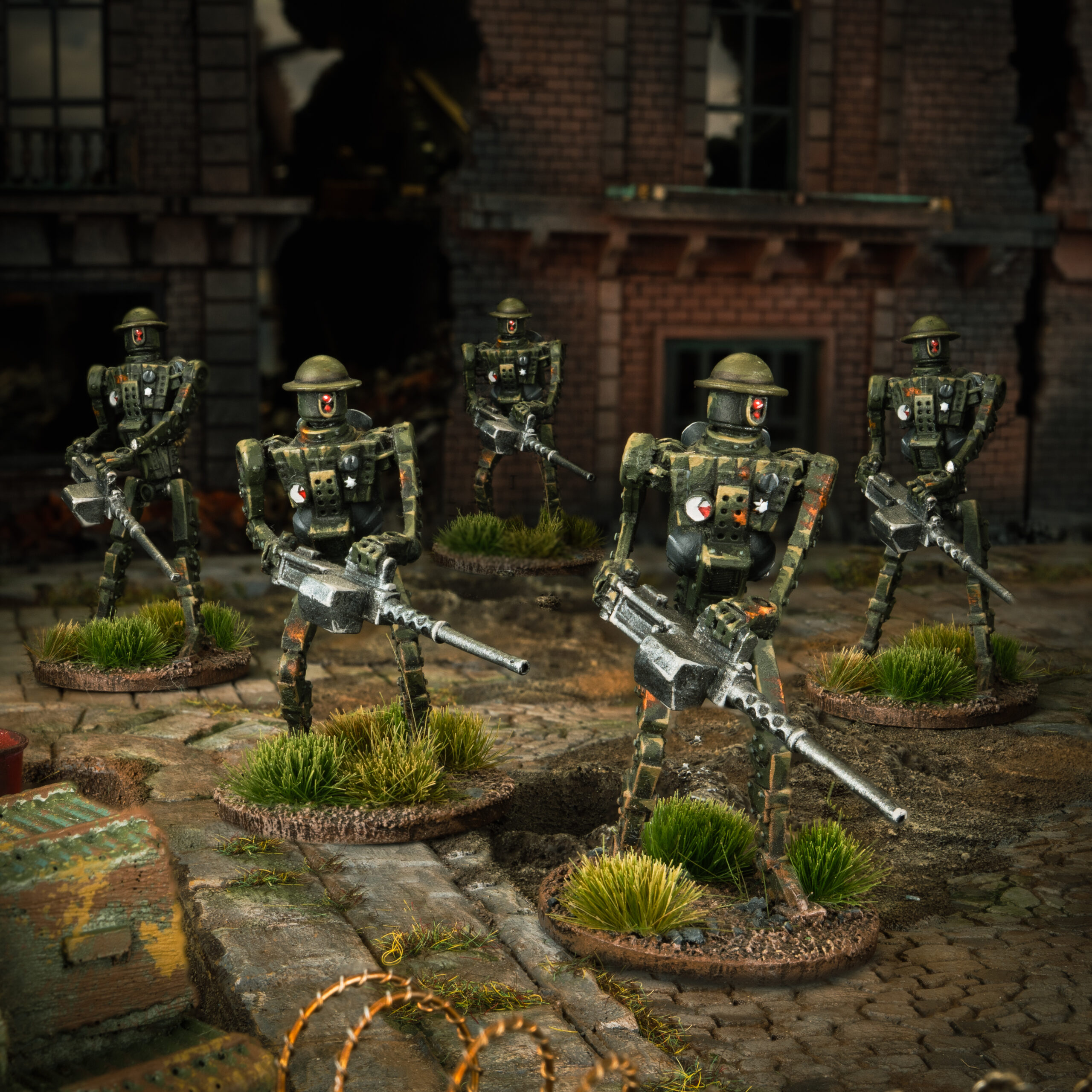
They win by making movement unsafe, not by rushing to take ground. Much like the Meteor, the sheer weight of fire they can bring to bear forces opponents into limited lines of movement, which can be blocked or countered by your supporting forces.
Choosing Your Hammer Defines Your Game
Each centrepiece pushes the Commonwealth in a different direction:
- Meteor → defensive tempo, indirect attrition.
- Walkers → wide pressure and flexible threat allocation.
- Cromwell/Humbers → mobility and reactive control.
- Automated Blocs → mid-range dominance through volume.
The common thread is that none of these centrepieces win games alone. Instead, they shape the entire list’s rhythm, and understanding that rhythm is key to mastering the Commonwealth.
How the Commonwealth Play on the Table
Commonwealth armies reward players who value control, consistency, and deliberate pressure. They don’t rely on explosive Rift-tech spikes or extreme special rules; instead, they win by building stable positions, sequencing their activations well, and forcing opponents to make inefficient trades. Their infantry are durable and dependable, their armour shoots accurately while manoeuvring, and their automation adds a layer of synergy that amplifies the value of every activation.
The Commonwealth excel in the mid-game, where Superior Codebreaking, careful positioning, and strong centrepiece choices combine to dictate the rhythm of the battle. Whether you’re anchoring a lane with a Meteor, applying wide pressure with a walker, or grinding opponents down with automated firepower, the faction shines when you create problems your opponent can’t answer cleanly.
They’re not the simplest army to play, with high unit costs and proximity-based synergies demanding precision. When you lean into their strengths, though, the Commonwealth offers some of the most rewarding strategic gameplay in Konflikt ’47. With their automated infantry forming a second, deeper layer of tactical identity, there’s far more to explore beneath the surface!
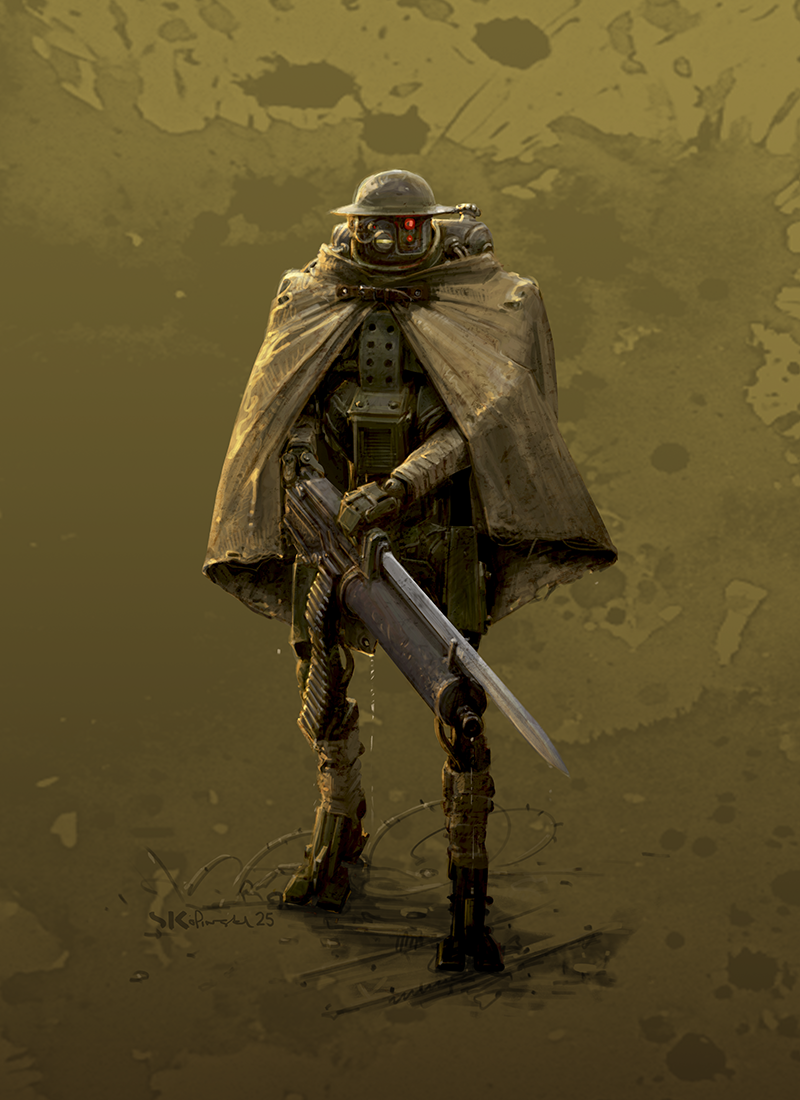
Who Will Enjoy This Faction?
The Commonwealth suit players who enjoy:
- Thoughtful, methodical gameplay,
- Reliable units that perform without relying on luck,
- Combined-arms synergy and calculated pressure,
- Lists that reward careful sequencing over raw force.
If you like shaping the pace of the battle rather than chasing ‘swing’ moments, a Commonwealth force will feel immediately intuitive and, crucially, fun.
What Comes Next?
Part Two will dive deeper into the Commonwealth’s automated units, from the design roles of the Mk I and Mk II to how Automated Carriers and support platforms reshape list-building. Where this article established the faction’s foundations, the next will focus on the mechanics and synergies that give Commonwealth armies their unique tactical identity.
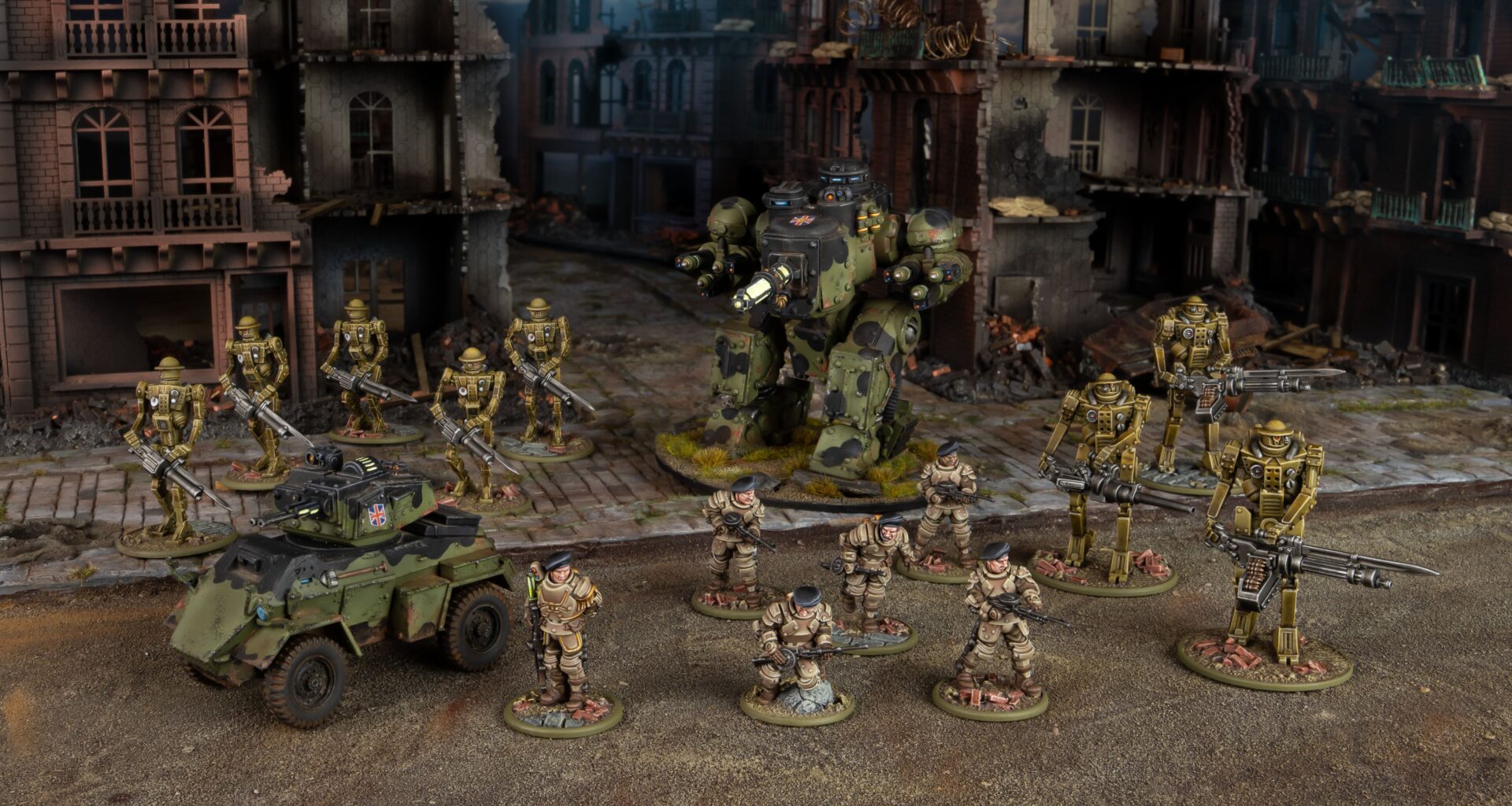
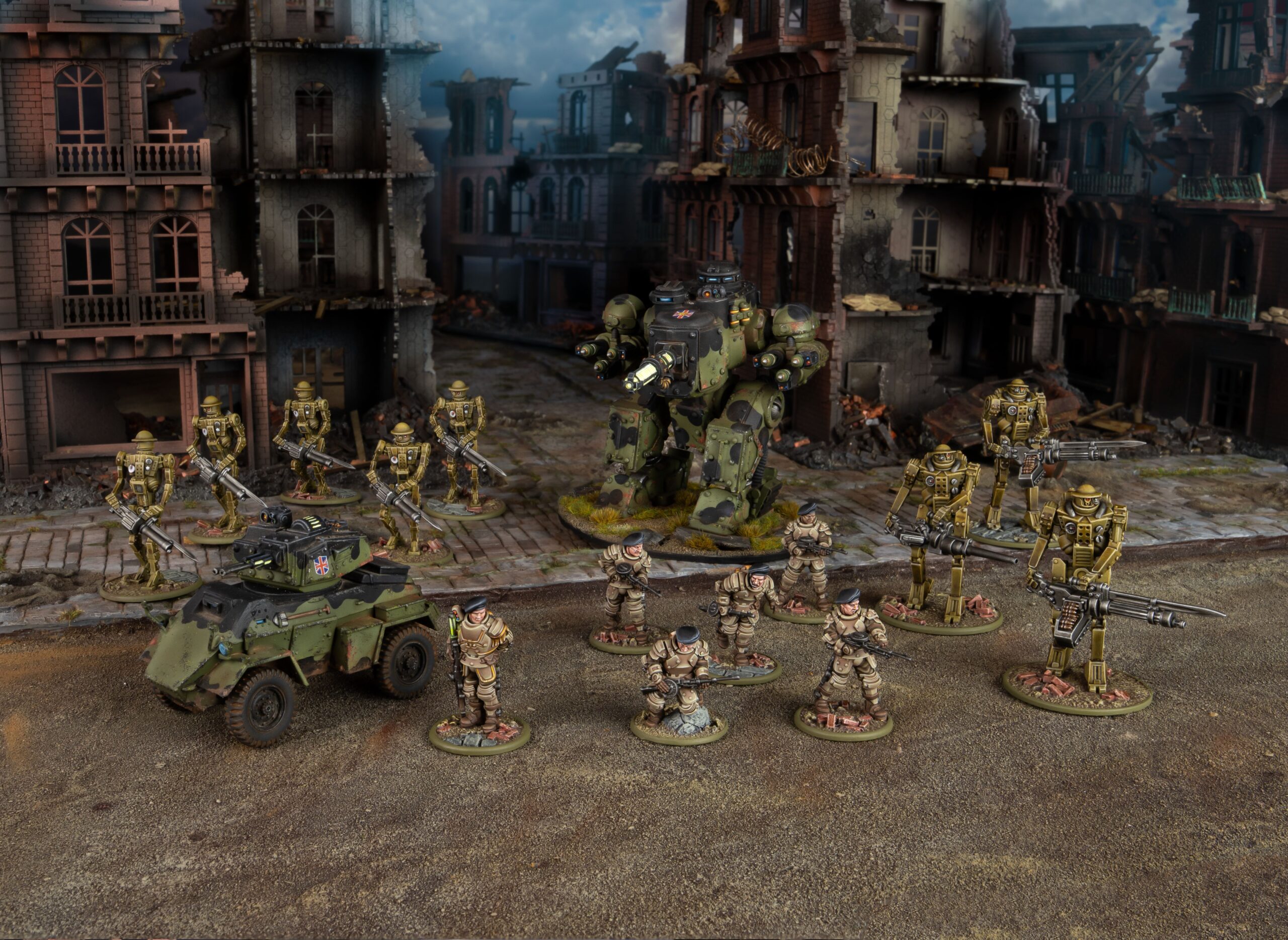
How’s that for a proper introduction to the British Commonwealth? If you want to try out Kris’ tactics for yourself, you’ll need a force. The best way to start is with the aptly-named British Commonwealth Starter Army, which gives you a firm foundation to build off, and lets you play games right away while you work out your playstyle.